Gratitude: A Powerful Life Transformer
Every person enjoys success, yet no success is born from the efforts of one individual alone. Behind every achievement stand countless visible and invisible hands. But in the race to claim credit, modern man has forgotten to acknowledge them. Gratitude is the forgotten virtue that heals restless minds, strengthens fragile relationships, and fills empty hearts with contentment. A thankful person spreads warmth in the family, harmony in society, and humanity in the world
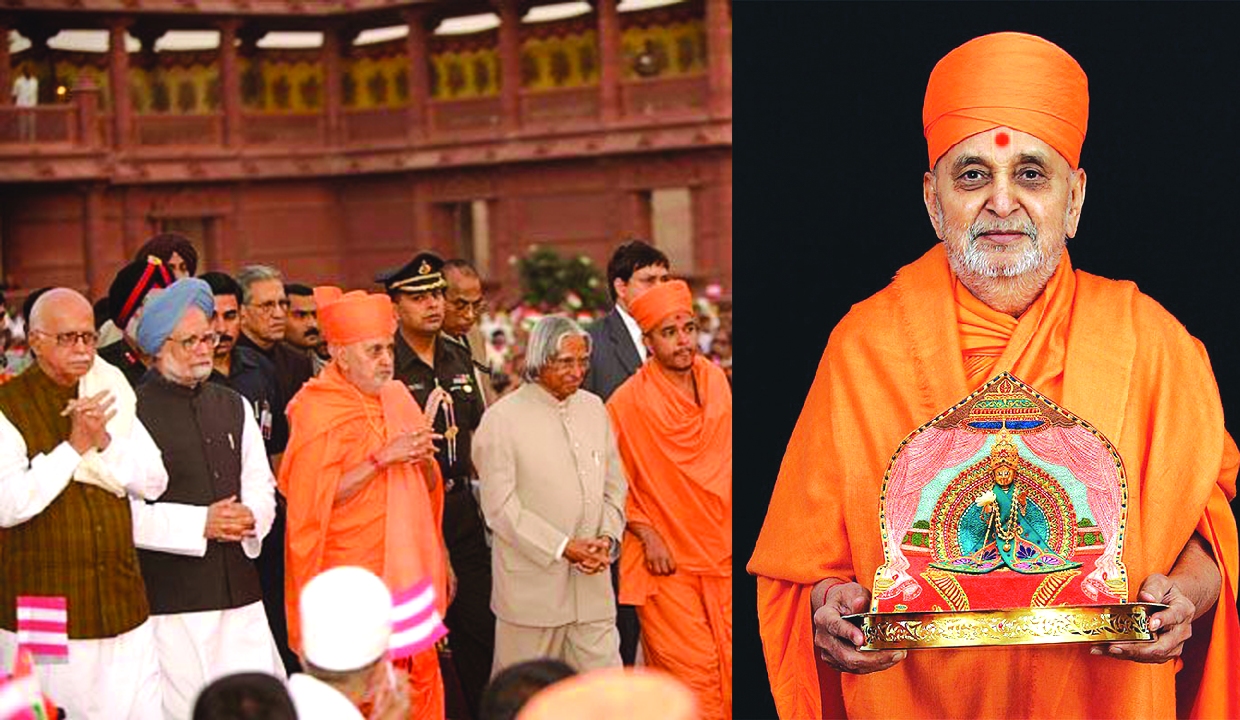
On November 6, 2005, the banks of the Yamuna witnessed a moment that entered the cultural history of modern India. The inauguration of Swaminarayan Akshardham, New Delhi, was not merely the opening of a grand Mandir; it was the unveiling of a civilisational dream carved in pink sandstone and white marble. As the evening sky glowed with lights and devotion, distinguished dignitaries from across the nation gathered to honour the occasion. Among those present were the then President of India, APJ Abdul Kalam, PM Manmohan Singh, former Deputy PM Lal Krishna Advani, and the Lieutenant Governor of Delhi. Eminent leaders, diplomats, scholars, sadhus, and thousands of devotees filled the vast assembly grounds. The atmosphere carried both national pride and spiritual reverence.
Speaker after speaker praised the magnificence of Akshardham. Some admired its breathtaking architecture; others marvelled at the organisational excellence behind such a colossal undertaking. Many described it as a modern wonder that had revived the soul of Indian culture. Ultimately, all eyes turned towards Pramukh Swami Maharaj, the quiet and pious guru, whose inspiration, leadership, and relentless sacrifice had transformed an impossible vision into reality.
Yet what followed left the entire gathering deeply moved. When Pramukh Swami Maharaj began to speak, there was no trace of triumph in his words. No sense of personal accomplishment. Standing before one of the grandest Hindu cultural monuments ever built in modern times, he folded his hands with profound humility and offered every ounce of credit to his guru, Yogiji Maharaj. With emotion-filled eyes and a voice soaked in gratitude, he said that whatever had happened was solely due to Yogiji Maharaj’s blessings, prayers, and divine vision.
At that historic moment, the audience witnessed something greater than architecture. They witnessed the feeling of gratitude in Swami’s pure eyes. The leaders on the stage appeared visibly touched. The dignitaries who had gathered to celebrate a monument were now witnessing the rare grandeur of humility itself. In an age where achievement often breeds ego, Pramukh Swami Maharaj transformed praise into gratitude and success into surrender.
Akshardham stood tall in stone, but that evening, an even greater monument arose silently in the hearts of millions: the monument of thankfulness.
Today, we have conquered distances, mastered technology, and built civilisations of extraordinary comfort. Yet, amidst this advancement, one precious virtue, ‘gratitude’, is quietly disappearing from daily life. Modern society often teaches people to claim credit, highlight personal accomplishments, and place themselves at the centre of success. Yet truly elevated personalities think differently. They recognise the invisible hands behind every achievement; the blessings, guidance, sacrifices, and support that shape one’s journey.
Gratitude is not merely saying “thank you”. It is a refined vision of life, the noble ability to recognise goodness, acknowledge kindness, and value even the smallest acts of care. A grateful person does not merely live life; he experiences its beauty. Indeed, he walks on the path of true transformation, a transformation that leads from negativity to positivity, from restlessness to contentment, and from ego to humility.
Surprisingly, the greatest transformations often begin not through grand revolutions, but through small daily acts. A child thanking his mother for preparing food, a husband appreciating his wife’s silent sacrifices, a student expressing respect towards his teacher, or a friend acknowledging another’s support, these simple expressions create invisible waves of positivity. They soften hearts, dissolve bitterness, and strengthen human bonds.
Human psychology itself confirms this truth. The mind gradually becomes what it repeatedly contemplates. If a person constantly focuses on complaints, shortcomings, and failures, negativity becomes their habitual mental climate. But when one consciously practises gratitude, the direction of thinking changes. The mind slowly shifts from dissatisfaction to contentment, from anxiety to hope, and from scarcity to abundance.
A person who begins the day with thankfulness carries a different energy throughout life. Instead of grumbling over what is absent, he becomes aware of what is already present: the gift of health, family, opportunity, friendship, and existence itself. This awareness generates emotional stability. Even difficulties appear smaller before a thankful mind.
In our daily life, a simple sentence such as “Thank you for always supporting me” can revive affection in relationships that have grown cold. Gratitude acts like oil in the machinery of family life; it reduces friction, prevents emotional wear, and keeps relationships harmonious.
And perhaps that was the deeper message hidden in the emotional eyes of Pramukh Swami Maharaj at the inauguration of Swaminarayan Akshardham. True greatness does not lie merely in achieving great heights; it lies in preserving the depth of humility amidst greatness. Gratitude transforms accomplishment into worship, success into service, and life itself into a celebration of blessings.
The writer, Dr Swami Gyanananddas, is a dedicated follower of the Swaminarayan tradition and has earned a PhD from MS University; Views presented are personal.