Home Sweet Home
In an age overwhelmed by digital distractions and widening generational divides, the warmth of many homes is quietly fading into silence, misunderstanding, and emotional distance. To heal this growing crisis, Pramukh Swami Maharaj offered humanity a timeless and transformative gift — Gharsabha, 'the sacred family assembly'. More than a ritual, it is a powerful forum for dialogue, reflection, and spiritual bonding that has helped countless families overcome years of tension, conflict, and estrangement. By nurturing understanding between generations, Gharsabha transforms homes into sanctuaries of respect, harmony, and heartfelt connection. In a fractured world searching for unity, this simple yet profound practice may hold the key to restoring the soul of the family
Does the word in the title sound familiar? This word, ‘Home Sweet Home’, is a phrase we often use, but the real question is: If instead of celebrating delightful Diwali, we are always celebrating Holi of quarrels, and instead of sweet speech, the acid of insults and accusations is poured upon one another, should we still call it a home, or a raging battlefield?
In our society, there is a beautiful tradition of giving names to houses. But how ironic it is! A house named Satkar (respect) often resounds with Dhutkar (insults). In a home called Ullas (joy), people may live in sorrow. A flat called Leelalaher (playful waves) might feel like poison to its residents. Even in a bungalow named Harsh (laughter), terror may dwell, and in a row house named Shanti (peace), unrest may prevail. Can such houses truly be called homes? Or are they merely lifeless walls? A house is built with bricks and beams, but a home is built with love and dreams. Without affection, forgiveness, and harmony, even a palace feels like a prison; with them, even a hut becomes heaven.
However, today, in every home, you will find tea sets, dinner sets, sofa sets, TV sets, all kinds of “sets.” But if the people living inside are constantly “upset,” then can we really call it a home? Everyone dreams of building the house of their dreams, a place filled with love, harmony, and warmth. Yet, where there are people, there are bound to be differences, jealousy, ambition, and ego. Despite a deep connection, not every family becomes the ideal home they imagined. This dilemma is not new. But now, how can we make our home sweet?
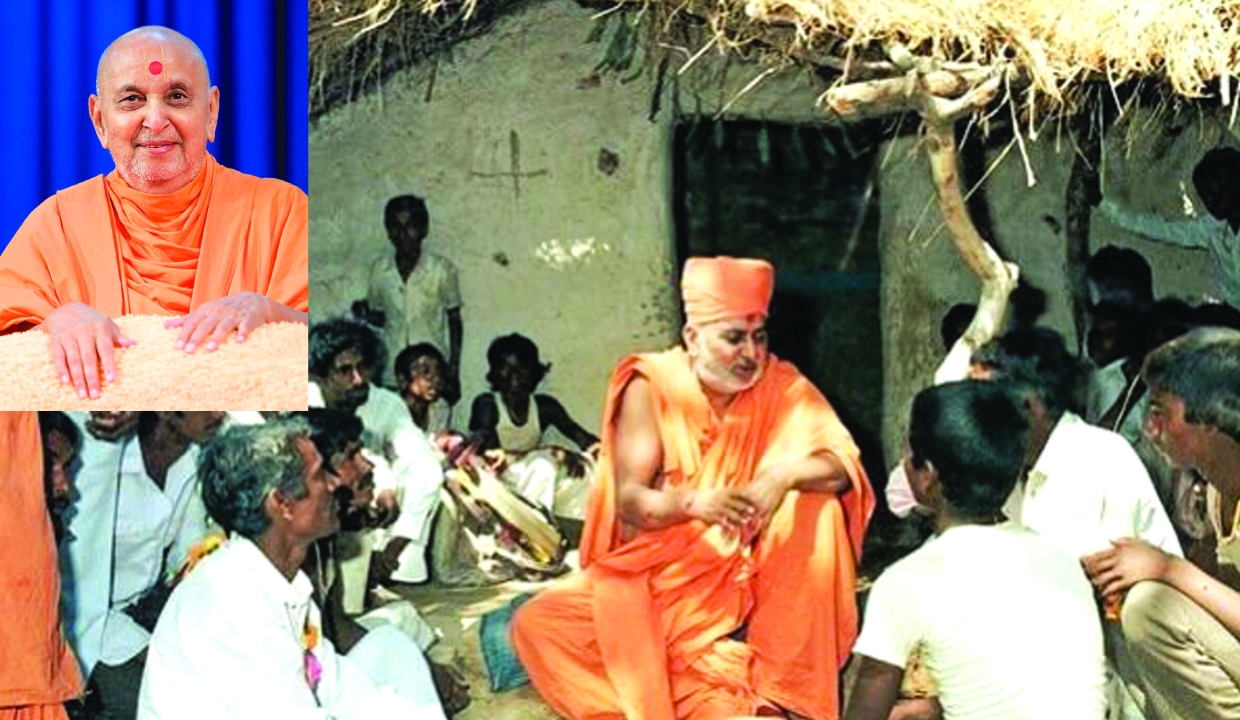
Pramukh Swami Maharaj had offered the remedy to make our home sweet. He gave the practical concept of Gharsabha. Gharsabha encourages family members to gather daily to discuss satsang concepts and share updates and happenings from each other’s lives. This daily dose of communication gives spouses, parents and children a better understanding of each other’s spiritual, physical, and emotional needs. Pramukh Swami Maharaj deeply understood the fragile dynamics of family life. He foresaw that when agitation, misunderstanding, and silent resentment begin to enter a home, they slowly erect invisible walls between hearts.
With time, those walls grow stronger, turning affection into distance and conversation into silence. Therefore, he emphasised that the first step toward restoring harmony is to break this wall of silence and misconception. This is precisely how Gharsabha works. It gently dissolves the barricades of conflict and reopens the pathways of communication within the family. Through the shared reading of sacred shastras, thoughtful reflection, and heartfelt dialogue, even a few simple words begin to rekindle warmth between family members. Gradually, conversations replace confrontation, understanding overcomes suspicion, and affection begins to flow once again.
Gharsabha does not merely ignite the spark of love; it carefully nurtures and sustains it, transforming the home into a sanctuary of trust, unity, and spiritual closeness.
This timeless wisdom shows us the essence of happy family life: No matter what attitude someone has towards me, I should always strive to see the good in them.
Shaileshbhai Dhanani of Rajkot relates his experience, “Sometime after my marriage, troubles started between my wife and me. I worked in a factory. Sometimes, due to an overload of work, I used to come home late. As a result, my wife became suspicious of me and this led to heated arguments and increasing conflicts. My parents became fed up with her bickering, hollow suspicions and unfounded accusations. I found my life hellish and our relationship came to the point of breaking up. One day, the conflict climaxed to such a point that my exasperated wife attempted suicide. But she was saved because of Vinubhai, our landlord, who came and calmed her.”
Thereafter, Shaileshbhai witnessed the Gharsabha carried out at Vinubhai’s house next door and the resulting joy and ease in their family. He was inspired and started Gharsabha in his home. Shaileshbhai adds, “In the beginning, I used to do Gharsabha on my own. My wife ignored it, but gradually, all the members joined me. Slowly, my wife became interested in satsang. She started to sit at some distance and gradually came closer. Our differences started to dissolve and our problems were solved. Finally, there was peace and joy between us.”
In this way, Gharsabha mended a broken family with trust and love.
By nurturing understanding between generations, Gharsabha transforms homes into sanctuaries of respect, harmony, and heartfelt connection. In a fractured world searching for unity, this simple yet profound practice may hold the key to restoring the soul of the family
The writer Dr Sadhu Gyanananddas is a dedicated follower of the Swaminarayan tradition and has earned a PhD from MS University; Views presented are personal.