Savitri Puja: Where faith, food and family endure
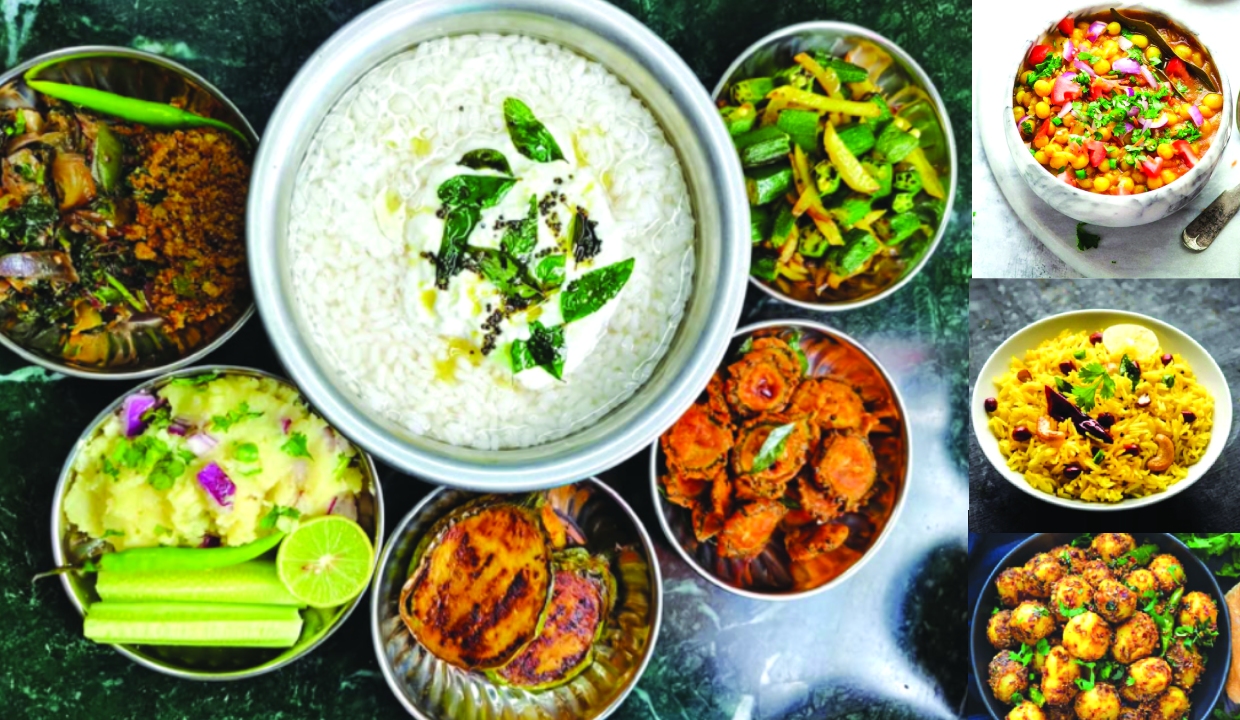
Observed across many parts of Bharat under different names, Savitri Puja is among those sacred observances where faith is expressed through fasting, prayer and remembrance. Rooted in the timeless story of Savitri and Satyavan from the Mahabharata, the occasion honours a wife whose courage, intelligence and spiritual determination compelled even Yama, the lord of death, to restore her husband’s life. Over generations, the observance has come to symbolise more than marital togetherness. It reflects steadfastness, duty, prayer and the moral strength of the household. Around this occasion evolved a distinctive culinary tradition as well, where fasting foods, seasonal fruits, simple sattvic preparations and ceremonial offerings became part of the custom and atmosphere of the day.
The story of Savitri and Satyavan gives the festival its moral depth. In the Mahabharata, Savitri is born to King Ashwapati after long prayer and is raised with strength of character and clarity of mind. When she chooses Satyavan as her husband, she does so despite being warned that he is destined to die within a year. Satyavan is no ordinary figure in the tale. He is the son of Dyumatsena, a blind and exiled king living in the forest after losing his kingdom. Savitri therefore accepts not only Satyavan, but also the hardship that surrounds his life. On the foretold day, she undertakes a rigorous fast and accompanies him into the forest, where he grows weak while cutting wood and rests his head in her lap. As his destined hour arrives, Yama, the divine lord of death and guardian of departed souls, comes to claim Satyavan’s life. Savitri does not collapse in grief. She follows Yama and speaks to him with composure, wisdom and moral force. One by one, she secures boons for her father-in-law’s sight, his lost kingdom, her father’s lineage and finally her own future as Satyavan’s wife. By the logic of this final boon, Satyavan’s life must be restored. The banyan tree, or vat vriksha, later became an important symbol of this observance because of its association with long life, shelter and continuity.
The importance of the festival lies in the way this epic episode moved from scripture into lived household practice. Savitri Puja allows the story to be remembered through fasting, offerings, worshipping banyan trees, seasonal foods and family rituals. It transforms Savitri’s journey into a recurring cultural lesson on courage, presence of mind and the quiet strength with which women have shaped the moral life of the home.
While Savitri Puja is observed across different parts of the country, its rituals and modes of celebration vary from region to region. The festival assumes different names, ceremonial forms and degrees of social prominence depending on local customs, ritual calendars, culinary traditions and inherited community practices. In Odisha it is celebrated as Savitri or Sabitri Brata, in Bihar and parts of North India as Vat Savitri Vrat, in Maharashtra and Gujarat as the related observance of Vat Purnima, and in parts of Bengal through related observances linked to Savitri Chaturdashi. Some emphasise banyan-tree worship, others fasting disciplines and household offerings, yet all remain rooted in the enduring story of Savitri and Satyavan. What binds these traditions together is a shared reverence for endurance, self-control, prayer, family continuity and the moral strength of women within the household.
Food on Savitri Puja observes these sentiments through humility, simplicity and inherited practice. Fasting is generally observed in the early part of the day and is usually followed by fruits and sattvic preparations. A brass thali filled with ripe mangoes, bananas, soaked grains, flowers, vermilion and sacred thread is readied for the vrat and placed as an offering. It becomes part of the festival’s beauty, reminding the household that food is first offered, then received as nourishment, and only afterwards enjoyed.
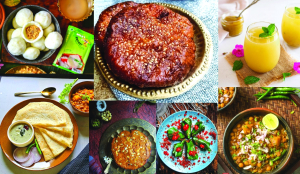
Odisha offers one of the richest culinary spreads, while in many northern and western communities the emphasis remains on fruits, coconut, simple sattvic foods and post-vrat nourishment. Among the most distinctive savoury offerings is muga chakata, a simple preparation of soaked green gram that reflects the quiet culinary spirit of the vrat. It is usually made from soaked or lightly sprouted whole green moong dal mixed with banana, coconut, sometimes jaggery, black pepper, or other fasting ingredients, then mashed into a sattvic preparation. Alongside it, soaked chana or buta (in Odia) is sometimes eaten plain, sometimes lightly mixed with coconut, ginger and a touch of salt after the fast is broken. Arwa rice, also used as a ceremonial grain, appears in ritual settings as a sign of auspiciousness and sustenance. These are not elaborate dishes, yet they show that the meal begins with the simplest forms of sustenance.
On completion of the fast, many households move toward light vegetarian meals. Chuda-dahi, made with flattened rice softened in curd, is cooling, quick to prepare, and often enriched with banana, grated coconut, jaggery or small pieces of mango. In some homes, kheera-dahi, or cucumber mixed with curd, offers similar relief from the heat. Pakhala, the beloved fermented or water-soaked rice, may also be consumed after rituals, served with curd, roasted cumin, salt, green chilli and simple accompaniments. Its character makes it especially suited to the season, as it restores the body gently after the fast.
A more complete vegetarian spread often includes dalma, the Odia preparation in which lentils and vegetables are cooked together with minimal spice. Raw banana, pumpkin, papaya, brinjal, drumstick and colocasia may be added, depending on what is available. Tempered with cumin, dry red chilli and ghee, and finished with grated coconut in some versions, dalma carries the dignity of everyday food elevated for a special day. It occupies an important place in Odia festive, temple and community food culture, valued for being wholesome, balanced and easy to digest. Kanika, a mildly sweet fragrant rice cooked with ghee, bay leaf, cinnamon, cardamom, cashew and raisins, may appear in festive Odia meals, offering a bridge between savoury rice and sweet pulao. Ghuguni, made from soaked yellow peas or dried white peas simmered with ginger, cumin, turmeric and a light masala, provides a heartier savoury note. When served with puri or luchi after the vrat, it becomes a family dish that gathers people around the table after the long quiet of fasting.
In Bihar and parts of North India, the post-vrat meal often remains simple, built around fruits, curd, soaked gram, light potato preparations and cooling foods suited to the summer season. In many north Indian homes, vrat-friendly aloo jeera is prepared with boiled potatoes, cumin, rock salt, green chilli and ghee, avoiding onion and garlic. Sabudana khichdi, made from soaked tapioca pearls tossed with roasted peanuts, potato, cumin and coriander, offers energy while remaining light. Singhara puri or kuttu puri, made from water chestnut or buckwheat flour, may be prepared where grain restrictions are observed, usually eaten with curd or a mild potato curry. In Maharashtra and Gujarat, where the related observance is often known as Vat Purnima, the culinary emphasis may remain more restrained, with fasting, fruits, coconut offerings and simple family foods carrying the meaning of the day. The vow remains consistent, but the plate changes with language, climate, agriculture and family tradition.
No account of Savitri Puja cuisine can be complete without its sweets, because they mark the emotional release of the vrat. Kheer, prepared by slowly simmering rice in milk until it thickens, then sweetening it with sugar or jaggery and flavouring it with cardamom, is among the most familiar offerings. In some homes, makhana kheer replaces rice with fox nuts roasted lightly in ghee before being cooked in milk. The dish is soft, cooling and auspicious, making it suitable for a day centred on prayer. Malpua, made from a batter of flour, milk, fennel and sometimes banana, fried gently and dipped in sugar syrup, brings a richer festive note. It is not always a fasting food, but after the rituals it becomes part of the family’s celebratory table.
Odisha’s pitha tradition gives Savitri Puja another layer of regional richness. Manda pitha, made from a rice flour casing filled with coconut and jaggery, is steamed until soft and fragrant. Kakara pitha is more robust, made with semolina or wheat dough, stuffed with coconut and jaggery, then fried until golden. Arisa pitha, prepared from rice flour and jaggery and fried slowly, has a deeper flavour and longer keeping quality, which makes it suitable for festive sharing. These sweets are not simply desserts. They carry the imprint of the household through recipes handed down by grandmothers, prepared carefully and shared with family and friends.
Seasonal fruits remain central even when elaborate dishes are prepared. Mango is perhaps the most visible fruit, not only because it ripens during the season but because its sweetness feels like a blessing in itself. Jackfruit, with its honeyed fragrance and many seeded bulbs, represents abundance besides being readily available in the eastern states. Banana brings softness and satiety, coconut purity and completeness, while palm fruit and date palm offer relief in the summer heat. Kendu, pineapple, apple and other fruits may also be included depending on region and availability. Fruit chaat, made after the puja with chopped mango, banana, apple, pomegranate, cucumber, grated coconut and lime, becomes an easy way to share the offered fruits among family members. Served with rock salt, chaat masala and lime, it is favoured for its sweet and tangy conclusion to a nutritious meal. In some homes, panchamrit, made with milk, curd, honey, ghee and sugar or banana, is also prepared for offering to deities and later distributed as prasada. Each ingredient carries ritual meaning within Hindu thought, making the preparation both simple and deeply symbolic.
While non-vegetarian dishes are included in some households, they belong to the later family meal and not to the vrat or puja thali. Non-vegetarian dishes are not treated as offerings to Savitri. However, in some eastern Indian households, especially where fish is a normal part of the regional diet, the family meal after the fast may include fish or meat once the formal ritual has concluded. A light machha besara, prepared with fish cooked in mustard paste, turmeric and green chilli, can appear as a post-puja household dish in Odia or Bengali-influenced kitchens. Macher jhol, a thin fish curry with potato, tomato, cumin and turmeric, offers a gentler alternative that pairs well with rice. Chingri malai curry, made with prawns simmered in coconut milk and mild spices, may be reserved for a more festive meal, while chicken jhol, cooked as a light curry rather than a heavy restaurant-style dish, can be prepared for family members who are not fasting or for the evening meal after observance. This distinction protects the sanctity of the vrat while acknowledging the diversity of regional food habits.
The beverages associated with the season of Savitri Puja deserve a special mention because the festival falls during a hot period and the body needs cooling drinks after fasting. Pana, made with water, jaggery or sugar, curd or milk, fruit pulp, grated coconut, black pepper and sometimes chhena, is one of the most culturally resonant summer beverages in Odisha. Aam panna, prepared from boiled raw mango, cumin, black salt and jaggery, restores salt and sharpness after the heat of the day. Bel sherbet, made from the pulp of wood apple mixed with water and jaggery, is valued for its cooling nature. Chaas, or spiced buttermilk, brings curd, roasted cumin and rock salt together in a simple drink that settles the stomach. Sattu sharbat, made by mixing roasted gram flour with water, lemon, salt or jaggery, gives strength without heaviness. Tender coconut water, sugarcane juice, lemon sherbet and light fruit drinks made from mango, watermelon or bael also fit naturally into the day’s refreshments. These beverages reflect the seasonal wisdom of the festival and help devotees remain hydrated through the long summer day.
The cuisine of Savitri Puja thus moves from a personal vow to shared nourishment. The morning belongs to fasting, prayer, offerings and family rituals. The evening opens into fruits, pulses, curd, rice, sweets and, in some households, a fuller regional meal. The festival does not seek meaning from excess. It asks food to remain sincere, seasonal and suited to a moment of prayer. I believe it teaches that the kitchen, like the shrine, can preserve values across generations.
In that sense, Savitri Puja is not only a celebration of Savitri’s love for Satyavan, but also a reminder of how the household has served as one of Bharat’s most enduring civilisational institutions. Its cuisine gathers the sacred and the seasonal into one graceful observance, where fasting, offerings, fruits, grains, sweets, cooling drinks and carefully prepared family dishes become more than food. They become carriers of memory, responsibility and cultural continuity. I believe this is where the deeper lesson of Savitri Puja lies. Our civilisational heritage is preserved not only in temples, scriptures and public rituals, but also in the quiet practices of the home, in the food placed before the divine, in the stories retold across generations, and in the values that families continue to live through their daily customs.
The writer is Secretary, Cuisine India Society; Views presented are personal.