Ganga Dussehra: Where sacred waters meet seasonal cuisine
Ganga Dussehra, also known as Gangavataran, celebrates the descent of the sacred River Ganges from heaven to earth. Normally commemorated over ten days commencing from Dashami (10th day) of the waxing moon in the Hindu month of Jyeshtha, the main rituals are being held on May 25, when the summer sun is at its most intense and the human body instinctively seeks coolness and renewal. The primary ritual is bathing in the Ganges at sunrise in the belief that lifetimes of sins are washed away, as Maa Ganga is revered not merely as a river, but as a purifier, nourisher and civilisational force. Her waters have shaped settlements, pilgrim routes, agricultural lands, rituals, songs, stories and collective memory across generations. To speak of Ganga Dussehra, therefore, is not merely to speak of a sacred observance, but of a living relationship between water, faith and life itself.
The sacred narrative of Ganga Dussehra recounts how King Bhagirath undertook intense tapasya so that the souls of his ancestors might attain liberation. His penance moved the divine order, after which Ganga, a purifying force for spiritual cleansing, agreed to descend from heaven. Because her force was too powerful for the earth to withstand, Lord Shiva caught her in his matted locks and released her in gentle streams, allowing her waters to flow across the land. Within this episode lies a profound civilisational insight that grace must be received with humility, and nature must be approached with reverence.
Across places such as Haridwar, Rishikesh, Varanasi, Prayagraj, and other regions touched by the Ganga and her tributaries, devotees gather in devotion, to take a holy dip, chant prayers and perform aarti to seek ablutions for themselves and their ancestors. Flowers, lamps, milk, fruits and sweets become part of the offering, but the mood remains one of humility rather than display. Water, food, fruits, hand fans, umbrellas and cooling drinks are distributed as acts of charity and service. It is within this framework that the cuisine of Ganga Dussehra has been shaped, not as a single fixed menu, but as a living tradition influenced not only by purpose but the season, sattvic discipline, riverine culture and the ethics of sharing.
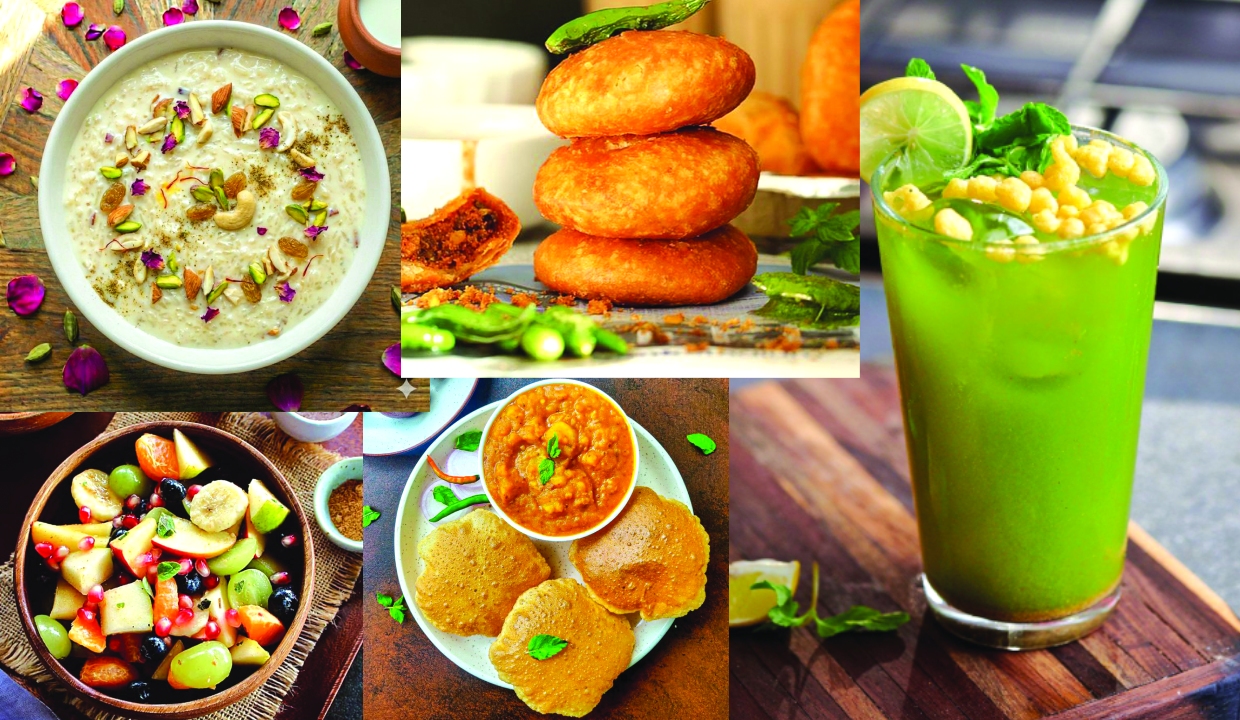
The food associated with the day often begins with offerings that are simple, pure and cooling. Fruits such as banana, mango, melon, watermelon, cucumber and seasonal produce are placed before Maa Ganga or offered during household worship. In the heat of Jyeshtha, fruit carries the wisdom of the season as it is light on digestion, nourishes and refreshes, and reminds the devotee that sacred food need not always be elaborate. Alongside fruits, many families offer batasha, mishri, peda, small laddoos and portions of halwa or kheer. These foods are first offered, then received as prasad, and only afterwards enjoyed. This sequence is central to the meaning of the festival, because it places gratitude before consumption. From this foundation of prasad, the household kitchen gradually opens into a fuller festive meal. In many homes of the Ganga belt, sooji halwa or atta halwa is prepared after the morning worship. Sooji halwa is made by slowly roasting semolina in ghee until its fragrance deepens, then cooking it with water or milk and sweetening it with sugar or jaggery. Cardamom, raisins and nuts may be added, though the preparation often remains simple. Atta halwa, made with whole wheat flour, carries a warmer, earthier taste and a denser texture. Both dishes are associated with worship because they transform everyday grain into something sacred through patience, fire, ghee and offering. When served with puri and sometimes kala chana, the meal becomes familiar, comforting and festive without losing its devotional character.
Kheer brings another important sweetness to the day. Chawal ki kheer is prepared by slowly cooking rice in milk until the grains soften and the milk thickens into a creamy consistency. It is sweetened and flavoured with cardamom, and sometimes enriched with saffron, almonds or raisins. In households observing a fasting discipline, makhana kheer or sabudana kheer may be preferred. Makhana is lightly roasted in ghee before being simmered in milk, while soaked sabudana pearls are cooked until they become soft and translucent. They are enjoyed after puja, shared with children and elders, and often served in small portions because their purpose is not indulgence alone, but auspicious nourishment.
The savoury side of the Ganga Dussehra meal usually reflects the tradition of North Indian sacred cooking. Puri is one of the most familiar preparations, made by kneading wheat flour into a firm dough, rolling it into small discs and frying them until they puff up. It is often paired with aloo sabzi cooked without onion and garlic, using cumin, ginger, green chilli, turmeric, tomato and coriander. The potatoes are simmered until they soften and partially break into the gravy, creating a dish that is simple, satisfying and suitable for a post-puja meal. When fasting rules are stricter, regular flour may be replaced by kuttu or singhara flour, and the puris are prepared with boiled potato added to help bind the dough. These are then served with vrat-style aloo sabzi or plain curd.
Alongside aloo, seasonal vegetables bring balance to the plate. Kaddu ki sabzi is widely suited to festive meals because pumpkin carries a natural sweetness that responds beautifully to cumin, fenugreek, ginger, turmeric, amchur and a hint of jaggery. It is soft, mildly tangy and comforting, and pairs well with puri or kachori. Lauki, or bottle gourd, brings an entirely different quality. It is cooling, light and gentle on the stomach, which makes it especially appropriate for a summer festival. Lauki may be cooked dry with cumin and green chilli, or prepared in a light gravy with minimal spices. In a meal that also includes fried items and sweets, such vegetables remind us that Indian festive cooking is not only about richness. It is also about balance, digestion and seasonal intelligence.
In some households, the meal becomes more elaborate with kachori, chana and lentil preparations. Moong dal kachori or urad dal kachori is prepared by stuffing spiced lentil paste into dough and frying it until crisp. The filling is usually seasoned with fennel, asafoetida, cumin, coriander and mild spices. It may be served with aloo sabzi or kaddu, creating a festive combination that is enjoyed after worship or offered to guests. Kala chana, soaked overnight and boiled until tender, may be tempered with cumin, ginger and mild spices, then finished with coriander and lemon. Sometimes it is served as part of a prasad-style combination with halwa and puri. In other homes, moong dal khichdi may replace richer foods. Rice and split moong dal are cooked together with turmeric, cumin, ginger and ghee, resulting in a soft, nourishing preparation that reflects simplicity rather than celebration for its own sake.
For those who observe vrat, the cuisine of the day adapts appropriately. Sabudana khichdi is prepared with soaked tapioca pearls, roasted peanuts, cumin, green chilli, boiled potatoes and sendha namak. A squeeze of lemon brings freshness, while coriander adds aroma. Sama rice khichdi, made from barnyard millet, is cooked with potatoes, cumin and mild spices, and often eaten with curd. These foods allow the devotee to remain within the discipline of fasting while still receiving energy during the summer day. Dahi also plays an important role in this seasonal logic. Plain curd, cucumber raita, boondi raita or dahi aloo may accompany the meal. Cucumber raita, made with grated cucumber, curd, roasted cumin and rock salt, is especially suited to Jyeshtha because it cools the body and softens the heaviness of fried foods besides being a natural probiotic.
The sweet foods of the festival extend beyond halwa and kheer into the broader festive traditions of the Gangetic region. Malpua may be prepared from a batter of flour, milk, fennel and sometimes mashed banana, then fried and lightly dipped in sugar syrup. Pua, often simpler, may be made with wheat flour, jaggery or sugar, and a touch of fennel or coconut. Thekua, especially associated with Bihar and eastern Uttar Pradesh, belongs naturally to the wider sacred food culture of the region, even though it is not exclusive to Ganga Dussehra. Made with wheat flour, jaggery, ghee and sometimes coconut or cardamom, it is shaped and fried until firm. These sweets are valued because they travel well, and can be shared with family, neighbours or visitors. They reflect a form of hospitality in which food becomes both offering and memory.
The beverages of Ganga Dussehra deserve a special place because the festival is inseparable from water, summer and daan. Sattu sharbat, made by mixing roasted gram flour with water, black salt, roasted cumin and lemon, is one of the most practical drinks of the Ganga belt. A sweet version may be made with jaggery. Aam panna, prepared from boiled or roasted raw mango pulp, mint, cumin, black salt and jaggery or sugar, protects the body from heat and carries the sharp freshness of the season. Bel sharbat, made from the pulp of the wood apple fruit, is deeply cooling and valued in many North Indian homes. Lassi, chaas, shikanji, jaljeera, rose sharbat and tender coconut water may also be served or distributed. On this day, offering a drink to a pilgrim, worker, neighbour or passerby becomes more than hospitality. It becomes a sacred response to thirst.
The significance of this cuisine is therefore not confined to the dining table. It begins at the riverbank, in the offering, in the home kitchen, in the act of preparing prasad, in the sharing of fruit, in the serving of water, and in the gathering of family after worship. Elders often guide the ritual order, women shape the offerings with care, children help arrange fruits and sweets, and the household meal becomes a continuation of prayer. In pilgrimage towns, the atmosphere is shaped by temple bells, crowded ghats, flower sellers, lamps, chants and the smell of food being prepared for families, pilgrims and those in need. In homes far from the river, the same spirit is recreated with Ganga jal, seasonal food and remembrance.
What makes Ganga Dussehra cuisine meaningful is not the claim that every dish belongs exclusively to this one festival. Its significance lies in the way these foods gather around a sacred idea. The river gives water, the fields give grain, the cow gives milk, the trees give fruit, and the household gives thanks. Food becomes the bridge between ecology and devotion. Central to this way of life, the flowing waters of Maa Ganga symbolizes both physical nourishment and the possibility of inner purification and spirituality.
In our time, Ganga Dussehra also carries a greater responsibility. To revere Maa Ganga cannot mean prayer alone but respect for rivers, water bodies and the natural systems that sustain life. The cuisine of the day teaches us these lessons and asks us to offer before consuming, share before storing, eat according to season, and recognise that nourishment is never produced by human effort alone. I believe that in preserving such festivals and their culinary traditions, we preserve more than recipes. We preserve a civilisational understanding of gratitude. Ganga Dussehra reminds us that when food is prepared with purity, shared with generosity and received with humility, it becomes more than a meal. It becomes a continuation of sacred memory, flowing like the river herself from one generation to the next.
The writer is Secretary, Cuisine India Society; Views presented are personal.