Ugadi: Six Tastes, One Civilisational Memory
The advent of Chaitra, the first month of the Hindu lunar calendar, marks the beginning of the new year in several parts of India. Coinciding with the full bloom of Vasanta Ritu, when the air grows warmer and the neem flowers bloom, the occasion carries deep seasonal, cultural and spiritual significance. In parts of southern India, especially in Karnataka, Andhra Pradesh, and Telangana, the first day of the season, Chaitra Shukla Pratipada, is observed as Ugadi, the commencement of a new year heralding both a seasonal renewal and a reaffirmation of an ancient cultural ethos.
Some Puranic traditions associate this day with the beginning of creation by Lord Brahma. It also marks the first day of Chaitra and the opening of the new year in the Shalivahana Saka calendar, the ancient calendar used in regional almanacs and public records. In time, this day assumed both metaphysical and social significance. Temples and royal courts marked it with religious congregations, prayers, and the recitation of the Panchanga, sometimes referred to as Panchangam, the annual almanac through which planetary alignments, seasonal predictions, and agricultural forecasts were interpreted. Even today, this practice remains central to the occasion. Families and communities gather to heed forecasts of weather and rainfall, productivity and prosperity that act as reminders of the cosmic influence on human life.
The days preceding Ugadi are filled with excitement and expectation. Homes are cleaned, doorways adorned with fresh mango leaf toranas to welcome good fortune, and courtyards are decorated with colourful rangoli. New clothes are worn after oil baths signifying purity and prayers offered before household deities. Yet it is in the kitchen that the philosophy of the festival finds its most intimate expression. If the almanac offers a vision of the year to come, the festive meal prepares you to celebrate it.
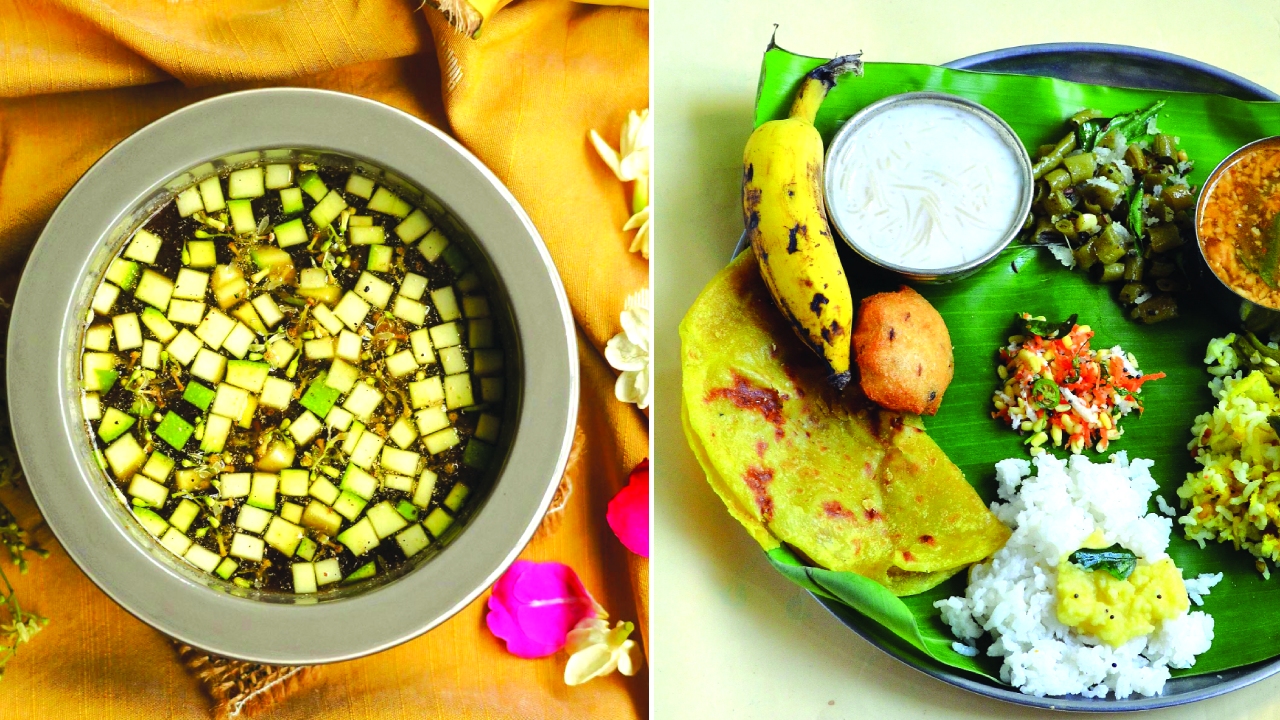
The defining dish on this occasion is the Ugadi Pachadi, an eloquent seasonal representation of the underlying philosophy of the day. Prepared with neem blossoms, jaggery, tamarind pulp, raw mango, green chilli, and salt, it unites the six primary tastes recognised in Indian culinary traditions, bitter, sweet, sour, pungent, bright, and saline, representing the various moods of life, into a single delectable offering. Neem is cleaned to soften its bitterness, tamarind pressed for depth, jaggery dissolved and strained, and mango grated finely. The final balance of these ingredients rests on individual preferences and not on rigid recipes. In Karnataka, the creative pairing of Bevu Bella, neem and jaggery, expresses the same insight and maintains the harmony of different flavours. In this elaborate calibration lies the essence of Ugadi and the recognition that the events of the year ahead, should be approached with similar equilibrium and harmony.
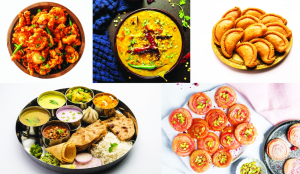
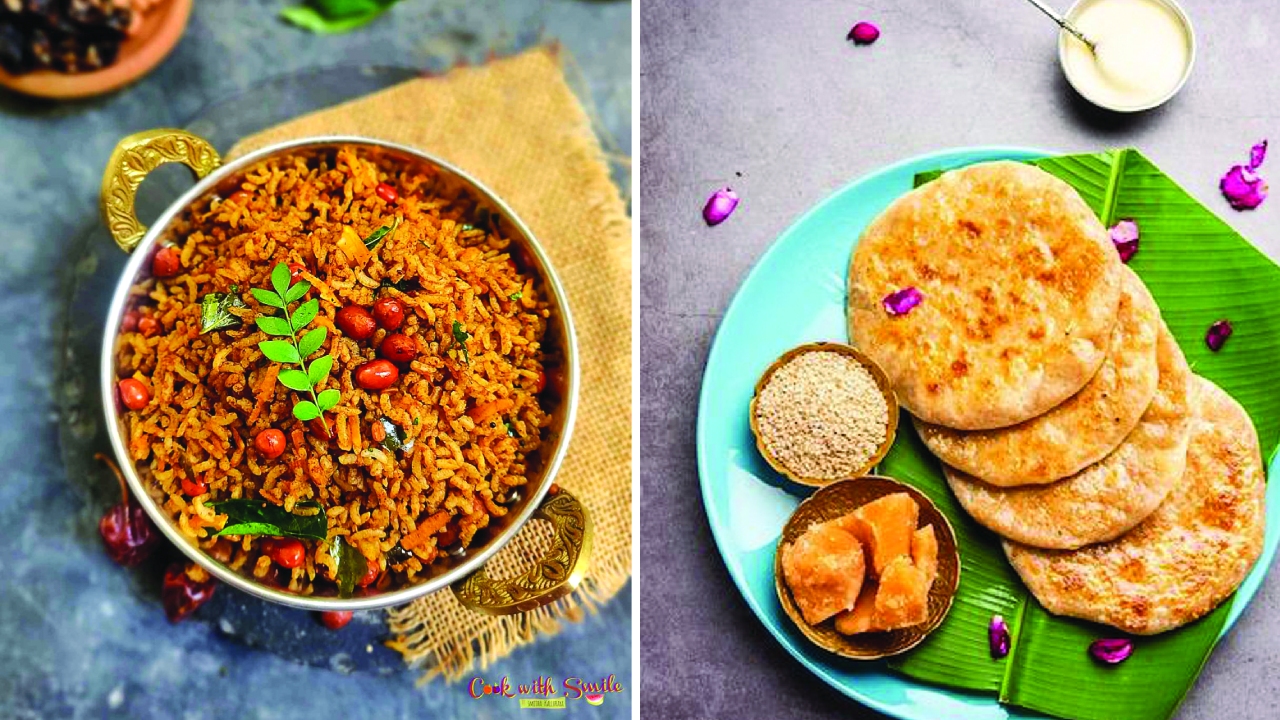
From this symbolic beginning, the festive meal unfolds in a wider spread shaped by the agricultural patterns of the Deccan plateau. Rice preparations form the backbone of the Ugadi thali, expressing regional identity. In Andhra Pradesh and Telangana, Pulihora is indispensable. Tamarind pulp is simmered slowly with turmeric and salt until it thickens, then mixed with cooled rice, ensuring that each grain remains separate. A tempering of mustard seeds, chana dal, urad dal, dried red chillies, peanuts, and curry leaves is poured over while still hot, releasing fragrance and adding crunch to the dish. Pulihora is equally suited for temple offerings and domestic servings and it nourishes without being heavy with its sourness suiting the changing season.
Alongside it appears Mamidikaya Pulihora, or mango rice, made with fresh raw mangoes which capture the early fragrance of spring. Raw mango is grated and gently sauteed with green chillies, curry leaves, turmeric, and tempered seeds before being cooked with rice. Peanuts or cashews lend texture, turning the preparation into a complete festive meal rather than a mere accompaniment. Besides being a seasonal preparation, Mamidikaya Pulihora is easy to prepare in large quantities and also serves as prasadam. Its balance of sourness and spice awakens the senses after the austerity of late winter, aligning with the New Year's call to alertness and renewal.
Karnataka's festive table is distinguished above all by Obbattu, also known as Holige, a delicacy whose preparation depends as much on technique as on its ingredients. Chana dal is cooked until tender and drained thoroughly before being blended with jaggery and cardamom into a smooth filling. The dough made of wheat, kneaded with oil or ghee, is rested until pliant, then rolled with the filling. This is done with great care so that the sweet centre is enclosed without rupture. Roasted patiently on a griddle and finished with ghee, the bread emerges soft, fragrant, and lightly bronzed. In Andhra Pradesh and Telangana, similar versions known as Bobbattu are made with subtle variations of thickness, filling, and finish, showing how one culinary idea acquires regional personality without losing its common identity.
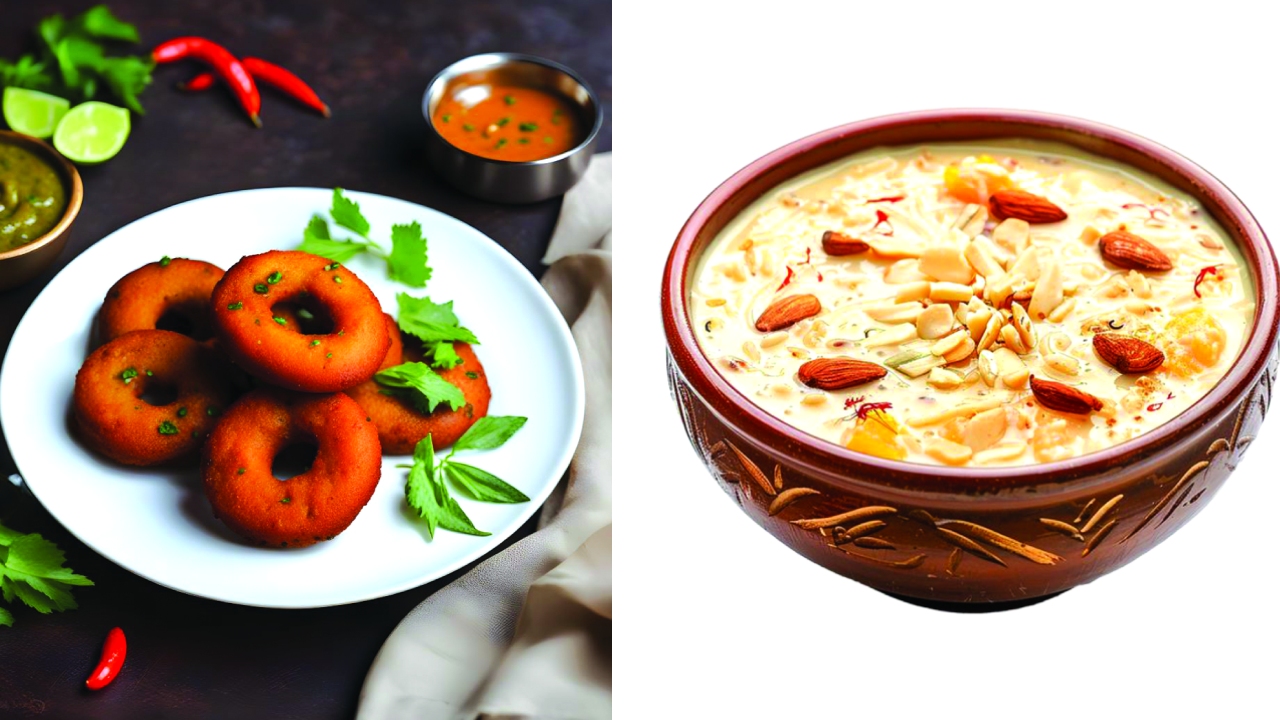
Sweetness is further expressed through Payasam, though here too the festive palate favours composure over extravagance. Whether prepared from vermicelli, rice, or lentils, the dish begins with milk or, in some households, coconut milk, simmered gradually until it thickens. Jaggery or sugar is added according to taste and traditions, while cashews and raisins fried in ghee are folded in towards the end. Cardamom adds fragrance and warmth. What matters most is the pace of preparation which is deliberately relaxed and meticulous to bring out the well recognized flavour. Offered first before the household shrine before being shared with the family, it reinforces a principle central to Indian festive practice that sweetness must be consecrated before it is consumed.
Savoury balance is essential to Ugadi cuisine as it seeks to mark a measured beginning of a new cycle and not indulgence. Kosambari, prepared from soaked moong dal, grated cucumber or carrot, fresh coconut, coriander, and a light tempering of mustard seeds, introduces freshness and restraint into the thali. Medu Vada, or Garelu in Telugu speaking households, adds crispness and satisfying depth, its fermented urad batter producing a contrast of a crisp surface and inner softness. Accompanying this are chutneys of coconut and tomatoes that are grated or crushed along with roasted chana dal, green chillies, a small piece of ginger, and salt. A little water is added to achieve a smooth yet lightly textured consistency. Besides bringing their vibrant colours to the plate, the coconut lends body and sweetness, while the tomatoes introduce a soft tang making for an irresistible combination. The chutney is finished with a tempering of mustard seeds, curry leaves, and dried red chillies briefly crackled in hot oil and poured over the surface.
Seasonal vegetable dishes commonly include raw banana, ash gourd, ridge gourd, bottle gourd, beans, or pumpkin, prepared with coconut, lentils, or mild spice according to regional habits. Papad and pickle sharpen the meal, while curd rice completes the menu, with its cool and digestive properties after the flavours that precede it. The arrangement is deliberate. Ugadi meals are composed to balance the heat of spices with the coolness of rice and coconuts, richness with refreshment, and sustenance with reflection, in keeping with the spirit of the festival.
A host of beverages accompany Ugadi's culinary experience, offering refreshment suited to meet the gentle warmth of early spring. Among the most traditional preparations is Panakam, a drink made from jaggery dissolved in water and flavoured with dry ginger and cardamom. Light yet restorative, it is valued both for its cooling character and digestive properties, and in many households it is offered as an aperitif before the main meal begins. Alongside it appears spiced buttermilk, known regionally as majjiga or neer mor, where churned yogurt is diluted and tempered with roasted cumin, curry leaves, ginger, and occasionally green chilli. Its gentle acidity restores balance after richer foods and reflects the longstanding wisdom of pairing festive indulgence with digestive moderation.
As the mango season begins its advance, households also turn to beverages that preserve the fruit's tender vitality in its earliest form to capture the fruit's freshness. Raw mango panaka or lightly sweetened mango drinks combine grated green mango with jaggery, cumin, and water, producing a sharp yet refreshing preparation suited to the rising heat. In some homes, particularly in Karnataka, badam milk enriched with almonds, saffron, and cardamom are prepared as a celebratory drink served to guests, offering warmth and richness that complement the festive sweets that follow. Tender coconut water, sometimes lightly chilled and shared with visitors, provides a natural cooling drink with a host of electrolytes that rehydrates and refreshes. These drinks reflect the tropical landscape of the southern peninsula that is dotted with coconut groves and vast green rice and sugarcane fields.
The care devoted to the preparation of Ugadi cuisine merits recognition, befitting the commemoration of an ancient tradition that continues to be celebrated with reverence. Lentils are sorted and soaked, jaggery melted and strained, neem blossoms gathered delicately, and mangoes selected for firmness and aroma. Grinding, roasting, tempering, and rolling unfold over hours of shared labour, where cooperation is as essential as skill. Elders recall well rehearsed recipes, while younger members watch closely and learn how consistency is tested by touch rather than measurement, how aroma is judged before a spice mixture is removed from the flame, and how balance is restored when one element threatens to overpower another. A spoonful of Pachadi is often tasted together, inviting children to identify the six flavours and understand the symbolism attached to each. Patience while rolling Holige, restraint while balancing sourness and sweetness, and attentiveness while tempering seeds cultivate qualities that extend beyond cooking. In these acts, participation becomes an expression of devotion and identity, and the kitchen itself becomes a place where history is kept alive through practice.
It is my considered view that Ugadi should retain its significance in contemporary urban life, where households are smaller and time is scarce. Ingredients may be procured from markets rather than gathered at home, and certain recipes may be simplified, but the impulse to prepare this sacred traditional cuisine should be kept alive. Families should continue to gather for Panchanga Shravanam, whether in temples, community halls, or before elders at home. Afterall, year after year, generation after generation, Ugadi survives not because it is spectacular, but because it answers a recurring human need. It offers a disciplined form of renewal at the threshold of a new year, reminding families that beginnings must be received with gratitude, sobriety, and togetherness.
The traditions and cuisine of Ugadi, I believe, carry this enduring cultural significance precisely because they are transmitted through living experience rather than instruction alone. When these dishes continue to be prepared with care, they do more than preserve flavour. They sustain judgement, memory, and belonging, all of which are learned most deeply through participation. It is, therefore, our collective responsibility to ensure that such traditions endure not merely as inherited customs repeated by habit, but as living practices that are prepared, shared, and understood by those who will inherit them.
(The writer is Secretary, Cuisine India Society); views are personal