Containment today, regime change tomorrow? Lessons from history
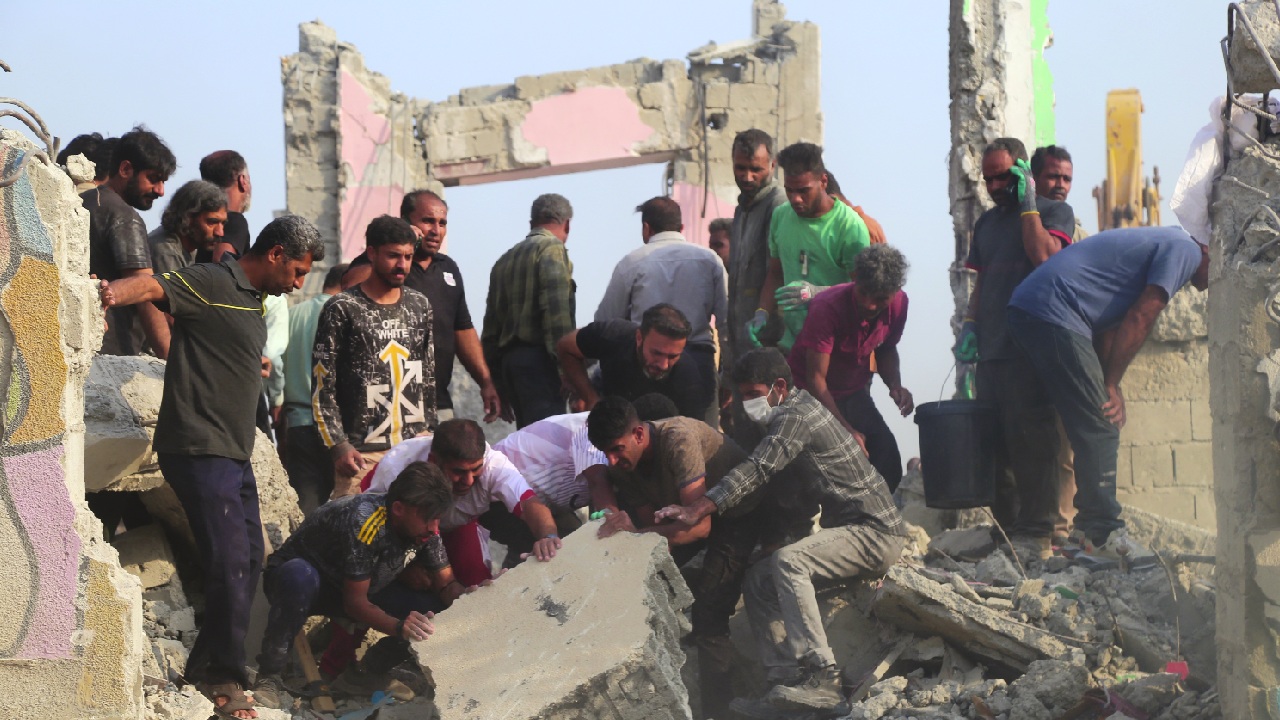
As tensions escalate in west Asia, the US stands at a familiar crossroads. Is the goal calibrated deterrence aimed at neutralising “imminent threats” from the Iranian regime, or the opening move in a far more perilous pursuit of regime change?
The debate unfolding today cannot be understood without examining a century of US foreign policy, where containment and regime change have alternated as preferred instruments of power. Neither carries an unblemished record but have been justified in the language of security, democracy and stability.
After World War II, containment became the US strategy. Popularised by George Kennan, it held that hostile ideologies, particularly communism, must be prevented from expanding. Alliances such as NATO and a network of military partnerships emerged from this thinking.
But containment was rarely passive. When Governments appeared too independent or ideologically suspect, Washington often moved beyond deterrence toward direct or covert regime change. Over time, the rationale expanded beyond communism to include counterterrorism, nuclear proliferation and regional dominance.
One of the most consequential early interventions occurred in Iran in 1953, when the CIA, working with British intelligence, engineered the overthrow of Prime Minister Mohammad Mosaddegh after he nationalised the country’s oil industry. Mohammad Reza Pahlavi, the Shah, returned, ceded a significant share of Iran’s oil fields to American firms, and ruled with growing authoritarianism. The backlash culminated in the 1979 Islamic Revolution, which installed the very regime Washington now seeks to restrain.
A similar trajectory played out in Guatemala in 1954, where US support helped topple President Jacobo Árbenz amid Cold War anxieties and corporate lobbying. The result was not democratic consolidation but decades of violence and repression.
These early interventions revealed two enduring truths. First, external interference often erodes domestic legitimacy. Second, the long-term consequences frequently outlast and outweigh the perceived short-term threat.
During the height of the Cold War, such interventions became almost routine. In Chile in 1973, American backing for forces opposing President Salvador Allende contributed to his overthrow and paved the way for General Augusto Pinochet’s dictatorship.
The regime justified itself as a bulwark against communism, but it entrenched repression and polarisation that scarred Chilean society for decades.
In the Congo between 1960 and 1965, US support for anti-Lumumba factions facilitated the rise of Mobutu Sese Seko. What followed was not stability but one of Africa’s most corrupt and extractive regimes, sustained in part by Cold War calculations rather than domestic legitimacy.
If these were Cold War chapters, the post-9/11 era provided even more sobering lessons. The 2001 invasion of Afghanistan, launched with broad international backing after the September 11 attacks, successfully removed the Taliban from power. Yet two decades of occupation and state-building failed to produce a resilient political order. When American forces withdrew in 2021, the Taliban swiftly returned. The episode has become a cautionary tale of how externally engineered governance collapses once external force recedes.
The 2003 invasion of Iraq was even more destabilising. Justified by claims that Saddam Hussein possessed weapons of mass destruction, the war dismantled the Iraqi state apparatus without a viable political successor. Sectarian violence surged, regional balances shifted, and the vacuum contributed to the emergence of ISIS. Iraq’s continuing fragility underscores how regime change by invasion can unleash forces far beyond initial strategic calculations.
Libya offers another warning. The 2011 NATO intervention, strongly supported by Washington, removed Muammar Gaddafi but left the country fragmented. Rival militias seized territory and oil infrastructure, state institutions collapsed, and external actors turned Libya into a theatre for proxy competition.
Even more indirect efforts have produced unintended consequences. In Syria, covert American assistance to rebel groups failed to unseat Bashar al-Assad and instead became part of a protracted civil war that displaced millions and destabilised neighbouring states.
If invasion has often proved costly, containment has appeared comparatively restrained. In West Asia, efforts to limit Iran’s regional reach have included sanctions, diplomatic isolation and the forging of new alignments such as the Abraham Accords. These strategies aim to constrain rather than topple. Yet containment, too, carries limits. It may slow rival power projection but rarely addresses underlying grievances. In Yemen and Syria, containment has coexisted with proxy warfare, prolonging humanitarian catastrophe without resolving core disputes.
History shows that once military escalation begins, political aims often expand beyond their original mandate. Regime change, whether overt or covert, rarely delivers stability. Toppling a Government is far easier than building a legitimate successor, and the vacuum that follows breeds insurgency, factional conflict and regional spillover. Iraq and Libya remain stark reminders that the most dangerous phase of intervention begins after the regime falls.
Containment, especially when paired with diplomacy and multilateral engagement, may offer fewer immediate risks. But it demands patience, clarity of purpose and a willingness to accept imperfect outcomes. It is a strategy of management rather than transformation.
For Iran, the stakes are exceptionally high. The country is not a marginal state but a deeply rooted civilisation with strong institutions, a large population and significant regional networks. Any attempt at forced political reconfiguration would reverberate across the Gulf, Israel, Iraq, Lebanon and beyond. Energy markets would react. Proxy theatres could ignite. Domestic Iranian nationalism, historically sensitive to foreign interference, would likely intensify.
The historical record is sobering. American ambitions to remake foreign regimes have seldom delivered stable democracies. More often, they have deepened conflicts, hardened anti-American sentiment and created vacuums filled by forces more radical than those displaced.
None of this absolves the regime in Iran or its undemocratic and repressive treatment of the Iranian people. But strategic prudence requires recognising limits. Power can depose rulers. It cannot manufacture legitimacy.
As US-Israel recalibrates its Iran policy in the wake of air strikes, it would do well to heed the hard lessons of the past century. History does not guarantee that regime change will fail. But it strongly suggests that the costs, intended and unintended, are almost always higher than initially assumed.
(The writer is Senior Fellow at the Manohar Parrikar Institute for Defence Studies and Analyses, New Delhi) ; views are personal
Leave a Comment
Comments (1)
Rightly argued that American efforts to remake foreign regimes have rarely produced stable democracies. More often, they have intensified conflicts, fuelled anti-American sentiment, and left power vacuums.