India’s balancing act in the West Asia
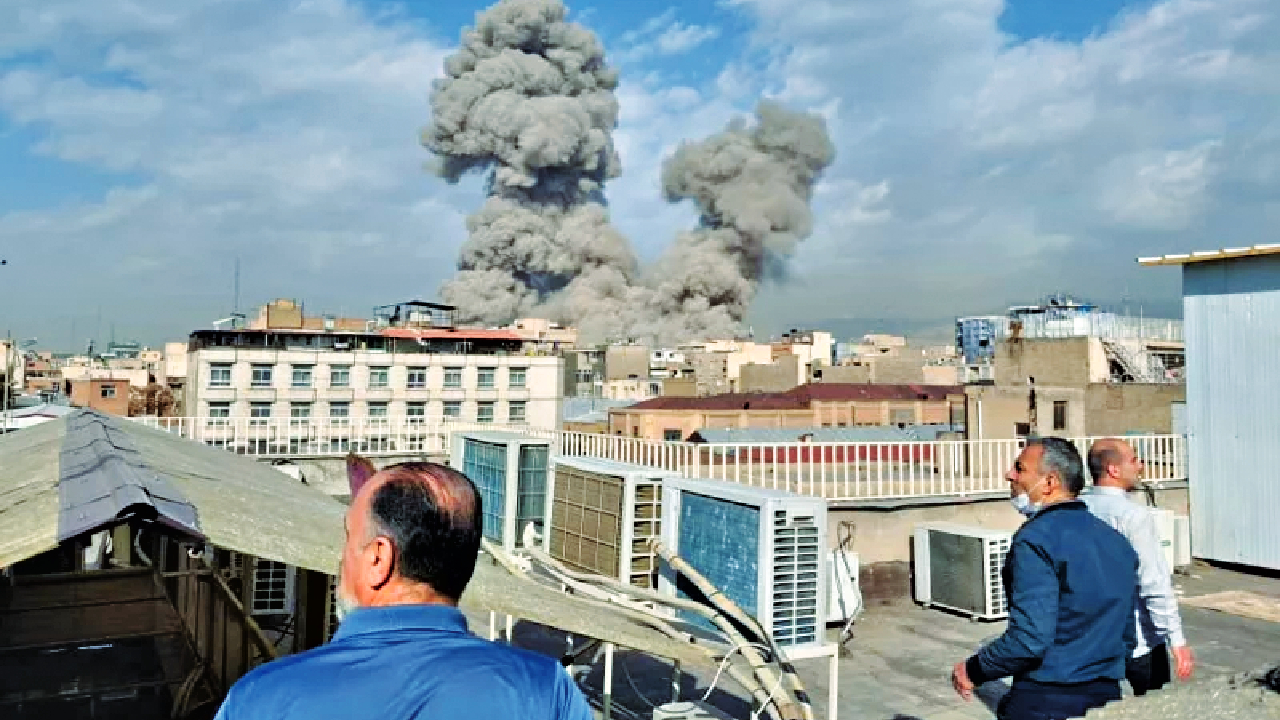
To assume that there is no sectarian angle to the attack on Iran is to live under a rock. What started as dispute over leadership after the death of the holy prophet, soon evolved into a irreconcilable theological divide of Shia-Sunni framework. First signs of the violent divide within the Ummah (Islamic World) came with the First Fitna (656-661 CE). Since then the sectarian dissonance got institutionalised within the respective sects.
In majority Shia Iraq, the Sunni leader Saddam Hussein had a predominantly Sunni Military and he diminished his Shia populace. Recently deposed Bashar al-Assad led Syria, had majority Sunni populace which was ruled by a predominantly Shia (Alawite) clique. In Sunni majority Yemen, the Shias were outliers. In majority Shia land of Bahrain, the Shias are kept under tight control by the minority Sunni monarchy of the House of Khalifa. In countries like Lebanon who have almost equal number of Sunnis and Shias, each side has had its own protective militias and turfs. In other countries like the Sunni-majority Pakistan or Afghanistan, the Shias have been routinely suppressed and openly discriminated against.
Unsurprisingly when Iran was coming under threat from Israel and the United States of America, the predominantly Sunni Arab Sheikhdoms chose to either remain silent or played meaningly platitudes. In many ways these Arab Sheikdoms actually supported the Israeli cause (beyond pursuing the Abraham Accords), but without officially saying so. On 13th-14th June, when Iran was retaliating to Israeli strikes on Iran by launching drones at Israel, the Jordanian Air Defenses actually intercepted and shot down the Iranian drones from hitting Israel. Coincidentally, Jordan was the second Arab country (after Egypt) to normalise relations with Israel following their Israel-Jordan Treaty of Peace, as way back as 1994!
In recent times, it has only been Iran and its co-sectarian militias like the Hezobollah (Lebanon) or the Houthis (Yemen) who have offered any modicum of opposition to Israel following the pummeling of Gaza Strip and the killing of nearly 70,000 Palestinian Gazans - ironically predominantly Sunnis. The Arab Sheikhdoms and other major Islamic powers like Turkey, Malaysia, Indonesia or even Pakistan have remained content to “express concern”, “call for calm”, and suchlike mealy-mouthed inanities. Therefore the recent frustrated Iranian counter-attacks on Arab Sheikdoms like UAE, Qatar or Saudi Arabia (all with American Military bases), elicited sharp anger against Iran, which itself was reeling under attacks by Israel and the USA, simultaneously. Today the sectarian divide in the Middle East theatre is clearly visible.
In the Indian narrative, the early signs of such divisive sectarianism came during the rule of the 17th Century under Aurangzeb, who was less accommodating and tolerating of the Shia sect. In independent India, the first Shia-Sunni violence came with the 1969 Lucknow Riots, after which the phenomenon of tensions surrounding the Muharram procession, became commonplace.
While the sectarian tensions have come down significantly in the last couple of decades, it is still delicate e.g., an offensive social media post had led to sectarian tensions in 2025 in Kanpur. For the 25 million odd Shias in India, certain enclaves like Lucknow, Kargil or Budgam are Shia-dominated - but 200 odd million Sunnis are the clear majority. It is in line with the global Shia population estimated at 10-15% of the Ummah, with about 300 million globally.
For Shiite faith worldwide, Iran has a special, emotional, and psychological significance as the centrality of their faith, even though many other places like Najaf and Karbala (both in Iraq), Sayyida Zeinab Shrine (Syria) etc, are very important. This is especially so, for the “Twelver” Shias. Therefore the institution of Ayotollah (Persian for Sign of God) is rooted in the seminary system (hawza) where the Grand Ayotollah or Marja is the top faith authority whose rulings are widely followed.
It transcends borders and resonates in the far-flung by-lanes of Srinagar, Lucknow, Lahore, Kabul etc., wherever the Shias reside.
With this backdrop, the recent killing of Iran’s Supreme Leader, Ayatollah Ali Khameini’s death by bombing conducted by Israeli jets has led to an outpouring of grief, protests, and mourning rallies.
Sentiments of many Indian Shias could understandably be wounded and it is imperative to handle the same with utmost dignity, care, and maturity. Dialogue with the Shia leaders to assuage their grief without pandering to politics of divide-and-rule, or of inelegantly celebrating the moment, must be ensured. Many politicians and the so-called “fringe elements” are prone to making provocative statements and the government must disallow any such vituperative outpourings, especially in its name.
India has had civilisational relations with Iran, and more recently with Israel. Iran under the Ayotollah regime had often taken India’s side on Kashmir in the OIC meetings, worked together in Afghanistan, and was home to the geostrategic development of the Chabahar seaport. Indeed, it also worked increasingly with Israel with the Indian Prime Minister having concluded a trip to Israel, days before the attack on Iran.
But it must delink the sovereign’s geopolitical moves from the treatment of its “own”, especially in a sensitive and emotional moment like now.
India’s track record on sectarian rift within communities has been amongst the best in the world, and therefore care to ensure that it remains so, going forward, is critical.
The writer, a military veteran, is a former Lt Governor of Andaman & Nicobar Islands and Puducherry; views are personal