From Mithila to the world: Modi’s 4,399 days and Bihar’s quiet transformation
Guided by the vision of Viksit Bharat 2047, the Modi government’s Act East and Purvodaya policies have repositioned the Northeast from the geographic periphery to a gateway of national growth
In a democracy, the true measure of time is not the turning of calendar pages but the transformation it brings to people’s lives. Prime Minister Narendra Modi’s completion of 4,399 consecutive days as an elected Prime Minister marks a significant milestone in the country’s democratic journey - one that speaks as much to the depth of popular trust as it does to the consistency of purposeful governance.
The NDA’s third consecutive mandate under his leadership is not merely a symbol of political continuity. It is an affirmation of a transformative journey that has connected large parts of India, particularly Bihar and the Northeast, to the mainstream of national development. That Prime Minister Modi has reached this landmark without the advantage of inherited political legacy, rising instead through determination, hard work, and the sustained trust of the people, makes the achievement all the more meaningful.
This milestone also carries a historical dimension. In surpassing the record of India’s first Prime Minister, Pandit Jawaharlal Nehru, Prime Minister Modi has done so in a political environment far more diverse and competitive than the one Nehru governed in, when the Congress party held near-unchallenged dominance over national life.
For much of the twentieth century, Bihar’s immense potential went largely unrecognised despite its central role in the nation’s political and cultural history. Over the past two decades, under the stewardship of former Chief Minister Nitish Kumar and through twelve years of Prime Minister Modi’s leadership at the Centre, the state has witnessed a quiet but consequential transformation. Bihar is no longer spoken of primarily in terms of its challenges. It has entered the national conversation as a state of growing opportunity, expanding possibility, and deep cultural richness.
It is a matter of particular pride that Prime Minister Modi has consistently worked to place Bihar’s cultural heritage on the global stage. Mithila painting stands as perhaps the finest example of this commitment. Once an art form confined to the walls of homes and village courtyards, it has today become a recognised symbol of India’s civilisational identity, finding its way to prestigious platforms across the world. Each time the Prime Minister presents Madhubani-inspired gifts to heads of state and distinguished visitors, he is not merely offering a work of art. He is introducing the world to the creative consciousness, living traditions, and cultural spirit of Mithila.
The story of Mithila Makhana follows a similar arc. For years, it remained a familiar but largely local agricultural product. Today, it is steadily earning a distinct identity in global markets as a nutritional superfood.
The Geographical Indication tag provided formal recognition of its uniqueness and value, while the announcement of a dedicated Makhana Board in the Union Budget signalled a meaningful policy commitment to transforming local produce into a global brand. Together, these initiatives have opened new avenues of livelihood and income for thousands of families across Mithila.
One of the defining characteristics of Prime Minister Modi’s approach to governance has been his conviction that development cannot be reduced to roads, bridges, and digital infrastructure alone. He has sought to weave cultural heritage, traditional knowledge, local products, and tourism into the broader fabric of national progress.
This is why places such as Ayodhya, Kashi, Kedarnath, and the cultural centres of the Northeast have received renewed attention and investment. Mithila, the sacred land associated with Mata Sita, has similarly found a stronger and more assured place in both the national and international imagination.
Under his leadership, India has established itself on the world stage not only as a rapidly growing economic power but as a civilisational and cultural force of consequence. From yoga and Ayurveda to Madhubani art and Makhana, there has been a sustained and deliberate effort to convert India’s diverse cultural strengths into instruments of global engagement and soft power.
India’s foreign policy has undergone an equally significant transformation. On the question of terrorism, India’s voice today is clearer, more confident, and more consequential than at any previous point. The all-party parliamentary delegations dispatched to various countries following Operation Sindoor gave expression to this resolve. Their purpose was to help the international community understand India’s concerns and its unwavering commitment to combating terrorism in all its forms.
I had the privilege of leading one such delegation. In meetings with policymakers, parliamentarians, analysts, and media representatives across several countries, I witnessed firsthand the seriousness with which India’s perspective is now received and the respect it commands. This transformation is not the product of a single moment. It reflects a consistent, proactive, and far-sighted diplomatic strategy pursued with discipline over more than a decade.
History will, in its own time, render its verdict on every government and every leader. Yet it is difficult to dispute that over the past decade, India has experienced a meaningful shift in its self-confidence, global standing, and developmental ambition.
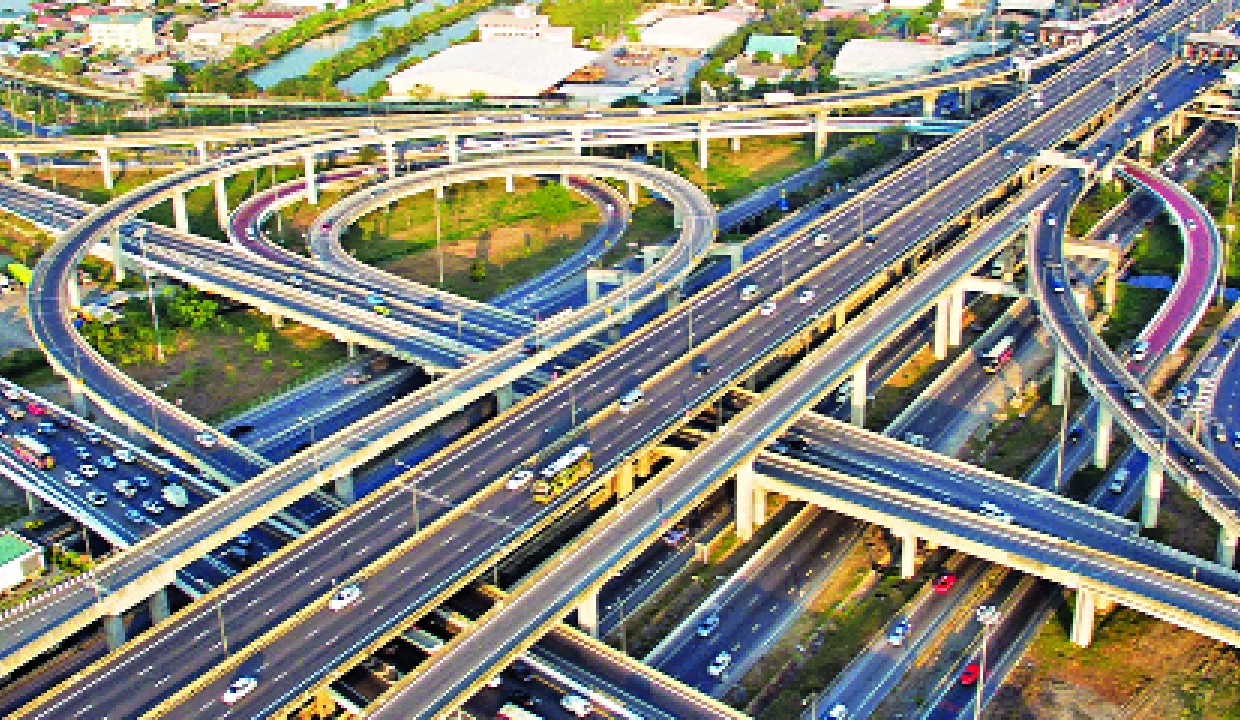
Guided by the vision of Viksit Bharat 2047, the Modi government’s Act East and Purvodaya policies have repositioned the Northeast from the geographic periphery to a gateway of national growth. Enhanced road, rail, and air connectivity has not only accelerated economic activity across the region but deepened national integration in ways that were long overdue.
For Bihar, which has historically contended with significant developmental constraints, this period has been especially consequential. The state has received enhanced economic support in successive Union Budgets, with sustained initiatives spanning infrastructure expansion, new expressways and bridges, railway modernisation, airport development, and the strengthening of its agriculture-based economy.
The effective coordination between the NDA governments at the Centre and in the state has enabled Bihar to steadily scale new heights. I remain confident that, building on the foundation of good governance and infrastructure-led growth established under former Chief Minister Nitish Kumar, Bihar will continue to gather momentum in the years ahead.
Prime Minister Modi’s record of 4,399 consecutive days as an elected Prime Minister is, in the end, far more than a statistical achievement. It represents trust, continuity, and the kind of visionary leadership that endures because it delivers. More than anything, it reflects a transformative process that has given large parts of India, and Bihar in particular, new opportunities, a renewed sense of identity, and greater possibilities for the future. In a democracy, that remains the most enduring measure of successful leadership.
One of the defining characteristics of Prime Minister Modi’s approach to governance has been his conviction that development cannot be reduced to roads, bridges, and digital infrastructure alone
The writer is Working President of the Janata Dal (United) and a Member of Parliament, Rajya Sabha; Views presented are personal.