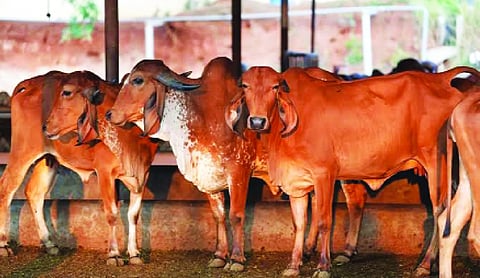

Few subjects in India’s traditional healthcare evoke as much discussion as Gaumutra. Revered in Ayurveda, questioned in public discourse, and increasingly examined by modern science, it represents a unique intersection of traditional knowledge, biomedical research, socio-cultural debate and public policy. The challenge today is to approach the subject not through ideology, but through objective evidence.
The debate surrounding Gaumutra extends far beyond traditional medicine. It now encompasses scientific inquiry, public health, and political discourse. Cow-derived dairy products are globally accepted as a rich source of nutrition. Ayurveda, India’s traditional system of medicine, has used cow-derived formulations for centuries as medicines. However, other than cow milk, public opinion often oscillates between unquestioning reverence and outright dismissal of these cow-derived therapeutic products. Neither extreme does justice to the subject. An objective assessment requires examining Gaumutra within its Ayurvedic context, alongside modern scientific evidence and broader insights from other bio-derived therapeutics. Samhita, Sushruta Samhita and Ashtanga Hridaya, classify Gaumutra among the Ashta Mutra, or eight medicinal animal urines. Ayurvedic pharmacology describes it as possessing Katu (pungent) and Tikta (bitter) tastes, Ushna (warming) potency and Tikshna (penetrating) properties.
Traditionally, Gaumutra has been prescribed to stimulate digestive fire (Deepana), improve metabolism (Pachana), support the management of skin disorders (Kushtha and Twak Roga), and address conditions such as Medoroga, Shotha and Udara Roga. It is also recognised as a Yogavahi, a catalytic medium believed to enhance the absorption and therapeutic efficacy of herbal, mineral and metallic preparations used in Ayurveda.
Equally important is the dosage form in which it is administered. Classical Ayurveda rarely recommends the consumption of raw, untreated cow urine. Instead, it emphasises Gaumutra Ark, a purified distillate obtained through controlled vaporisation and condensation, or its use in traditional formulations such as Panchagavya, which combines cow milk, curd, ghee, urine and dung in specific proportions. Processing and formulation have always remained integral to Ayurvedic therapeutics.
Scientific interest in Gaumutra has grown steadily over the past two decades. Laboratory analyses have identified a range of naturally occurring constituents, including urea, uric acid, allantoin, hippuric acid, phenolic acids such as gallic, caffeic, ferulic and salicylic acids, essential minerals including calcium, magnesium, potassium, sodium and phosphates, as well as enzymes. These findings have encouraged researchers to investigate their possible biological significance.
One of the most significant developments is research on ‘Cow Urine Distillate (CUD)’, also known as Go-Ark, as a potential bioenhancer. Research undertaken by the Council of Scientific and Industrial Research (CSIR), in collaboration with the Central Institute of Medicinal and Aromatic Plants (CIMAP), resulted in two U.S. patents in 2002 and 2005 relating to the use of CUD for enhancing the effectiveness of certain antibiotics and anticancer drugs. Studies cited in the literature suggest that CUD may improve the absorption of antibiotics such as rifampicin and ampicillin, as well as anticancer drugs including paclitaxel, thereby enhancing their efficacy.
Published laboratory studies have reported antioxidant activity through free-radical scavenging, while other investigations have demonstrated antibacterial and antifungal effects against several microorganisms, such as Escherichia coli, Staphylococcus aureus, Klebsiella species, Candida albicans, etc., under controlled laboratory conditions. These observations provide scientific leads for further investigation into the biological properties of Gaumutra and its distilled preparations.
Viewed in isolation, Gaumutra often appears exceptional. However, modern pharmacology has long relied on biologically derived materials for developing life-saving medicines.
Human urine has provided compounds such as urokinase and menotropins. Gila monster saliva led to the development of Exendin-4 for Type 2 diabetes. Hirudin from leech saliva, peptides from Jararaca viper venom, heparin, insulin and conjugated estrogens demonstrate the therapeutic potential of biological materials.
The distinguishing factor has never been the biological source itself, but the rigorous scientific process through which active molecules are isolated, characterised, standardised, tested for safety and evaluated through clinical trials.
The discussion gained renewed public attention in January 2025 when V Kamakoti, Director of IIT Madras, referred to the traditional medicinal uses of Gaumutra during a public address, citing its reported antibacterial, antifungal and digestive properties.
The remarks triggered immediate debate. Medical associations cautioned against promoting the consumption of unprocessed cow urine because of the potential risks of zoonotic infections and other health concerns. At the same time, supporters argued that traditional knowledge systems deserve scientific investigation rather than outright dismissal. The issue resurfaced after Prof. Kamakoti received the Padma Shri in 2026, with discussions once again extending beyond science into the broader realm of public discourse.
The continuing debate over Gaumutra reflects differences in scientific interpretation, public perception, cultural identity and political narratives. Exaggerated claims without sufficient evidence can undermine scientific credibility, while blanket rejection of traditional formulations risks overlooking potentially valuable avenues of investigation.
Another important issue concerns methodology. Scientific scepticism often arises from advocacy of raw, unprocessed cow urine rather than standardised preparations. Concerns regarding microbial contamination and zoonotic infections reinforce the need to distinguish between raw biological material and purified formulations such as Gaumutra Ark.
Equally important is the evidence gap. While laboratory findings are encouraging, large-scale, well-designed human clinical trials remain limited. Bridging this gap requires rigorous chemical profiling, safety evaluation, pharmacological studies, standardised manufacturing and robust clinical trials.
The discussion on Gaumutra should neither be driven by unquestioning belief nor automatic dismissal. Traditional knowledge and modern science need not stand in opposition. Moving beyond political rhetoric and focusing on evidence-based investigation offers the most credible path forward. Gaumutra Ark should be evaluated through rigorous scientific standards to establish its safety, efficacy and clinical relevance.