India’s widening strategic front
India’s strategic calculus in August 2026 is being tested on two increasingly important fronts: a new defence architecture taking shape in West Asia and a rapidly evolving political and strategic environment in Bangladesh on its eastern flank. Neither development warrants alarmism. But together they point to a more fluid regional order in which India will need strategic patience, credible deterrence and sustained diplomatic engagement.
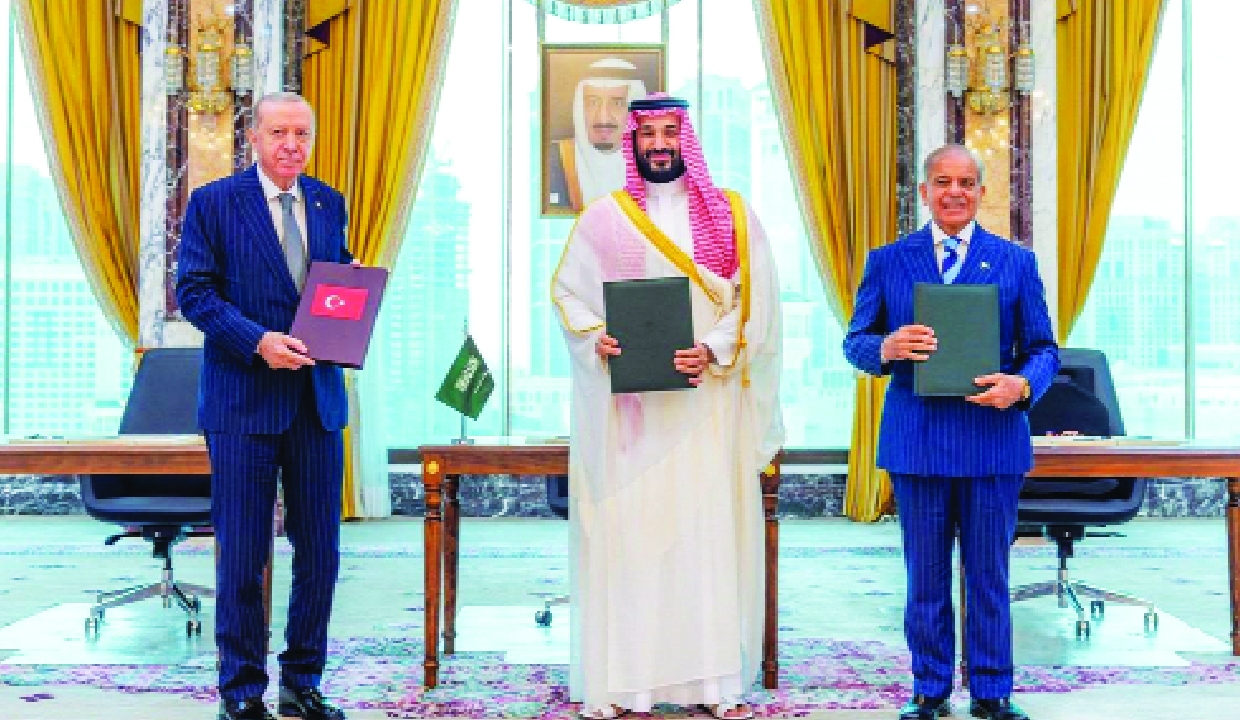
The first question is whether the Mecca Pact is symbolism or substance. On August 7, Saudi Arabia, Turkey and Pakistan signed the Makkah Joint Defence Agreement, declaring that an armed attack on one signatory would be treated as an attack on all - language clearly reminiscent of NATO’s Article 5. The agreement builds on the Saudi-Pakistan Strategic Mutual Defence Agreement of September 2025, but its significance lies in bringing Turkey, with its substantial military and defence-industrial capabilities, into the arrangement. Initial assessments understandably differed. The agreement’s collective-defence clause does not publicly specify the circumstances or mechanisms through which members would be obliged to respond.
This has led some analysts to view it as more a political signal than a fully operational military alliance. Saudi officials have also resisted portraying it as a formal “military axis”. That assessment, however, needs updating. Turkey has now indicated that the three countries intend to establish high-level political and military coordination mechanisms, conduct joint exercises across land, sea, air and cyber domains, and cooperate in unmanned systems, electronic warfare and artificial intelligence. The agreement also envisages joint defence development, production and technology transfer.
These provisions give the pact a degree of institutional and technological substance beyond symbolism. Yet it would still be premature to call it a NATO equivalent. The three countries have different strategic priorities, military systems and threat perceptions. Saudi Arabia’s principal security concerns remain centred on the Gulf and Iran; Turkey has its own ambitions and obligations as a NATO member; and Pakistan’s strategic focus remains heavily influenced by India. The durability of the arrangement will therefore depend on whether the three can translate political convergence into sustained military interoperability. Lt Gen Syed Ata Hasnain has offered a useful caution against exaggerated threat perception.
The psychological boost to Pakistan is undoubtedly significant, but external strategic alignments are rarely permanent. The priorities of Riyadh, Ankara, Washington and Beijing can shift rapidly, while Pakistan’s own tendency towards strategic overreach has historically carried costs. There is nevertheless a genuine Indian concern. Pakistan now potentially combines its nuclear capability and military experience with Turkish defence technology and Saudi financial and strategic weight. Turkey’s expanding defence cooperation with Pakistan, particularly in drones and advanced military technologies, deserves close monitoring. The emerging arrangement could strengthen Pakistan’s military modernisation even if the collective-defence clause is never tested. The pact also has an economic dimension.
Turkey’s exclusion from the India-Middle East-Europe Economic Corridor (IMEC), combined with its interest in alternative connectivity routes, could complicate India’s ambitions for regional connectivity. India should therefore continue strengthening its relationships with Saudi Arabia, the UAE, Israel and Qatar while maintaining pragmatic engagement with Ankara. Shashi Tharoor, writing recently on the pact, has similarly argued for a response combining deterrence, innovation and deeper Gulf engagement rather than panic. That broad approach is sensible. But India’s strategic challenge extends beyond the Mecca Pact itself. It lies also to the east. The description of Bangladesh as “another Pakistan” was recently advanced by Sajeeb Wazed Joy, son of former Prime Minister Sheikh Hasina. Speaking from the United States to the Foreign Correspondents’ Club in New Delhi, Joy alleged that Pakistan’s ISI now has an “open hand” in Bangladesh, that convicted militants have been released and that banned Islamist groups such as Hizb ut-Tahrir are operating more openly. He warned that Bangladesh could become a source of future terrorist recruitment and described it as another Pakistan on India’s eastern frontier.
These are serious allegations, but they need to be viewed in context. Joy is a deeply interested participant in Bangladesh’s internal political struggle, and his assertions cannot by themselves constitute an objective assessment of the country’s strategic direction. Pakistan has also denied the allegations concerning ISI interference. Yet dismissing the concerns would be equally unwise. India’s Parliamentary Standing Committee on External Affairs has already identified the growing influence of China and Pakistan in Bangladesh, along with the resurgence of Islamist forces, as significant strategic concerns. The committee has described the changing situation as one of India’s most serious challenges in Bangladesh since 1971. Bangladesh is undergoing a profound political transition, with warmer ties with Pakistan, substantial Chinese influence and concerns over Islamist mobilisation. Yet it cannot simply be equated with Pakistan. India’s priority should be to protect its interests whatever political direction Dhaka takes.
That means strengthening border management, monitoring extremist and intelligence networks, watching Chinese and Pakistani strategic activity, and maintaining channels of communication with all major political constituencies. Taken together, the developments in West Asia and Bangladesh reveal a broader strategic challenge. On India’s western flank, Pakistan is seeking to embed itself within a network involving Saudi Arabia and Turkey. On the eastern flank, Bangladesh’s political transition is creating greater space for China and Pakistan. The two theatres are geographically separate, but their implications for India’s security calculus could increasingly intersect.
India should therefore resist the temptation to see every new alignment as an emerging anti-India bloc. Saudi Arabia has substantial economic and strategic interests in India, and Turkey’s relationship with Pakistan does not automatically translate into a unified strategic front against New Delhi. Similarly, Bangladesh’s current political transition does not predetermine its long-term strategic orientation. What India does need is preparedness for the possibility that these relationships could reinforce one another during a future crisis. Pakistan’s diplomatic and military leverage could increase if it successfully converts bilateral partnerships into a broader strategic network. Turkish defence cooperation could enhance Pakistan’s technological capabilities, while Chinese influence in Bangladesh could add pressure on India’s eastern security environment.
The appropriate Indian response is therefore a combination of deterrence, diplomacy and strategic diversification. India must retain credible military preparedness on both its western and eastern fronts while simultaneously investing in economic partnerships, regional connectivity and political engagement. Its relationships with Saudi Arabia, the UAE, Israel and Qatar acquire added significance in this environment. Equally important is preserving India’s long-standing economic, cultural and people-to-people links with Bangladesh across political transitions. The emerging regional order should not be viewed through a binary lens of friends and adversaries. The Mecca Pact may evolve into a significant security arrangement, or its ambitions may ultimately be constrained by the divergent interests of its members. Bangladesh may move closer to China and Pakistan, or eventually seek a more balanced external posture. The outcome will depend less on today’s declarations than on how these relationships develop over time.
India’s strategic advantage lies in retaining the freedom to engage all sides while firmly protecting its national interests. The answer to a widening strategic front is not to widen the definition of the threat, but to sharpen the quality of India’s assessment and response. The region is entering a period in which old alignments are being reshaped and new ones are being tested. India’s response must therefore be neither alarmist nor complacent. It must combine credible deterrence with active diplomacy, economic statecraft with technological preparedness, and vigilance with strategic patience. In an increasingly multipolar neighbourhood, India’s greatest strength may ultimately be its ability to hedge without hesitating, engage without depending, and deter without overreacting.