Choosing India’s youth over political acrimony
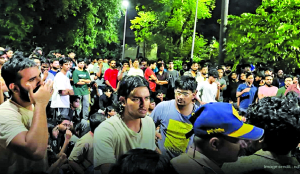
India's youth are not merely the country's demographic advantage; they are its greatest national asset. Every competitive examination, every innovation, every start-up, every scientific breakthrough and every sporting achievement reflects the aspirations of a generation determined to shape the nation's future. When examination irregularities caused concern among students, that concern was understandable. Those who prepare for years deserve a system that is fair and trustworthy. At demonstrations, including those held at Jantar Mantar, many students voiced legitimate concerns about examination integrity. Yet alongside these genuine voices, some individuals resorted to abusive personal slogans directed at Prime Minister Shri Narendra Modi Ji and his family. Slogans advocating confrontation rather than constructive dialogue received media attention, but they did not define the aspirations of India's youth.
The overwhelming majority of Gen Z Indians were not on the streets hurling insults. They were in libraries, classrooms, coaching centres and homes, preparing for their next examination, chasing their careers and striving to build their future. They deserve to be recognised as the true face of India's youth. A statesman understands this distinction.
Rather than allowing personal attacks to dominate the national conversation, PM Shri Prime Minister Modi chose to remain focused on the larger issue: the future of India's students.
This ability to absorb criticism without losing sight of governance is what distinguishes political leadership from statesmanship. Democracies will always witness passionate disagreement, and criticism is a natural part of public life. Leadership, however, is ultimately judged by whether
personal attacks are allowed to distract from national priorities.
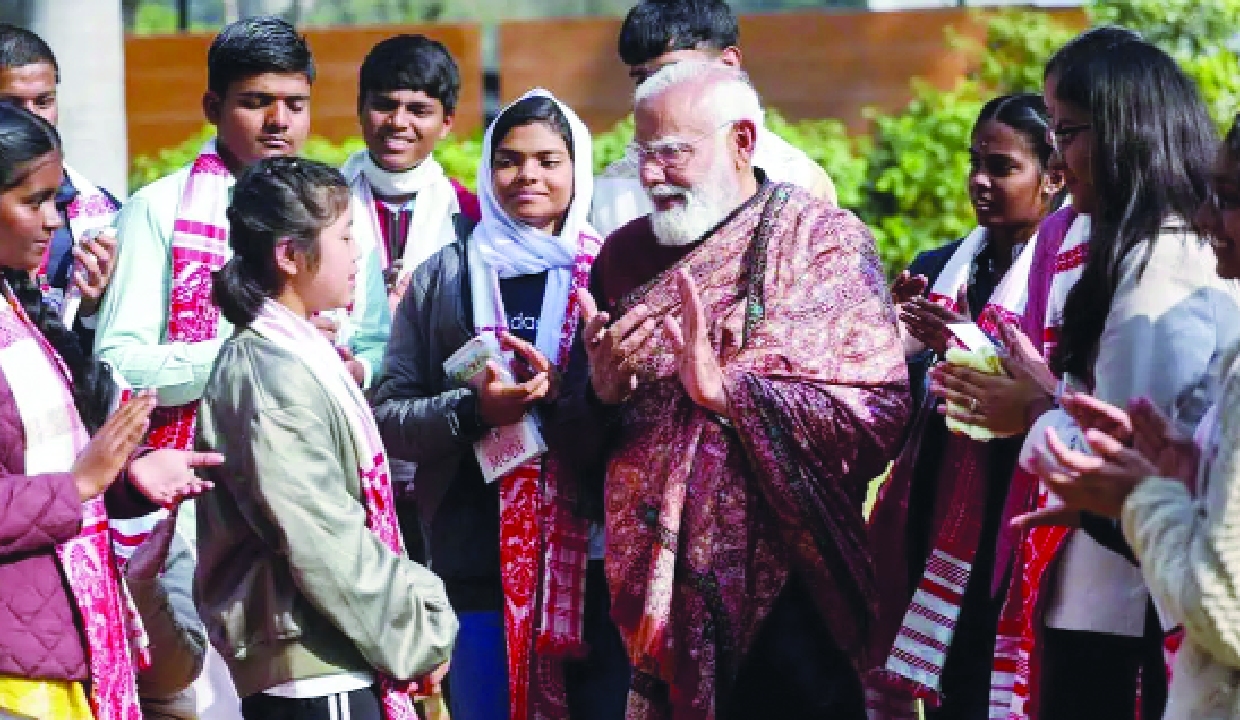
For over a decade, PM Shri Narendra Modi has consistently placed young Indians at the centre of his governance. Through Pariksha Pe Charcha, he has transformed the conversation around examinations, encouraging students to approach them with confidence, curiosity and emotional resilience rather than fear. His interactions extend beyond marks and rankings to mental well-being, time management and self-belief. Similarly, Mann Ki Baat has become a platform where young achievers find national recognition; student innovators, start-up founders, grassroots inventors, young scientists, sportspersons and social entrepreneurs alike, reinforcing the message that India's future will be shaped by its youth rather than by political division.
The Union Government has also worked to strengthen the ecosystem in which students compete, introducing structural reforms to strengthen confidence in public examinations. It has enacted a stringent law against unfair practices in public examinations, providing severe penalties for organised paper-leak rackets and those who facilitate examination fraud. It has strengthened coordination among central agencies and examination bodies, enhanced digital surveillance, encryption and the secure transport of question papers, and tightened cybersecurity for computer-based tests. Firm action against organised cheating networks, middlemen and complicit officials, together with stronger accountability mechanisms, is intended to ensure that future examinations are conducted with greater transparency and credibility.
The Modi Government's vision for youth extends even beyond examinations. The National Education Policy 2020 seeks to equip students with multidisciplinary learning, critical thinking and greater flexibility. Programmes such as PM Gati Shakti envision new economic opportunities through world-class infrastructure, creating jobs and enabling young entrepreneurs to join India's growth story. Digital India, Start-up India, Skill India, semiconductor manufacturing, artificial intelligence, drone technology and space-sector reforms are all designed with the aspirations of Gen Z in mind. The philosophy is consistent: invest in the capabilities of young Indians rather than merely manage their expectations.
The contrast is significant. While a handful of motivated voices may seek attention through provocative slogans, the aspirations of India's youth lie elsewhere. They seek quality education, employment opportunities, technological advancement and a nation that rewards merit. Prime Minister Modi's response reflected an understanding of this distinction. Rather than treating every angry slogan as representative of an entire generation, he separated a few disruptive voices from the millions of sincere students pursuing their dreams, demonstrating confidence in India's youth instead of cynicism towards them.
History often remembers leaders not for the insults they received but for the restraint they displayed in responding to them. Statesmanship lies not in winning every political argument but in refusing to let personal attacks overshadow national priorities. A leader who continues to engage with students through Pariksha Pe Charcha, celebrates young achievers in Mann Ki Baat, expands educational opportunity through reform and strengthens the integrity of competitive examinations sends a clear message: the future belongs to India's youth, and their aspirations must remain at the centre of governance.
That, ultimately, is the measure of leadership, not the ability to answer every provocation, but the willingness to rise above it in service of the nation.