The long history of India’s changing relationship with nature
For centuries, India’s landscapes have been shaped by communities whose lives and livelihoods have been closely connected to forests, rivers, mountains, wetlands, grasslands and wildlife. Forests, in particular, have sustained communities by providing food, fuel, fodder, fibres, fruits, medicinal plants, timber and water, while also supporting soils, water systems, local climates and biodiversity. For millions of forest-dependent communities, forests remain deeply woven into their livelihoods, traditions, customs and everyday lives.
Over generations, numerous communities across India developed customary practices to govern the use of forests, water sources, grazing lands and other common resources. Although these practices varied across regions, many were rooted in the understanding that human well-being is closely connected to the health of surrounding ecosystems. Sacred groves, community-protected forests, traditional water-harvesting systems and sustainable agricultural practices were among the ways in which communities conserved natural resources while meeting their livelihood needs.
This close relationship with nature also gave rise to a rich body of traditional ecological knowledge. Indigenous, tribal, and other forest-dependent communities developed a detailed understanding of local biodiversity through generations of observation and experience. They learned to identify plants and understand their seasonal availability, edible uses, medicinal properties, and other practical applications. Plants such as neem, tulsi, turmeric, ashwagandha, amla, giloy, and bael have long been used in various traditional medical systems and community practices. This accumulated knowledge has helped deepen our understanding of India’s remarkable botanical diversity and continues to form an important part of the cultural knowledge of many communities.
Certain trees, including peepal, banyan, neem, and bael (Aegle marmelos), have acquired religious and cultural significance in different communities and regions of India. Rivers such as the Ganga, Yamuna, Narmada, Godavari, and Kaveri have also become deeply embedded in cultural and religious traditions, with communities developing rituals and practices around these rivers.
Over time, however, this relationship underwent a profound transformation. Under British rule, forests were increasingly brought under state control and managed primarily for revenue generation and commercial timber production. The appointment of the German forester Dietrich Brandis as the first Inspector General of Forests in India in 1864 marked an important step towards establishing a centralised forest administration.
Environmental movements emerged as communities defended their close relationship with nature. The 1730 Khejarli sacrifice, when Amrita Devi Bishnoi and 363 Bishnois gave their lives protecting Khejri trees, remains a powerful example. Gandhi similarly advocated restraint, conservation and responsible consumption. The loss or restriction of customary access created economic hardship, disrupted traditional resource-use practices, and contributed to growing resentment against colonial forest policies. From the mid-nineteenth century onwards, the rapid expansion of the railway network created an enormous demand for timber, particularly for railway sleepers, bridges, buildings and other infrastructure, as well as for fuel for steam locomotives.
To meet this growing demand, the colonial forest administration expanded timber extraction and brought increasingly large areas of forest under systematic management. In many regions, the colonial forest administration favoured economically valuable species and established monoculture plantations at the expense of diverse natural forests. Teak, deodar and sal, for example, were highly valued for their durability and suitability for shipbuilding, construction and other commercial uses. During the First and Second World Wars, pressure on forests intensified further as wartime requirements generated additional demand for timber, fuelwood and other forest products.
After Independence, India faced widespread poverty, food shortages, and significant economic challenges that required rapid development. Large dams, mining projects, steel plants, transport infrastructure, thermal power stations, and agricultural expansion became national priorities. While these projects contributed to economic growth, they also accelerated the diversion and degradation of forests. In many cases, forest-dependent communities were displaced, often without adequate rehabilitation or alternative sources of livelihood, while wildlife habitats became increasingly fragmented. The Green Revolution significantly improved agricultural production and food security, but intensive farming in some regions also contributed to groundwater depletion, soil degradation, and greater reliance on chemical inputs.
Although India has subsequently strengthened its forest laws and expanded afforestation programmes, challenges in implementing and enforcing these measures have limited their effectiveness in protecting natural forests. Moreover, newly planted forests cannot fully replace ancient natural forests that have evolved over centuries and continue to support complex ecosystems and rich biodiversity.
The environmental movements that emerged across India were, in many ways, responses to the changing relationship between people and nature. Ecosystems have endured not only because of scientific knowledge or government policies, but also because ordinary people have regarded nature as integral to their lives and communities and shown extraordinary courage in protecting it. The Khejarli sacrifice of 1730, when Amrita Devi Bishnoi and 363 members of the Bishnoi community in Rajasthan gave their lives resisting the felling of Khejri trees, remains a powerful example. A similar philosophy is reflected in Mahatma Gandhi’s ideas, which emphasised restraint in the use of natural resources and cautioned against excessive consumption and unchecked industrialisation.
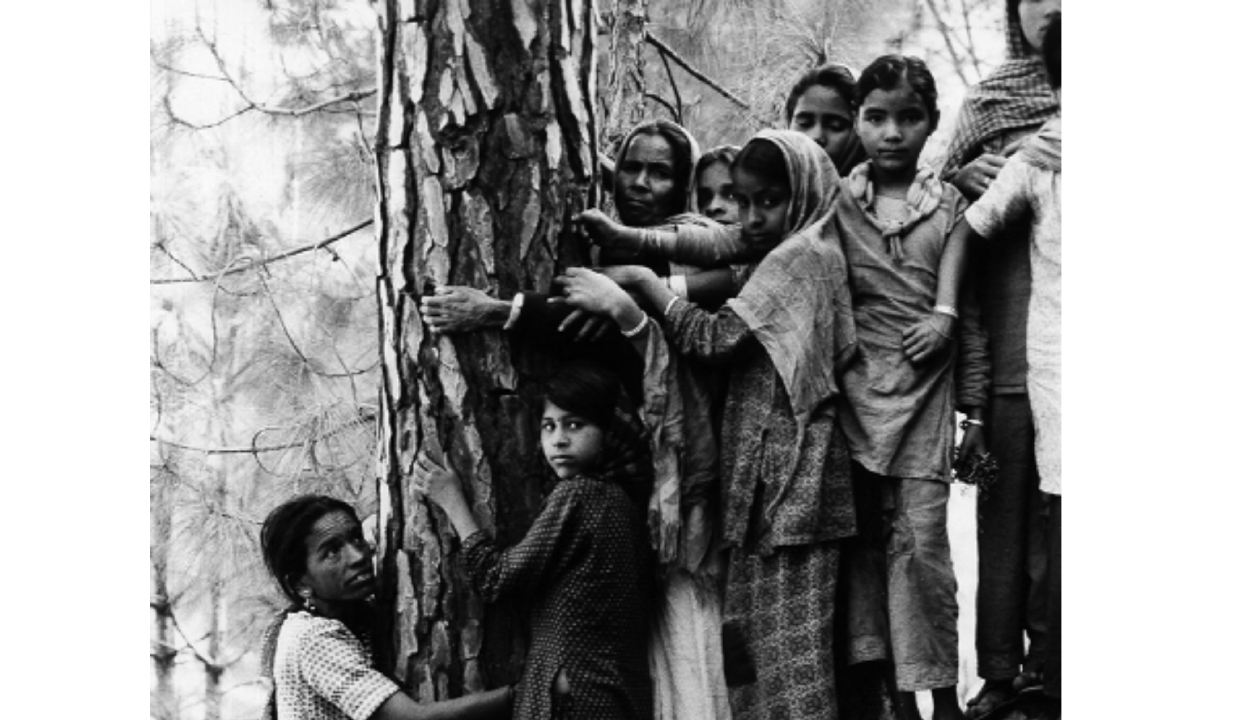
These concerns about unchecked development and the growing separation of human life from nature were also reflected in the ideas of Rabindranath Tagore. At Shantiniketan, Tagore sought to bring education closer to nature. In 1928, he introduced the Vriksharopana ceremony, encouraging people to celebrate trees and respect the environment.Decades later, these concerns found powerful expression through the Chipko Movement in the 1970s. Local villagers, particularly women, resisted commercial felling because their lives and livelihoods depended on forests. Activists such as Chandi Prasad Bhatt and Sunderlal Bahuguna helped mobilise support, while Gaura Devi and the women of Reni village became prominent figures. The movement highlighted the ecological and social importance of Himalayan forests and contributed to the government’s 1980 decision to impose a fifteen-year ban on commercial green felling in the Himalayan forests of Uttar Pradesh.
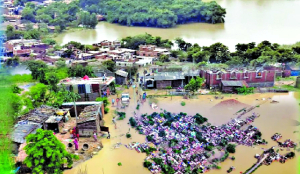
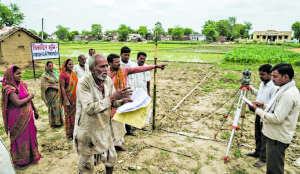
The struggle to protect nature, however, did not end with these movements. It continues today, as major development projects and resource extraction put pressure on India’s remaining natural ecosystems. The proposed Great Nicobar Island infrastructure project, coal mining in Chhattisgarh’s Hasdeo forests, and the Ken-Betwa river-linking project, which involves the submergence of forest areas in and around Panna Tiger Reserve, are a few examples of this continuing struggle. The true measure of development must therefore go beyond economic gains to account for forests lost, soils degraded, water depleted, and biodiversity diminished — costs that are ultimately borne by society and future generations.
If modern governance is to honour the legacy of those who gave their lives to protect nature, it must move beyond passive bureaucracy towards active stewardship - safeguarding native ecosystems, meaningfully involving tribal and forest-dependent communities and respecting their rights. This requires the same moral courage shown by earlier generations who stood in the path of the axe to protect their forests, so that India’s natural landscapes can be safeguarded for future generations.