Why RBI is betting on plastic in a UPI economy
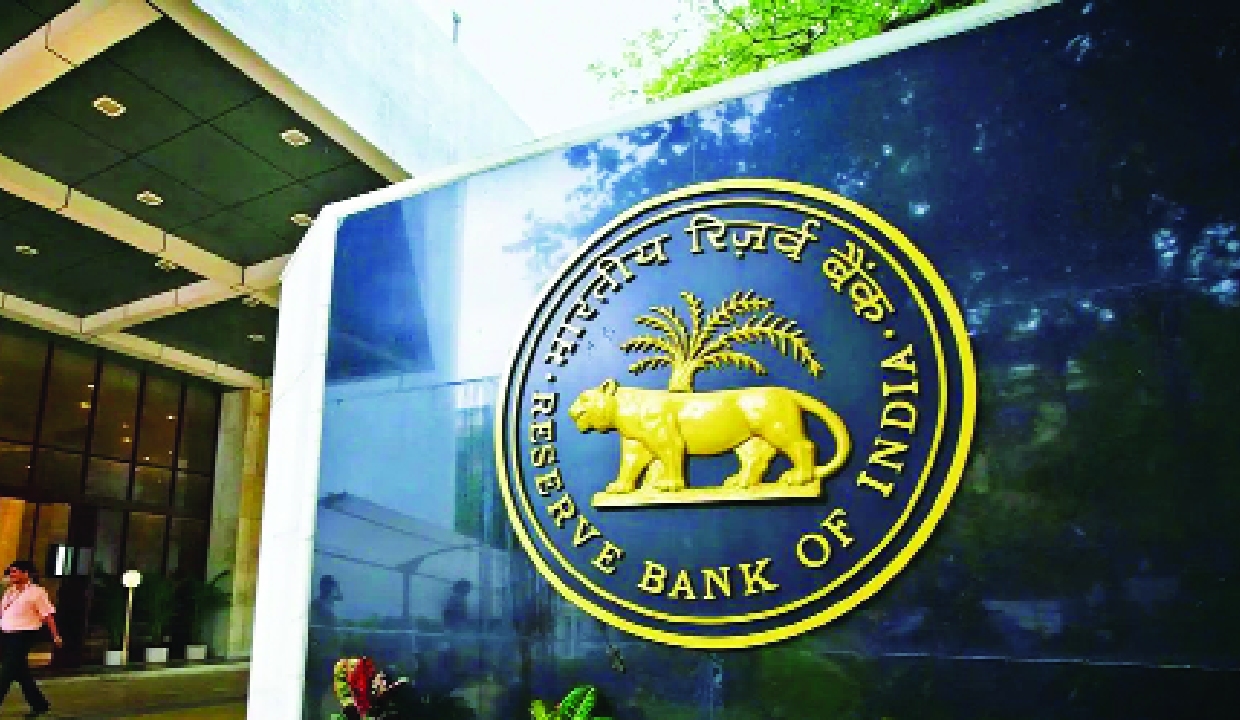
The Reserve Bank of India’s (RBI) latest currency experiment may seem counterintuitive at first glance in an economy rapidly digitising on the back of real-time payment rails. The central bank, through its printing arm Bharatiya Reserve Bank Note Mudran Private Limited (BRBNMPL), has floated a Global Expression of Interest for 68,000 reams of polymer substrate, with 34,000 reams earmarked for Rs 10 notes and another 34,000 reams for Rs 20 notes. This global tender has been the central bank’s most decisive move yet in a long-debated pilot rollout of plastic banknotes. This may seem like an over-engineered solution to a problem that digital payments already solve, but on the surface, it’s not an unthinkable move for market observers. India is the world’s largest player in the real-time digital transactions space, with the Unified Payments Interface (UPI) processing over 24,000 crore transactions annually and the Central Bank Digital Currency (e-Rupee) expanding its footprint. Why spend regulatory bandwidth and capital on upgrading physical banknotes when paper cash seems to be on a path towards structural decline? The answer lies in a nuanced understanding of cash velocity, life-cycle economics and the continuing reality of India’s vast informal economy.
The economic case for polymer is entirely based on longevity, where the velocity of money is highest. The traditional cotton-pulp notes, especially the lower denominations of Rs 10 and Rs 20, are subject to constant wear and tear. Paper notes rapidly wear out in tropical humidity and rough treatment due to daily use. The RBI spent Rs 5,101 crore in FY2023-24, Rs 6,373 crore in FY2024-25 and Rs 4,875 crore in FY2025-26 on security printing of currency. This was done to collect, shred and reprint billions of soiled paper notes to maintain its Clean Note Policy. Polymer substrate has an upfront production premium over traditional paper; however, its structural durability changes the cost equation over time. Polymer notes last much longer, so the break-even point is reached after a few years of deployment. On a multi-year horizon, fewer print runs translate directly to lower recurring bills for paper procurement, lower overhead for security printing, and lower transport and destruction costs. In addition, polymer banknotes enable the RBI to incorporate advanced security features such as transparent windows, metallic numerals, shadow images and complex optical effects that are very difficult for counterfeiters to reproduce with normal printing equipment.
Why cash coexists with the UPI surge
The core phenomenon of monetary macroeconomics: the divergence between payment transaction velocity and the base stock of money. Rapid digital adoption has not replaced physical cash; rather, the two channels show complementarity. This structural need for cash is evident from the recent monetary data. While setting records in terms of the volume of UPI transactions, the country’s Currency in Circulation (CiC) crossed the historic level of Rs 40 lakh crore, recording a strong rise of 11.9 per cent in FY26, which is its fastest growth pace since FY21. This is evident graphically from the upward-sloping CiC graph. The trend is explained by the fundamental dichotomy of functions, where UPI takes care of high-frequency, low-value transactions on a daily basis, and cash acts as the main store of value and precautionary fund. Important factors responsible for the growth of cash include an increase in nominal GDP, economic activity, income growth in the informal and rural segments, and high interest rates, which lead to increased precautionary saving.
Geopolitical safeguards and cultural lessons
The global tender parameters rolled out by the RBI reveal sharp parallels drawn from past international rollouts and India’s geopolitical scenario:
- Cultural Sensitivity: The tenders obligate suppliers to state explicitly that there is absolutely no animal tallow or animal DNA present in the substrate. The requirement is related directly to the public relations issue that the Bank of England faced in 2016 due to the presence of small traces of tallow in the new £5 polymer banknotes, which led to strong protests from religious organisations and vegans.
- Geopolitical Boundaries: Procurement requirements include strict security conditions whereby suppliers should ensure total separation from any sites located in
China or Pakistan, as well as ensure that they use no raw materials whatsoever from these countries.
Operational friction and global benchmarks
However, despite these benefits, switching to polymer presents operational challenges. Polymer-based notes are more slippery and have a static charge that may cause them to get stuck in automatic note-counting devices and ATMs. There will be a need for commercial banks to adjust their automatic sorting machinery to prevent mistakes in dispensing cash. Moreover, the special Biaxially Oriented Polypropylene (BOPP) polymer substrate is mostly supplied by foreign sources. However, over 50 central banks have provided clear empirical benchmarks:
- Australia: In 1988, it was the first to adopt polymer notes commemoratively, before fully mandating them over 1992-96. The Reserve Bank of Australia realised net financial savings of nearly $1 billion over 25 years from reduced reprint costs.
- United Kingdom & Canada: Switching to polymer in both countries resulted in substantial drops in counterfeiting, as well as a reduction in the life-cycle carbon footprint relative to traditional paper currency. The Bank of England found its £5 note had a 16 per cent lower impact and its £10 note an 8 per cent lower impact, while the Bank of Canada found a 32 per cent reduction in global warming potential.
A pragmatic middle path
This measure taken by the RBI, where it decided to confine its pilot project to only the Rs 10 and Rs 20 notes, is indeed an astute move that will ensure no risk is involved. In this way, there is no need for a costly attempt to modify all high-denomination banknotes, but rather to focus on the most circulated notes where the value is best in relation to the lifespan of these notes. While the UPI system gradually gains momentum by handling micro-transactions in the major cities, physical cash plays a critical role in ensuring that financial inclusion, transaction privacy and economic security are achieved for millions of people in rural India. Modernising the physical infrastructure of low-denomination banknotes is not a replacement for digital transactions but rather a complement to them.
The writer is a Research Consultant at the Economy & Trade vertical at Chintan Research Foundation; Views presented are personal.