
- HOME
- INDIA
- WORLD
- BUSINESS
- STATES
- LAW & JUSTICE
- ENTERTAINMENT
- SPORTS
- VIEWPOINT
- LIFESTYLE
- TECH
Climate finance is largely built around creation. A solar project can borrow against future electricity sales. Green bonds can finance new infrastructure. Blended finance can help an emerging technology move from being technically possible to commercially viable.
The harder problem begins when climate value comes not from building something new, but from changing what already exists.
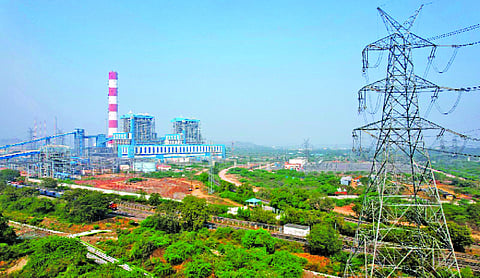
Let’s take a thermal power plant that could operate commercially for another decade. If cleaner and reliable replacement capacity becomes available five years earlier, retiring or repurposing the plant could avoid substantial future emissions. But the financial obligations do not disappear. The owner may lose expected revenue, lenders may still have exposure, workers and local economies may be affected, and replacement electricity still has to be financed.
The avoided emissions have a climate value. What is less clear is how that value can help pay for the transition itself.
India therefore needs to think about climate capital according to the job it has to do. Some capital builds the emerging low-carbon system. Some helps existing assets become cleaner or change function. Over time, some will also be needed to finance the repurposing or retirement of assets that the energy system can eventually do without.
For India, that last category has to be approached carefully. Coal (including lignite) supplied 69.5 per cent of electricity between April and June 2026 and accounted for roughly three-fourths of maximum generation during non-solar peak-demand hours. Thermal power still performs an important system-security function.
This cannot become a backdoor case for shutting viable coal capacity prematurely. India’s electricity demand is still growing. The more useful question is whether, once adequate replacement electrons are available, finance can help an older asset move out of its existing role earlier than it otherwise would.
An experiment underway in Singapore offers one possible route. Its Transition Credits Coalition (TRACTION) has been exploring energy-transition credits generated from verified emissions reductions when coal plants retire earlier than planned and are replaced with cleaner energy. The idea is not that carbon credits pay for the entire exercise. Rather, revenue from avoided emissions can improve the economics of an otherwise difficult transition
transaction.
There is now enough work on this idea to make it more than a thought experiment. Verra’s methodology for accelerated retirement of grid-connected coal plants has been active since May 2025. It sets out how net emissions reductions can be calculated when retirement is paired with replacement renewable generation and requires a just-transition plan for affected workers and communities. A revised methodology consulted on in 2026 is now at final review.
India should not copy this model mechanically. Its coal fleet, demand trajectory and development needs are different. But the underlying financial idea deserves a domestic pilot.
Suppose the gap between a plant’s remaining economic value and the value realised through an earlier transition is too large for the owner or lenders to absorb. A transaction could combine restructuring by existing lenders and owners, concessional finance or guarantees, commercial capital for replacement capacity, public resources for workers and site redevelopment, and revenue from verified avoided emissions.
Carbon revenue would be only one piece of the financing package. Its role would be to put a price on a climate benefit that is otherwise difficult to monetise.
A limited Transition Finance Transaction Framework could test this approach. The first question should be simple: is the energy system actually ready for the asset to change role?
In power, adequate replacement electrons, whether from renewables, storage, hydro, nuclear or stronger grid connections, must exist before retirement is financed. In sectors such as steel, fertilisers or refining, the equivalent question concerns alternative low-carbon molecules and production processes. Finance should follow technical readiness, not run ahead of it.
There would need to be other safeguards. An asset already due to close should not earn a windfall for doing what economics would have forced it to do anyway. Nor should one plant’s closure simply shift generation and emissions elsewhere. Workers, local economies, land rehabilitation and productive reuse also have to be part of the transaction.
India is already beginning to treat mine closure in this broader way. The coal ministry reported in July that 42 coal mines had been scientifically closed, with ecological restoration, community interventions and productive post-mining land use forming part of the process.
India’s emerging carbon market and climate-finance taxonomy provide a useful policy backdrop. The Carbon Credit Trading Scheme now covers 490 obligated entities across seven emissions-intensive sectors and has put in place an institutional framework for monitoring, reporting and verification. Separately, the draft climate-finance taxonomy explicitly supports transition activities and says India’s classification must reflect its development priorities, transition pathways and energy-security needs.
There is an opportunity to connect these pieces more deliberately. Instead of treating transition finance as a broad label for anything less carbon-intensive than the status quo, India could distinguish between capital that improves an existing asset, transforms it, repurposes it and, where justified, finances its retirement.
But this brings us to the question that may ultimately determine whether such transactions work at all: who pays?
Should the asset owner absorb the loss in remaining economic value? How much should existing lenders restructure? When is public or concessional capital justified? Should buyers of verified transition credits contribute because they value the avoided emissions? Who finances replacement electricity, worker support, land restoration and local economic redevelopment? And what part, if any, should international climate finance bear?
These are not secondary questions. A transition can be technically sensible and environmentally credible, yet still fail because its costs fall on actors with neither the incentive nor the capacity to carry them. The answer will vary across assets and sectors, but the distribution of transition costs has to become explicit.
The issue extends well beyond coal. Cement kilns, steelmaking equipment, refineries and industrial systems built around carbon-intensive molecules will increasingly face choices between retrofit, conversion, replacement and retirement. Each has a different financial logic.
Climate finance has spent years learning how to make tomorrow’s assets investible. India will also need a way to deal with yesterday’s assets when keeping them in their existing form no longer makes economic or environmental sense. The goal is not to pay viable assets to disappear before the system is ready. It is to ensure that, once transformation or retirement becomes technically sensible and economically desirable, the absence of a financing mechanism does not become the reason the old system persists.
The next innovation in transition finance may therefore lie not only in putting a value on avoided emissions, but in answering the harder question that follows: who should bear the cost of turning that climate value into an investible transition?