World humanitarian day: Remembering unsung heroes
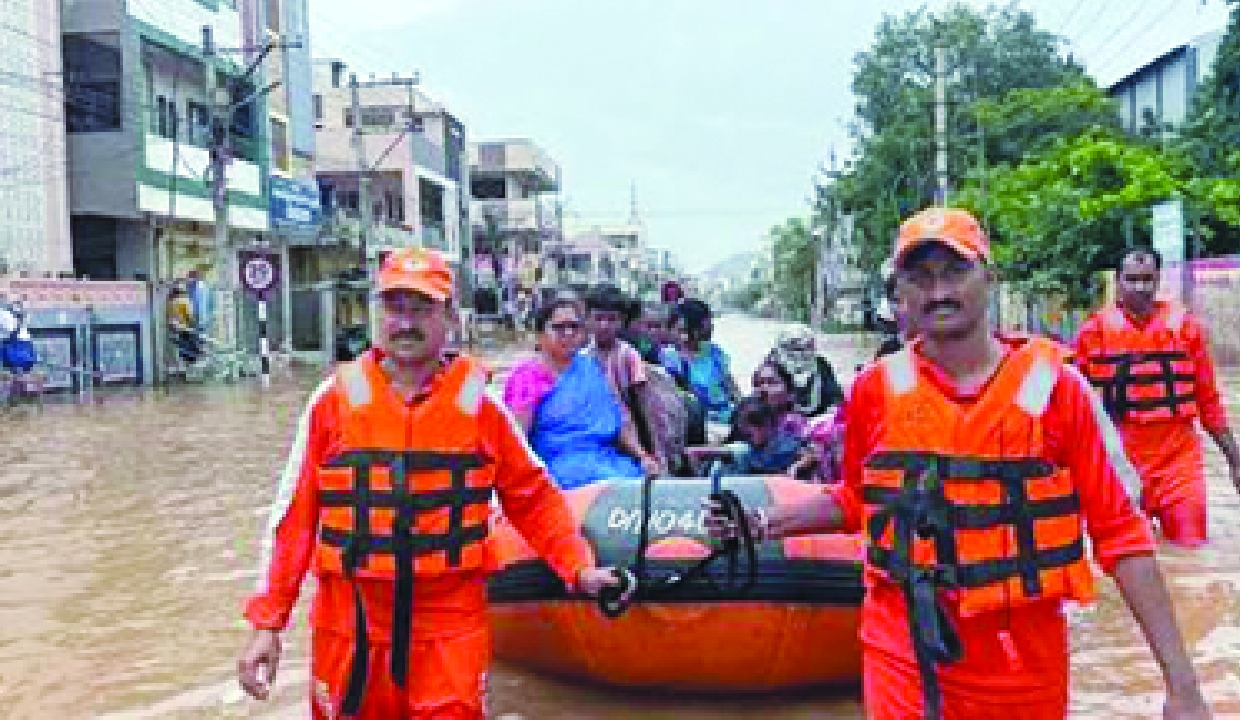
India is once again witnessing the human cost of the monsoon season. The state of Assam is facing massive flooding, while Himachal Pradesh is witnessing deaths and disruption due to heavy rainfall, landslides and flash floods. Meanwhile, Uttarakhand is at risk from heavy rainfall, landslides and flash floods. However, these are more than just weather disturbances. These are humanitarian crises. Behind every statistic is a human story - a family being forced out of its house, farmers losing their crops and animals, children missing school, patients failing to make it to a hospital, or elderly people stranded without medication.
That is why August 19, which is observed as World Humanitarian Day, holds so much relevance to India today. The day, observed by the United Nations, pays tribute to humanitarian workers who risk their lives while helping people suffering from any disaster, conflict or other crisis. However, humanitarian action means much more than aid work done in times of such emergencies. In India, humanitarian efforts are those of NDRF and SDRF workers, firefighters, police, armed forces, medical professionals, district authorities, NGOs, volunteers and local communities. In many disaster situations, the initial humanitarian response comes from a neighbour.
The local fisherman may help a family get out of a dangerous situation. The villagers may be the first to search through the rubble of a collapsed building.
The increasing complexity of these disasters, however, poses an enormous burden on this system of response. The relevant question here is no longer limited to how fast we will be able to offer assistance after the disaster has occurred. What we need to ask ourselves is whether we will be able to react to a predicted hazard before it causes a humanitarian crisis.
People behind the response
In case of any disaster, the general public tends to see the rescue operations. What is less visible is the large network of people working behind these operations. They are the humanitarian workers. They are the ones who operate in some of the toughest and most dangerous environments. Most of them continue their jobs even when other people try to escape from there. World Humanitarian Day is a chance to remember these people. However, this day should also serve as a reminder that the humanitarian response is not the responsibility of a particular department. It is a collective process.
Over the last two decades, India has developed its unique disaster response system. The National Disaster Response Force, State Disaster Response Forces, armed forces, police force, fire services, civil defence, health authorities, district administration, NGOs and community organisations all play their part. All these agencies' combined efforts have saved many lives during various disasters such as floods, cyclones, earthquakes and landslides. However, there is a paradigm shift taking place in relation to disasters. While a disaster could previously be restricted to one locality or even one sector, today, a cloudburst may lead to a flash flood that leads to a landslide, causing the destruction of bridges, power outages and communication failures, disrupting hospitals and isolating communities.
There is also the impact of climate change, which has increased the level of uncertainty. It is important that preparedness does not just revolve around post-disaster actions but needs to take place long before such events occur.
One of the most significant shifts is that between early warning and early action. India has made huge strides in terms of forecasting and early warning mechanisms in respect of cyclones, evacuation, river and rainfall monitoring, among others. However, the real success of an early warning lies in its translation into action. An alert posted on a government website will not save lives. It needs to get through to the farmer, the fisherman, the tourist, the schoolteacher, the village head and the family residing in a vulnerable settlement. More importantly, they need to understand what the alert means and what they have to do. This is where the participation of local communities comes into play. Communities should not be treated merely as beneficiaries of relief. They need to be trained to participate in the process of disaster management.
It is worth noting one more thing that requires our greater attention - the well-being of humanitarian workers themselves. Disaster responders spend many hours in a very difficult physical and emotional state because they have to deal with unsafe buildings, floodwaters, landslides, fire, extreme temperature changes and diseases. The life of a disaster responder is always at risk while helping other people. The disaster responder needs proper education, protection, communication systems, insurance, rest and psychological help. A resilient disaster management system has to protect those who are protecting us.
Humanitarian response is not only about the number of rescue teams working or relief materials sent out to the disaster-affected area. It is about saving people from unnecessary suffering and helping them to restore their lives. The humanitarian worker is thus no longer just a saviour; he or she is a connection between disaster and hope.
With the increasing complexity and unpredictability of disasters, it is imperative that the Indian government develops a humanitarian system where humanitarian assistance starts not once a community is in distress, but even before disaster strikes. With the increased occurrence of disasters comes the question: What sort of humanitarian assistance and response system does India require in the coming years? There is no denying the fact that India has done well on its side to develop its disaster management systems. With bodies like the National Disaster Management Authority, National Disaster Response Force, State Disaster Management Authorities and district administrations developing their preparedness and response capacity, a lot is being done in this regard. But more is required. It is time that we move from responding to disasters to reducing risks before disaster strikes.