Land justice cannot run on a 1908 clock
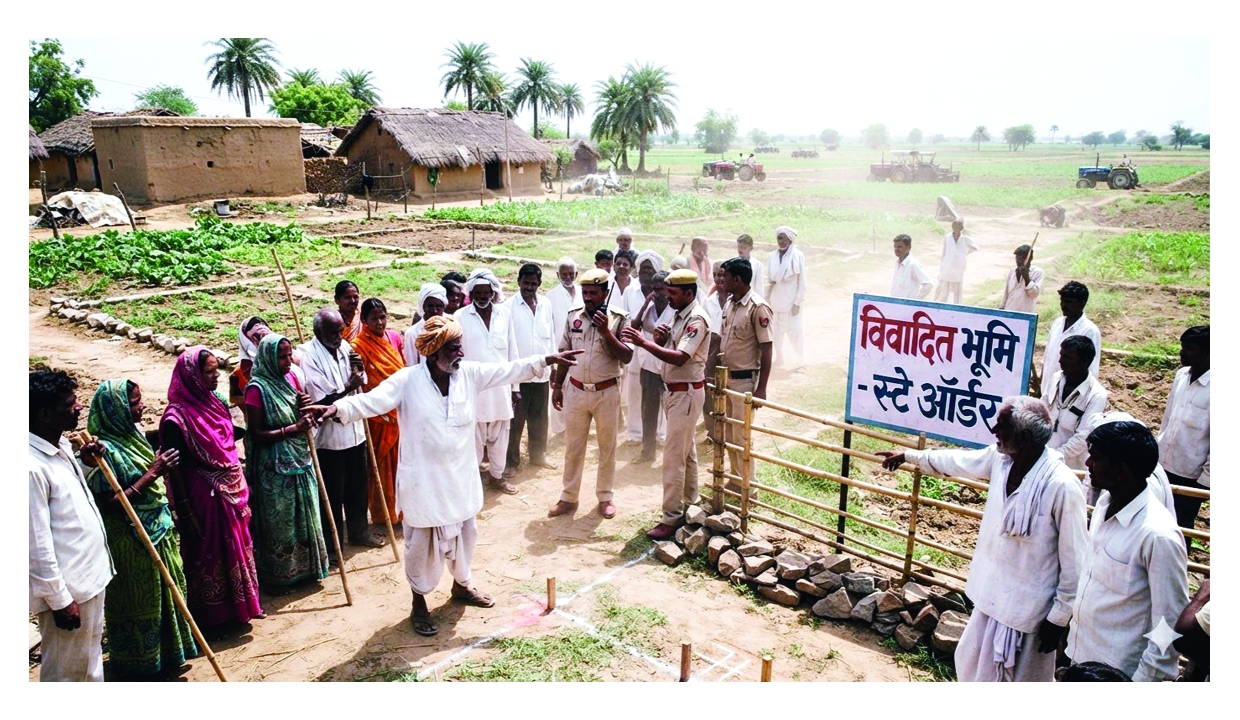
India does not merely need faster courts for land disputes. It needs a different procedure for deciding them. Land and property disputes account for roughly two-thirds of all civil litigation in India. Behind these numbers lie disputes over boundaries, inheritance, sale deeds and possession that can become a family’s engagement with the courts for a generation. Land remains locked, investment is postponed and relationships deteriorate. By the time a decree arrives, possession may have changed, physical features may look different and original witnesses may no longer be available.
Judicial vacancies and heavy dockets are part of the explanation. But there is a deeper structural problem. The Code of Civil Procedure, 1908 still supplies the basic architecture for land litigation. The question is whether a general procedure devised more than a century ago should govern land disputes in substantially the same way when both landholding and the State’s capacity to identify land have changed dramatically.
The CPC came into force in a world without digitised Records of Rights, geo-referenced cadastral maps, satellite imagery, electronic registration databases or interoperable government records. Even where surveys and settlement records existed, establishing the identity, boundary, possession and history of a parcel could require painstaking reconstruction through paper registers, field measurement, local knowledge and oral testimony.
A procedure allowing commissioners, witnesses and substantial judicial discretion was therefore understandable. Facts that can now often be technically verified then had to be laboriously proved. There was yet another fundamental difference. The legal relationship between people and land in 1908 was not the same as it is today. British India did not have a uniform conception of individual, parcel-based ownership. Agricultural land in different provinces was governed by distinct revenue and tenancy regimes. From the Bengal Tenancy Act, 1885 and the Punjab Tenancy Act, 1887 to the tenancy regimes of Oudh, Agra and Chhota Nagpur, the law reflected a landscape in which rights could be distributed among zamindars or other intermediaries, tenure-holders, occupancy raiyats, tenants and actual cultivators.
Proprietary interest, possession, cultivation, rent liability and rights of transfer or succession did not necessarily vest in the same person. The CPC was therefore not designed as the procedural arm of a modern, integrated, parcel-based land-title system. Courts often had to reconstruct layered rights from settlement records, rent rolls, possession, custom and oral evidence. A slower and more elaborate fact-finding process had a historical logic.
Post-Independence Zamindari and many intermediary interests were abolished. Tenants and cultivators acquired stronger or more direct rights under different State laws. The relationship between the State, the recorded holder and the parcel became more direct. Land administration consequently became increasingly concerned with identifying the current legally sustainable claim to a defined parcel, rather than merely recording layered tenurial relationships.
The information environment has been transformed. Computerised Records of Rights, digitised and increasingly georeferenced cadastral maps, computerised registration and digital survey technologies have changed what a court can know before oral evidence begins. But still, the procedural architecture through which such claims are adjudicated remains substantially rooted in 1908. Civil procedure can therefore begin where the old procedure often ended, i.e., with identification of the land.
Every land suit may be accompanied at filing by a parcel dossier, the parcel identifier, current and historical Records of Rights, cadastral and, where available, georeferenced maps. Registered instruments can be relied upon, along with mutation history, relevant survey or settlement entries, and a concise statement of actual possession. At the first substantive hearing, the court ought to know what land is in dispute and whether the controversy principally concerns title, record, map, possession, inheritance, transaction or encroachment. That change could narrow litigation enormously. Today the true dispute may emerge only after pleadings, local inspections and cross-examination.
A parcel-first procedure would require the controversy to be defined before it expands. The written statement should then have a real outer limit. In ordinary civil litigation, procedural deadlines have proved elastic. Parliament has already accepted firmer discipline for commercial disputes. A citizen litigating over a home, farm or inherited plot has no lesser claim to timely justice.
Interim injunctions also require redesign. They are sometimes indispensable to prevent construction, alienation or destruction of the subject matter. But an interim order that survives for years becomes the practical allocation of property without adjudication. Land injunctions may therefore carry a review date and automatically trigger an accelerated schedule for deciding the core dispute.
The same logic applies to evidence. Oral testimony remains necessary where fraud, intention, oral partition, family arrangement or personal conduct is genuinely in issue. But objective facts can ordinarily be proved objectively. Boundaries ought to come primarily from authenticated maps and coordinates, registration history from official records, and physical change, where relevant, from reliable geospatial or time-stamped material.
The local commission could likewise become a technical exercise rather than a second trial. Neutral, trained survey personnel using prescribed reference points, modern equipment and digitally reproducible measurements can replace ad hoc reconstruction through conflicting private maps and oral identification. A court need not ask a commissioner to rediscover information the State has already surveyed and stored. Adjournments must carry consequences. In land litigation, delay itself can have economic value, and a party enjoying possession may benefit from elapsed time. Nominal costs do little to change behaviour.
Most importantly, a land decree must end the dispute. Under the present architecture, a successful litigant may spend years proving title and then begin another struggle to obtain possession. Record correction, map correction and delivery of possession can generate further proceedings before different authorities. A decree declaring ownership but leaving the successful litigant to separately fight for the land, the map and the record, is justice only on paper. A new land procedure should strive to integrate adjudication and execution. Once a decree becomes executable, consequential mutation, map correction and delivery of possession should flow from it through an electronic interface between the civil court and land administration.
This also requires a firmer jurisdictional line between civil courts and revenue authorities. Mutation and fiscal records should not provide parallel forums for re-litigating questions already decided by competent courts. Equally, routine record correction, survey discrepancies or map errors should not require a full civil trial where an effective revenue court can resolve them. Jurisdiction needs to follow the nature of the dispute.
None of this means replacing fairness with speed. Notice, hearing, cross-examination where necessary, appeal and judicial review remain essential. The reform required is for better-structured justice, fewer procedural stages, where facts can be objectively verified and stricter consequences built-in where delay is intentional. India has spent decades modernising its land records, while leaving the procedure for resolving land disputes anchored to an earlier informational age. That mismatch now needs correction. The case is, therefore, for more than just mere amendment to the CPC. Land disputes justify a specialised civil procedure. It must have parcel identification at its core and documentary evidence as the default.
Case-management timelines, limited interlocutory detours, clear civil-revenue jurisdiction and execution built into the decree itself, could further tighten the procedure. The test of a procedural law is not how long it survives, but how effectively it delivers justice under the conditions in which it operates. The CPC of 1908 responded to the land relations, records and technology of its time. India in 2026 has different land relations, vastly better land information and entirely different technological capacity. Its land justice system should finally reflect that change.