
- HOME
- INDIA
- WORLD
- BUSINESS
- STATES
- LAW & JUSTICE
- ENTERTAINMENT
- SPORTS
- VIEWPOINT
- LIFESTYLE
- TECH
When the news came that an Indian captain had been stabbed in the cockpit of a flydubai Boeing 737 and had still managed to open the door so others could reach him, I did not read it as another aviation headline. I read it as a captain’s report from the only place where a pilot is finally judged: alone, injured, and responsible for everyone behind the door. I was commander of Indian Airlines Flight IC-814 when it was hijacked (Kandahar) in December 1999.
For seven days we lived inside an aircraft that had ceased to be ours, first in Amritsar, then Lahore, Dubai and finally Kandahar. What stayed with me was not the drama that later filled books and screens. It was the narrower duty: keep the aircraft intact, keep the people alive, and do not let fear decide the next minute.
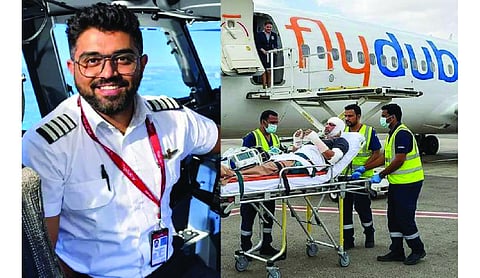
That is why Captain Smit Machchhar’s conduct on Flight FZ1073 from Dubai to Tel Aviv moves me so deeply.
On 30 September, cruising near 34,000 feet with about 174 passengers, most of them bound for Tel Aviv, Captain Machchhar was attacked by his co-pilot. He was struck and stabbed. He went down. The aircraft began a violent descent, losing some 14,000 feet in seconds. From the floor of that cockpit, bleeding and still being hit, he understood what only a long-serving pilot understands with his eyes closed: the aeroplane was no longer being flown, it was falling. He told himself there was one push left. He made it. He opened the cockpit door.
That single act changed the arithmetic of the flight. Israeli passengers and crew could enter, overpower the attacker and, with help from others on board, recover the aircraft. It diverted to Tabuk in Saudi Arabia and landed. Every life entrusted to that cockpit was saved.
Captain Machchhar is now recovering, his head bandaged, his account given from a hospital bed to the Prime Minister of India. The world has rightly called him a hero. I wish to call him something more precise: a captain. In our profession, skill is the entry ticket. The test comes later. A captain is measured by whether he can remain inside the problem when the problem has become physical, personal and immediate.
Procedures assume a functioning crew and a secure flight deck. They do not write the line for the moment when the threat is the man beside you and the door is the only bridge to the cabin. Captain Machchhar crossed that line with a calm that was not the absence of pain. It was the refusal to let pain finish the decision. He has said he was fighting for his own life and, at the same time, could not allow the others to die.
That is the oldest sentence in command. It is not rhetoric. It is the bargain every passenger makes, usually without knowing it, when the cabin door closes. We accept their trust. In return we are expected, if the hour comes, to spend ourselves on it.
I have watched younger pilots train for engine failures, decompressions and rejected take-offs. We can simulate almost everything except the private instant in which a man decides that the aircraft and its people still belong to him. Captain Machchhar has shown that instant in public.
His bravery belongs to the highest tradition of professional aviation: not display, but custody. He stood firm when the circumstances were at their most punishing, and by doing so he gave passengers and fellow aviators something rarer than relief. He gave them proof that the left-hand seat still means what it claims to mean.
As a fellow captain, I am proud to acknowledge him. The aviation fraternity owes him respect, and the younger generation of pilots owes him an example. Captain Smit Machchhar, you have earned both. I salute your professionalism, your courage and your devotion to duty, and I wish you strength, recovery and honour in the years of flying still ahead.
Conclusion
Captain Machchhar did what no checklist prescribes. Bleeding on a cockpit floor, with the aircraft in freefall, he chose the passengers' lives over his own pain and opened the door that saved them all. That is command in its purest form: custody, not display. Skill gets a pilot into the seat; character keeps him there when everything else fails.
He has restored a quiet faith that the left-hand seat still carries its original meaning. The aviation fraternity owes him respect, and younger pilots owe him an example worth following. Captain, we salute you, and we wish you recovery and many more safe skies.
The writer is the Captain of IC-814, the Indian Airlines flight hijacked and taken to Kandahar in 1999; Views presented are personal.