From guns to narratives: India’s next Naxal challenge
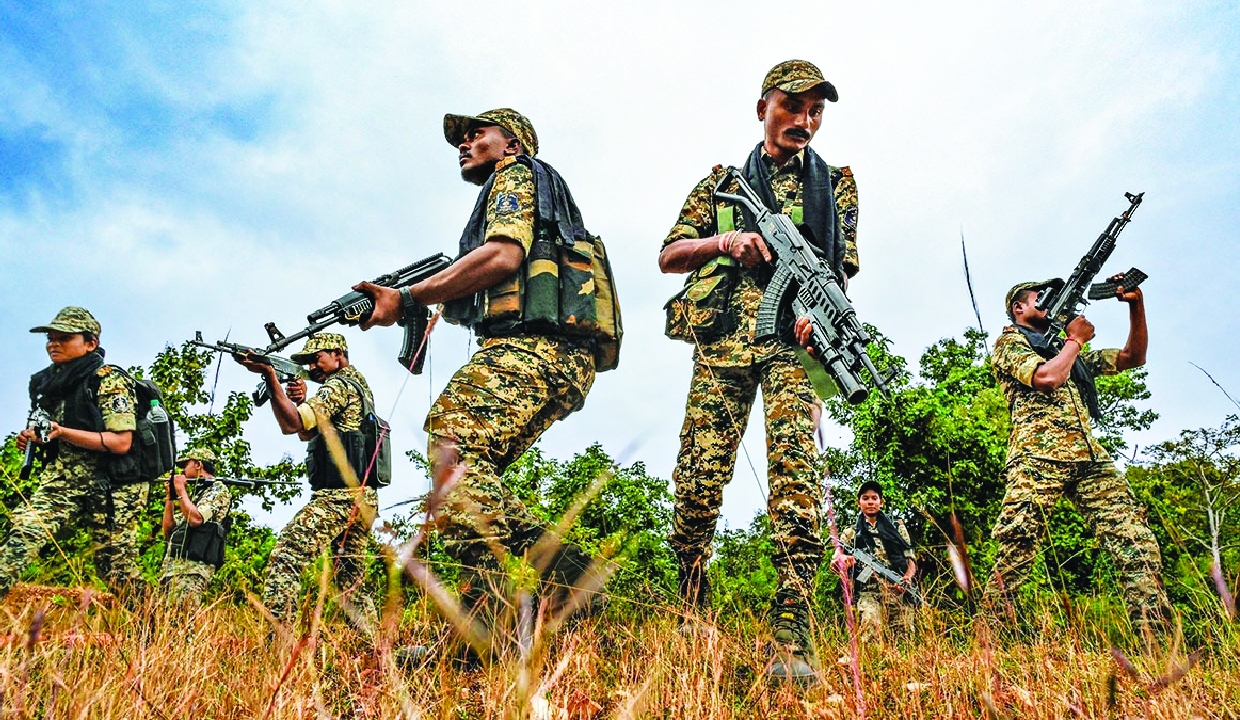
Prime Minister Narendra Modi’s warning from the ramparts of the Red Fort about the threat posed by what he termed “dimagi Naxals” deserves a serious national conversation. India has achieved extraordinary success against armed Naxalism. But the defeat of an armed insurgency does not automatically mean the disappearance of the ideological ecosystem that sustained it.
For decades, armed Naxalism did not survive merely because cadres operated from forests. Every insurgency needs an ecosystem: narratives that legitimise violence, networks that amplify those narratives, organisations capable of mobilising resources, and intellectual voices willing to portray attacks on the constitutional state as revolutionary justice. The armed Naxal was visible. He carried a weapon, occupied territory and attacked the state openly. That made the threat identifiable and ultimately easier to confront.
The dimagi Naxal is harder to confront precisely because there is no uniform or gun by which he can be identified.
The ideological battle can take place in universities, activist networks, cultural organisations, publications and sections of civil society. The problem is not criticism of the government. Criticism is indispensable to democracy. The problem begins where intellectual activism crosses into legitimising political violence, deliberately spreading hostility towards the nation and its constitutional institutions, or providing material, organisational or propaganda assistance to violent or unlawful movements. This distinction is essential. Otherwise, “dimagi Naxal” becomes an indiscriminate political label rather than a description of a genuine security and ideological challenge.
Another dimension of this ecosystem deserves scrutiny. Certain activist organisations and advocacy networks have repeatedly placed themselves at the forefront of movements directed against major decisions of elected governments. Participation in an anti-government protest is, by itself, neither illegal nor anti-national. Indeed, peaceful protest is a democratic right.
The legitimate question arises when political mobilisation intersects with opaque financing, foreign funding, coordinated misinformation, unlawful activity or networks associated with extremist causes.
This is precisely why the financial architecture surrounding advocacy organisations matters. Where organisations receive substantial funding from abroad while simultaneously participating in campaigns intended to influence India’s political and social environment, the Indian state has both the right and the responsibility to demand complete transparency regarding the origin, destination and utilisation of that money.
It is equally important not to collapse all such organisations into one category. Thousands of civil-society organisations perform legitimate humanitarian, educational and social work. The case for scrutiny must therefore rest on evidence of financial or legal violations rather than ideological disagreement. There is also a political dimension to this ecosystem.
Opposition parties frequently find themselves supporting the same protests and campaigns championed by activist organisations opposed to government policies. That convergence does not, by itself, prove an organisational or financial nexus. But it does help explain the political resistance that often follows attempts to regulate these networks: activist groups can generate narratives, mobilisation and institutional pressure that coincide with the political objectives of parties seeking to challenge the government.
The relationship can therefore become mutually reinforcing even without a formal alliance. Activist networks provide intellectual arguments, litigation, campaigns and street mobilisation; opposition parties can provide political amplification and parliamentary legitimacy. Where their objectives converge, each strengthens the reach of the other. This is where the Foreign Contribution (Regulation) Act (FCRA) assumes importance.
The 2020 amendments substantially tightened India’s foreign-funding architecture. They prohibited recipients of foreign contributions from transferring such funds onwards to other organisations, reduced the permissible ceiling for administrative expenditure from 50 per cent to 20 per cent, strengthened identification requirements and required foreign contributions to enter through a designated FCRA account at the State Bank of India’s New Delhi Main Branch.
These changes made the movement of foreign money considerably more traceable.
Earlier, a complicated chain of transfers between organisations could make it difficult to establish precisely where foreign contributions ultimately went and for what purpose they were used. Greater transparency disrupts precisely the kind of opaque ecosystem within which illegitimate political or extremist activity can potentially hide. The government should strengthen this framework further where regulatory gaps remain.
The government’s success against armed Maoism illustrates the difference between the two challenges. An armed movement can be defeated geographically; an ideological movement reproduces itself intellectually. For years, sections of the ideological ecosystem surrounding radical movements have portrayed the Indian state as inherently oppressive and undeserving of allegiance. Universities are particularly important here. They must remain places where governments, ideologies and institutions can be questioned. But intellectual freedom cannot mean freedom from intellectual challenge. Ideas that romanticise revolutionary violence, excuse terrorism or portray India’s fragmentation as liberation must be confronted through scholarship, debate and facts.
The same principle applies across civil society, media, culture and academia.
India therefore needs something considerably more sophisticated than another security crackdown. The support system of violent extremism must be dismantled wherever evidence establishes its existence, while the ideological arguments sustaining extremism must be defeated openly.
Financial networks require transparency. Illegal activity requires prosecution. Foreign funding requires scrutiny. Propaganda requires rebuttal. Universities require genuine intellectual pluralism rather than domination by any single ideological tendency. And political parties, irrespective of ideology, must recognise a fundamental distinction: opposing the government is entirely legitimate; weakening the constitutional state is not.
The armed Naxal sought to weaken India with the gun. The ideological extremist can pursue the same objective through narratives, networks, institutions and the radicalisation of young minds.
India has demonstrated that it can defeat the first. Prime Minister Modi’s warning about the “dimagi Naxal” is ultimately a warning that victory against insurgency will remain incomplete unless India also develops the intellectual confidence, financial transparency and institutional vigilance necessary to dismantle the ecosystem from which extremism repeatedly regenerates itself.
The writer is a commentator on socio-political issues; Views presented are personal.