Uttarakhand: Rising geological stress is increasing the risk
Although science has made tremendous progress and humanity has advanced from tribal societies to the age of Artificial Intelligence (AI), we have never been able to conquer nature—neither in the past nor in the present. Certainly, scientific advancement has enabled us to anticipate potential dangers and make preparations in advance to reduce their risks. However, this is much like creating the causes of destruction ourselves, nurturing them knowingly or unknowingly, repeatedly inviting disaster, and then searching for ways to protect ourselves from it.
We are talking about earthquakes, a natural disaster that has recently caused devastation in Venezuela, where more than 1,500 people have reportedly lost their lives, hundreds have been seriously injured, and thousands are still missing. The scale of destruction can be understood from the fact that after a series of powerful tremors, one city in Venezuela was almost completely destroyed. Earthquakes measuring magnitudes of 7.2 and 7.5 caused widespread devastation.
According to research, around 500,000 earthquakes occur worldwide every year. Of these, only about 100,000 are felt by people, and approximately 100 cause significant damage. Between 2000 and 2025, an average of 134 earthquakes of magnitude 6.0 to 6.9 occurred annually. In comparison, earthquakes with magnitudes between 7.0 and 7.9, like the two that struck Venezuela, occurred less than 14 times per year on average. Earthquakes of magnitude 8.0 or higher are even rarer, with only about one such event occurring worldwide each year on average. In some years over recent decades, no earthquake above magnitude 8.0 occurred at all. The most powerful earthquake in recorded history struck the Biobío region of Chile in 1960. Measuring 9.5 on the Richter scale, it killed 1,655 people and left nearly two million homeless.
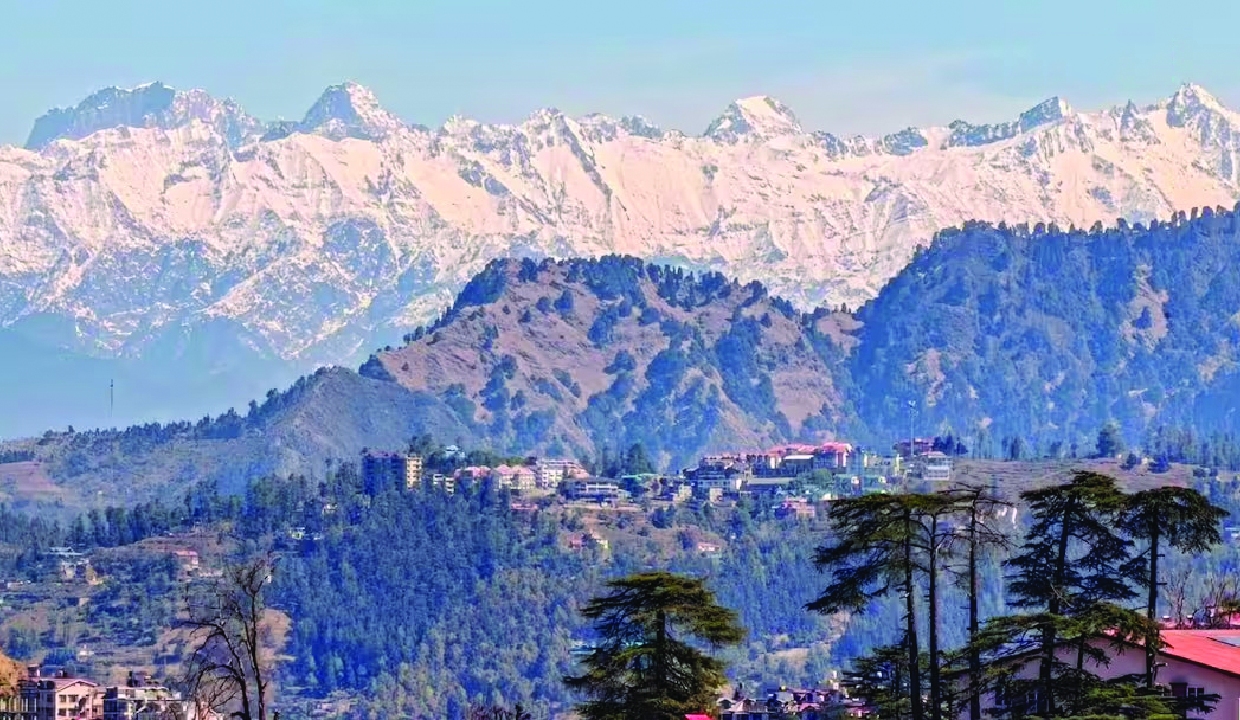
Uttarakhand is also highly vulnerable to earthquakes and is categorised into seismic Zones IV, V, and VI. The geological condition of this mountainous state is far from stable and remains highly active. The Indian Plate continues to move beneath the Eurasian Plate, causing geological stress to increase continuously. Geologists believe that a catastrophic earthquake could strike Uttarakhand at any time. From a geological perspective, the Himalayan region has long been considered extremely sensitive. Due to ongoing tectonic activity, the Himalayas continue to rise, and their elevation increases gradually year after year.
In this context, the new seismic zoning map prepared by the Wadia Institute of Himalayan Geology and the Bureau of Indian Standards (BIS) has raised concerns. According to the scientific classification in the revised map, several areas of Uttarakhand have now been included in Zone VI, indicating that the geological conditions of this Himalayan state have become extremely sensitive. Scientists have expressed concern and warned that ignoring the expected seismic risks and geological realities would be a serious mistake. Therefore, earthquake-resistant construction can play a major role in minimising damage.
A positive development in this direction is the construction of 1,872 earthquake-resistant houses under the Prime Minister’s Urban Housing Scheme in Bagwala, Rudrapur, the district headquarters of Udham Singh Nagar. This initiative is being viewed as an important step toward preparing for future seismic threats.
According to geologists, the collision between the Indian and Eurasian Plates has been continuing for millions of years. At present, this interaction is generating immense geological stress. Whenever this accumulated stress is released, earthquakes occur and the ground shakes violently. Since the Indian Plate continues to move beneath the Eurasian Plate, the stress between the two plates keeps increasing, making the possibility of a major earthquake ever present. However, it is impossible to predict exactly when such an earthquake may occur.
According to geologists, under the new zoning classification, Chamoli, Pithoragarh, Bageshwar, and Rudraprayag have been placed in the highly sensitive seismic Zone VI. Uttarkashi, Tehri Garhwal, Pauri Garhwal, Almora, and Champawat fall under Zone V. Dehradun, Nainital, Haridwar, and Udham Singh Nagar are classified under Zone IV. However, the revised classification issued in 2025 also suggests that the entire state of Uttarakhand should be considered as falling under Zone VI due to its overall seismic vulnerability.
Experts believe that protection from earthquakes largely depends on earthquake-resistant construction techniques. Buildings should be constructed on solid ground, and in mountainous areas, structures should ideally be built on stable rock formations. Maintaining a safe distance from riverbanks is equally important. Construction on loose debris or unstable soil should be strictly avoided. Traditional building techniques used in the Himalayan region were often naturally earthquake-resistant, and many of these methods can still be adopted today to reduce earthquake-related risks.
Ultimately, protection from earthquakes lies largely in our own hands—through stronger buildings and better preparedness. The formation of the Himalayas will not stop, nor will the movement and collision of tectonic plates cease. Japan experiences earthquakes almost every day, yet large-scale casualties are rare because building regulations are strict and people are well prepared. Therefore, whether it is your home or your business establishment, it is important to ensure that the structure has been built according to earthquake-resistant standards.
The writer is Assistant Professor at Department of Mechanical Engineering Kanpur Institute of Technology; Views presented are personal.