When schools disappear, so do dreams
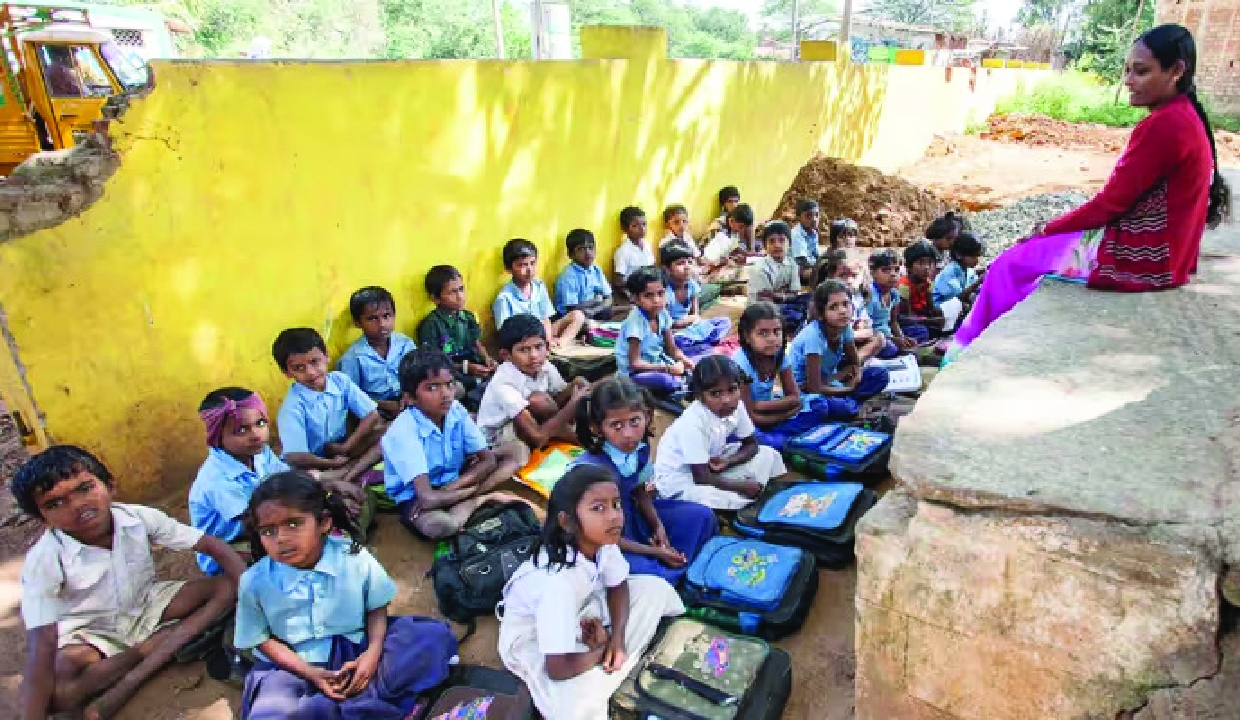
India's journey as the world's largest democracy has been inseparable from its commitment to public education. For decades, government schools have served as the first classrooms for millions of children, particularly those from rural, tribal, and economically weaker communities. For generations, the neighbourhood government school symbolised aspiration rather than privilege. It offered every child-irrespective of caste, class or geography-a fair chance to succeed.
Today, however, this foundational pillar of the Republic faces an unprecedented challenge. According to analyses of UDISE+ data and highlighted in NITI Aayog's report on the School Education System in India, nearly 94,000 government schools have ceased functioning over the last decade, averaging nearly 25 closures per day. Many of these closures have occurred due to mergers, rationalisation, and consolidation aimed at improving efficiency. Yet the scale of this transformation raises a constitutional and policy question that deserves national attention: Can India fulfil its promise of universal education? At the same time, its public-school network steadily contracts.
Education occupies a unique position in India's constitutional framework. Through the Eighty-Sixth Constitutional Amendment, Parliament inserted Article 21A, making free and compulsory education for children between six and fourteen years a Fundamental Right. The Right of Children to Free and Compulsory Education Act, 2009 (RTE Act) transformed this constitutional guarantee into an enforceable legal obligation. Additionally, Articles 41, 45 and 46 of the Directive Principles require the State to promote education, provide early childhood care and protect the educational interests of weaker sections. Even before Article 21A came into force, the Supreme Court had recognised education as intrinsic to the right to life under Article 21. In Mohini Jain v. State of Karnataka (1992) and Unni Krishnan v. State of Andhra Pradesh (1993), the Court observed that meaningful enjoyment of other fundamental rights becomes impossible without access to education. Public education is a constitutional responsibility. Viewed through this constitutional lens, the closure of government schools deserves scrutiny. In thousands of villages, the government primary school remains the only educational institution within accessible distance. Once such schools are merged or closed, children often have to travel significantly farther every day.
For older students, this may be inconvenient; for younger children, it can become prohibitive. Girls, children with disabilities, and those belonging to economically weaker households are particularly vulnerable. Longer travel distances, lack of safe transport, and additional costs frequently translate into irregular attendance, higher dropout rates, and poorer learning outcomes. Accessibility is not merely a logistical concern-it determines whether the constitutional right to education can be exercised in practice. Government schools also perform functions that extend far beyond classroom teaching. They serve as centres for the Mid-Day Meal Scheme, vaccination drives, disaster relief, elections, public health campaigns and community gatherings. More importantly, they remain among the few institutions where children from different castes, religions and economic backgrounds study together, strengthening social cohesion and democratic values.
Nevertheless, any balanced discussion must acknowledge the government's rationale behind school rationalisation. Declining fertility rates, migration from villages to urban centres, teacher shortages, and falling enrollment in several regions have created schools with very few students. Maintaining separate infrastructure and teaching staff for such institutions may not always represent the most effective use of public resources.
These considerations deserve serious attention. However, administrative efficiency cannot become an end in itself. If school mergers result in children discontinuing education because the nearest classroom has moved beyond practical reach, constitutional objectives stand compromised irrespective of administrative savings. Rationalisation must therefore remain a means to strengthen education-not a mechanism that unintentionally restricts access. Recent reports by NITI Aayog, UDISE+, the Annual Status of Education Report (ASER) and the National Achievement Survey (NAS) continue to identify challenges relating to teacher vacancies, infrastructure deficits, foundational literacy, digital inequality and regional disparities. These concerns suggest that India's education system requires sustained public investment and institutional strengthening rather than merely reducing the number of schools. The way forward requires balanced, evidence-based reforms. Any decision to merge or close schools should be preceded by a social impact assessment, considering distance, accessibility, gender and dropout risks. Teacher vacancies must be filled urgently, while rural schools need better infrastructure, digital connectivity and basic facilities. School Management Committees should be empowered to strengthen local participation and accountability.
India today aspires to become a developed nation under the vision of Viksit Bharat 2047. Public schools remain India's most powerful instrument of social justice. Weakening this network without adequate safeguards risks widening educational disparities at precisely the moment when India seeks inclusive growth. The real objective should be to preserve the constitutional philosophy that no child's educational opportunity should depend upon geography, income or social background. The closure of nearly 94,000 government schools over the past decade should serve as a moment of reflection rather than political confrontation.
India's constitutional promise was never simply to educate children-it was to ensure that every child, regardless of birthplace or circumstance, enjoys an equal opportunity to realise his or her potential. That promise deserves not only preservation but renewed national commitment.
Abhinav is an advocate and Columnist based in New Delhi and Divyanshu is an advocate based out of Delhi; Views presented are personal.