The Aravalli green shield: India’s living defence against the desert
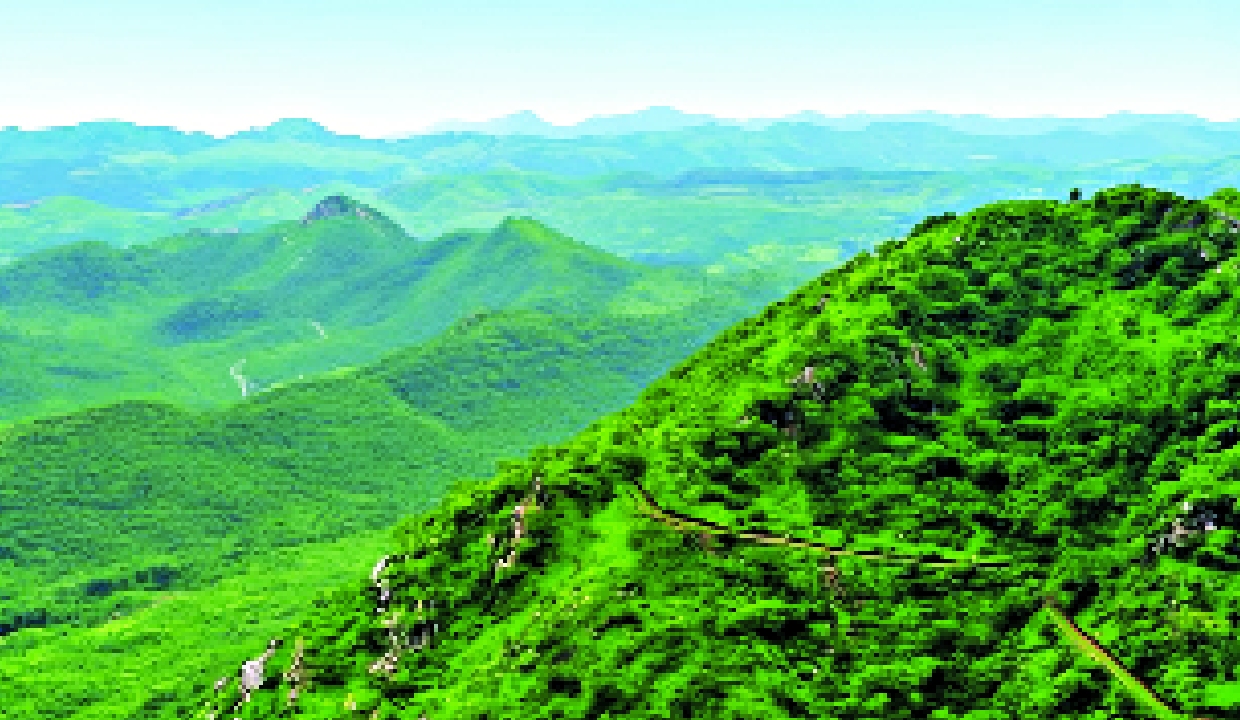
The Aravalli Green Wall Project represents one of the country’s most ambitious environmental projects. It seeks to revive an ancient ecological system that has protected north-western India for centuries. Its success, however, will depend on ensuring strong legal protection, scientific planning and active community participation
Every year on 17 June, the world observes the UN Day to Combat Desertification and Drought under the UNCCD Convention - a reminder that healthy land is the quiet foundation of our food, our water, our biodiversity and our resilience to a changing climate. This year’s theme, “Restore the Land. Unlock.”, carries a hopeful message: restoring degraded landscapes is not merely an ecological duty but an investment in livelihoods, water security and a sustainable future.
The challenge is sobering. Nearly 40 per cent of the Earth’s land is now degraded, affecting billions of lives and threatening economic and ecological stability. India faces its own pressures - declining groundwater, biodiversity loss, expanding aridity and growing climate variability. Yet India has also emerged as a global leader in land restoration, and one of its most ambitious efforts is unfolding along an ancient line of hills: the Aravalli Green Wall.
A green wall, or a green shield?
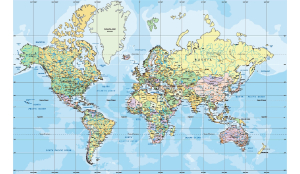
The phrase “green wall” entered the global vocabulary through Africa. Launched in 2007 by the African Union, the Great Green Wall set out to restore degraded land across the full width of the continent, stretching some 8,000 kilometres from Senegal on the Atlantic to Djibouti on the Horn of Africa. Originally conceived across eleven core Sahel countries and since expanded to many more, it aims to restore 100 million hectares of land, sequester 250 million tonnes of carbon and create 10 million green jobs by 2030.
Africa’s experience taught the world an important lesson. A rigid line of planted trees marching across deserts could not survive on its own; the most enduring insight from the Sahel is that the initiative evolved from a tree-planting drive into a mosaic of activities - a comprehensive effort blending water harvesting, soil conservation, grasslands and community livelihoods. The “wall” was never really a wall.
This is why, in spirit, we should understand these initiatives not as walls but as shields. The Aravalli Green Wall, properly understood, is India’s green shield against the advancing desert — not a barrier of bricks, but a breathing, regenerating landscape.
Reviving an ancient ecological shield
Stretching across Gujarat, Rajasthan, Haryana and Delhi, the Aravalli Range is among the oldest mountain systems on Earth. For millennia, it has shielded the subcontinent from the eastward march of the Thar Desert while recharging aquifers, regulating local climate and sheltering rich biodiversity. Decades of deforestation, mining, encroachment and unsustainable land use have worn this shield thin - and the consequences reach far beyond the hills.
Recognising this, Union Minister for Environment, Forest and Climate Change Bhupender Yadav launched the Aravalli Green Wall Project in 2023, one of India’s most ambitious landscape-restoration programmes, blending afforestation, watershed development, groundwater recharge, the revival of water bodies, dust-storm mitigation, carbon sequestration and community livelihoods.
The Aravalli Green Wall is the on-ground expression of a commitment India has made repeatedly at the highest global forums. Under the leadership of Prime Minister Narendra Modi, India has placed land restoration at the centre of its climate diplomacy. When India hosted the 14th Conference of Parties to the UN Convention to Combat Desertification (UNCCD COP14) in 2019, the Prime Minister raised India’s ambition to restore degraded land from 21 million to 26 million hectares by 2030 - a pledge carried forward in the Delhi Declaration adopted at the close of that conference.
This sits within a wider arc of leadership: India’s commitment to Land Degradation Neutrality and the Bonn Challenge; its pledge of net-zero emissions by 2070, announced at Glasgow; and Mission LiFE (Lifestyle for Environment), which the Prime Minister has championed from the G20 to the United Nations as a model for sustainable living. The Aravalli Green Wall translates these global commitments into restored watersheds, regenerated forests and revived water bodies on Indian soil.
If restoration rebuilds the shield, the law defends it - and here the judiciary has been a steadfast guardian of the Aravallis. The Supreme Court banned mining in Gurugram, Faridabad and Nuh as far back as 2009, and has intervened repeatedly against illegal mining and encroachment across the range. Yet a deeper problem persisted: the four Aravalli states followed inconsistent criteria for what even counts as an “Aravalli”, leaving regulatory gaps that illegal mining exploited. To close those gaps, the Court constituted a committee in May 2024 to recommend a uniform definition. In November 2025, it accepted that committee’s formulation - defining an Aravalli hill as a landform rising 100 metres or more above the local relief, and a range as two or more such hills within 500 metres — froze new mining leases and mandated a plan for sustainable mining.
The definition, however, drew sharp criticism: ecologists and citizen groups warned that a purely height-based threshold could exclude vast tracts of the range from protection, endangering groundwater recharge, biodiversity and the very desertification control the Aravallis exist to provide.
Responding to these concerns, the Supreme Court took suo motu cognisance, kept its November judgment and the committee’s report in abeyance, and ordered a fresh, independent expert review. In June 2026, it constituted a high-powered committee headed by the Director General of the Indian Council of Forestry Research and Education (ICFRE) to re-examine the definition and demarcation, resolve the “critical ambiguities” in the earlier findings, and submit a comprehensive report by 31 August 2026. Much now rests on this committee. A definition is not a technicality; it draws the line between what is protected and what may be quarried. The expectation — shared by conservationists, scientists and administrators alike — is for a definition that is scientifically rigorous and map-verifiable, yet ecologically precautionary: one that protects not merely the tallest peaks but the connected system of foothills, valleys, recharge zones and ridgelines that make the Aravallis a functioning ecological barrier. Where the science is uncertain, the definition must err on the side of protection. Crucially, the legal boundary of the Aravallis and the restoration ambition of the Green Wall must speak to each other - for it makes little sense to plant a shield on one hand while leaving it legally exposed on the other.
The stakes are highest, and most immediate, for the National Capital Region. The Aravallis are the single most significant natural barrier shielding the NCR from the dust and aridity of the Thar. A healthy Aravalli landscape means cleaner air and fewer dust storms over Delhi and its satellite cities, recharged aquifers beneath one of the world’s most water-stressed urban regions, and a cooler, more stable microclimate for tens of millions of residents. The environmental fate of the capital region is, quite literally, tied to the health of these ancient hills.
At the landscape scale, the case is just as compelling. Restoration knits together a continuous ecological corridor from Gujarat through Rajasthan and Haryana to Delhi - reconnecting fragmented wildlife habitats, stabilising watersheds across the basin, and rebuilding the resilience of all north-western India.
A people’s shield
The Sahel’s experience confirms a simple truth: where communities are excluded, walls crumble; where they are made stewards, shields endure. Through Mission LiFE, the Ek Ped Maa Ke Naam campaign and the Amrit Sarovar Mission, restoration in India has become a people’s movement - the work of citizens, schools, civil society and the private sector as much as of government. Every restored hectare, every revived pond, and every nurtured tree adds a fibre to the living shield that guards our water, our biodiversity and our climate. As the world marks World Desertification and Drought Day 2026, the Aravalli Green Wall stands as a powerful symbol of India’s resolve — a resolve that must now be matched by a definition strong enough to hold the line. Reviving the Aravallis is not about building a wall of trees; it is about restoring, and defending, an ancient living shield for the generations to come. The time to act is now — for the land, for the climate, and for the future.
The Aravalli Green Wall stands as a powerful symbol of India’s resolve — a resolve that must now be matched by a definition strong enough to hold the line. Reviving the Aravallis is not about building a wall of trees; it is about restoring, and defending, an ancient living shield for the generations to come
The writer is an Indian Forest Service officer and former Country Representative of the International Union for Conservation of Nature; Views presented are personal.