Empowering widows to rebuild their lives with dignity and independence
I was only 11-year-old when my father Jagiri Lal Loomba died of tuberculosis, leaving my mother, Shrimati Pushpa Wati Loomba, widowed with seven children. My mother became a widow at the early age of 37. Despite the immense challenges my mother faced, she ensured that all her children received a good education. Her strength and resilience inspired me to lifelong determination to ensure that widows are treated with dignity and given opportunities for economic independence and social inclusion Forty three-year later, in 1997 I founded The Loomba Foundation, with the mission of supporting widows and educating their children in memory of my late mother, who was my inspiration.
In 1999, the then Prime Minister, Atal Behari Vajpayee, launched our project to educate children of poor widows in India. To date the Loomba Foundation has educated over 10,000 children of poor widows in all the 30 states of India. Each beneficiary was given a monthly scholarship of `500 for a period of five years. This amount included school uniform, lunches, healthcare and sustenance amount for the mother.
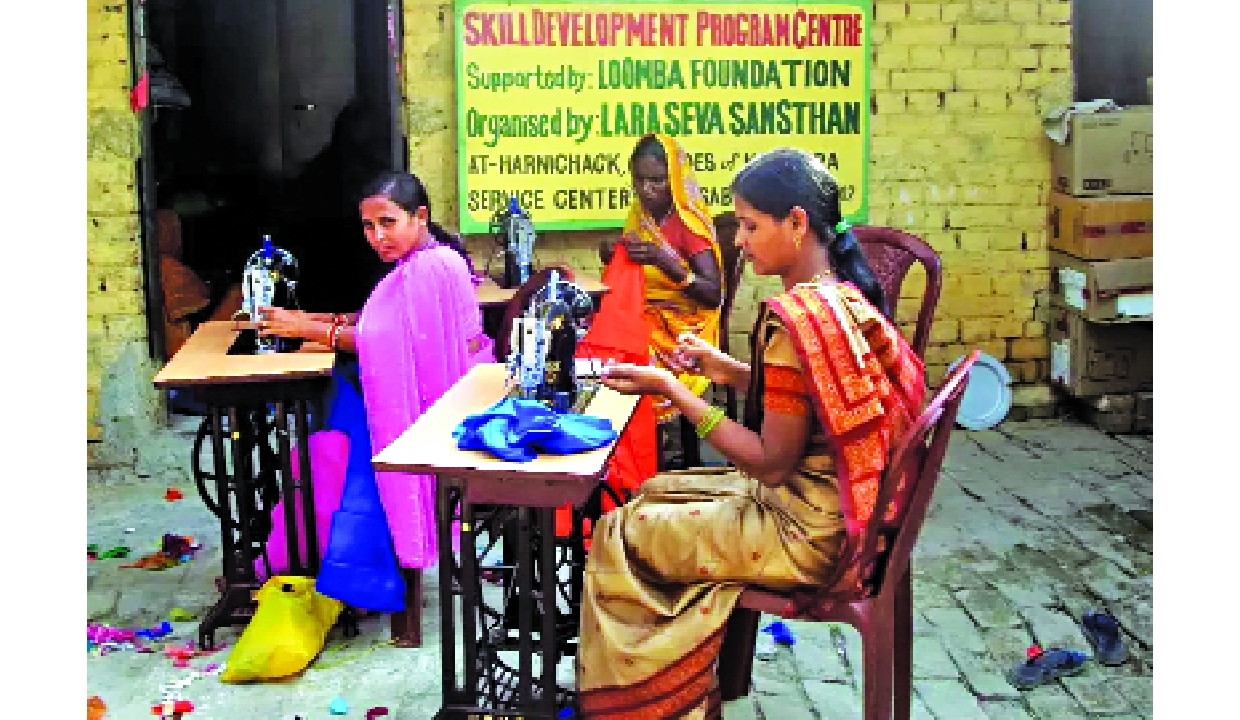
Over the years, the Foundation has developed pioneering programmes focused on education, empowerment and advocacy. More than 10,000 children of poor widows have received educational scholarships, helping to break cycles of poverty and social exclusion. The Foundation has also empowered over 20,000 widows through vocational training programmes in areas including tailoring, food processing, healthcare, hospitality and computer education.
These initiatives have enabled widows to become financially independent and rebuild their lives with dignity. I believe that widowhood should never condemn a woman to poverty, isolation or humiliation. The Foundation’s work has extended across India and internationally, with activities in Africa, Asia, Europe and North America. In recognition of its global impact, The Loomba Foundation was granted Special Consultative Status with the United Nations Economic and Social Council (ECOSOC).
Widows are treated badly in South Asia, Africa and other parts of the world. In some cases, they have to deal with murder, rape, prostitution, forced marriage, property theft, eviction and social isolation. There are an estimated 285 million widows worldwide and of these 100 million live in poverty and 81 million have been abused physically, psychologically and even sexually.
Perhaps our most historic achievement has been the establishment of International Widows Day. The campaign began in 2005 when the Foundation formally launched International Widows Day at the House of Lords in London. The aim was simple but ambitious — to bring global attention to the plight of widows and mobilise governments, international organisations and civil society to act.
That followed a tireless five-year international campaign. International events were held across several countries to raise awareness of what he described as the “invisible suffering” of widows. The campaign gathered support from influential global personalities, including former UN Secretary-General Kofi Annan, Cherie Blair, Hillary Clinton, Yoko Ono and leaders from several nations.
The breakthrough came on December 22, 2010, when the United Nations General Assembly unanimously adopted 23 June as United Nations International Widows Day. The first official UN-recognised observance took place on June 23, 2011, at UN Headquarters in New York. This landmark achievement ensured that widows’ rights and welfare would no longer remain invisible on the global agenda. Today, International Widows Day is observed annually around the world, highlighting the social, economic and human rights challenges faced by widows and their dependents.
As a member of the House of Lords, I have continued to champion widows’ rights at every opportunity. My advocacy has helped redefine widowhood not simply as a social issue, but as a major human rights and development concern. Through research publications, international conferences and grassroots programmes,
Over 20,000 widows in Sri Lanka, Bangladesh, India, Nepal, Kenya, Uganda, Tanzania, South Africa, Malawi, Guatemala and Chile have so far benefited from the Loomba Foundation empowerment programmes, breaking the cycle of deprivation and transforming their prospects.
In India, the Loomba Foundation, in partnership with the US India Friendship Alliance, a charitable arm of the US India Strategic Partnership Forum, started a ‘Prosperity for Widows Project’ to empower 5.000 marginalised widows in the state of Uttar Pradesh on January 1, 2023.
Loomba Foundation’s Varanasi project to empower 5,000 widows was launched by Prime Minister Narendra Modi in 2016. That project not only helped the widows but it also supported 50,000 of their children and family members. Each widow has received training in tailoring for two months. Once the training was completed, the Foundation gave each beneficiary a sewing machine so that they could start their own business or work in a factory to earn money, become self-reliant and be able to educate their children and support their family members.
Modi, who represents Varanasi in the Lok Sabha, had said: “I met Lord Loomba about a year ago in Delhi and he mentioned that his foundation would like to support 5,000 widows in Varanasi. I commend their work and feel happy that both of them are present at this event here today”. The “World Widows Report” presented to him; was the most authoritative and comprehensive country-wise data source on the plight of widows. The Report revealed that the number of widows in the world has gone up by 9 per cent since 2010. There are over 258 million widows and their 585 million children worldwide. Later,
I appealed to the Prime Minister that “since there are over 46 million widows and over 100 million children in India who need support from all of us as individuals, policy makers and corporates alike, the Government should establish a ‘National Commission for Widows’ to help them.”
Unless the Government comes forward to help widows, India will never be able to achieve the Sustainable Development Goals, which have been signed by all the governments, including India, at the 69th General Assembly of the United Nations in New York in September 2015.
The writer is the Founder of the Loomba Foundation and a member of the House of Lords, United Kingdom; Views presented are personal.