Can the UN be revived for the world’s sake?
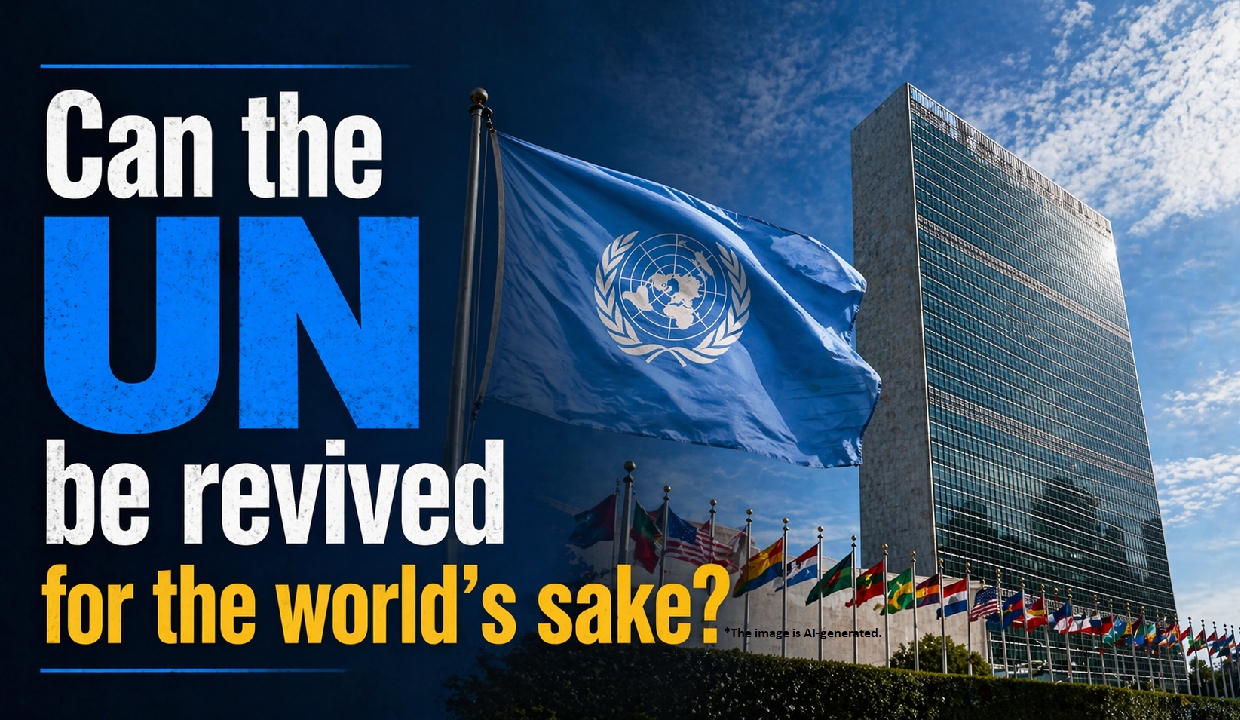
Even as the Gulf war slowly turns into a war of egos and a load of baloney from everyone involved, one reality stands out - the diminished relevance of the United Nations in the entire drama. The first time I heard about the UN was in school, where we had annual examinations that I took, not knowing for what reason. It, however, gave me an overview of the organisation, which I felt was very impressive even at that young age — a league of nations instituted to prevent future wars. Schools now conduct model UN simulations to help students learn more about its functions and principles, but it makes one wonder, to what end all the understanding if the organisation itself stands powerless and peripheral in the face of mindless violence and aggression around the globe?
The UN Secretary General’s latest words on the war as “a rising tide of human suffering, and a deeper global economic shock,” sound like platitudes that do very little to bring any shift in the way the conflict is moving, and inconsistent with its original objective of playing an integral part in avoiding global conflagrations post-World War II. With each instance of clash between nations, the UN’s original aims seem to get dismantled, one cog at a time.
A quick read-up of the UN’s history reveals how, despite the bold ambitions, it was often paralysed in its initial years by the prolonged discord between the US and the USSR.
In the 1990s, it had some role to play in limiting conflicts from escalating into global wars with its peacekeeping operations and interventions. But then came an era where the UN began to lose its grip on member nations that rose in stature to such an extent that their belligerent voices stood above
the peace-loving pleas of the UN. The rise of a multi-polar world and regional powers made sure that it was heard lesser and lesser, and now, as we see, its voice has been reduced to a whimper appealing for peace with no one to heed.
The increasing geopolitical divisions have reduced the role of the UN from being an enforcer to that of a mediator, and that too with limited impact. Donald Trump’s stance towards the UN has been one of scepticism and open disregard. Given that his initiatives are tilted towards serving American interests and not in maintaining world order, his assessment of the UN as biased and inefficient sounds more like a death sentence on the institution. His withdrawals and reduced engagement with specialised agencies like the UNHRC, WHO and UNESCO makes one wonder — if the superpower itself doesn’t stand in tandem with the values on which the UN was built, how then does the rest of the world honour it?
Of what value are UN resolutions when major powers exercise vetoes based on national interest? Wars continue, and nations increasingly rely on bilateral or regional arrangements, reducing the UN to a forum for discussion rather than action. Yet, despite its limitations, the UN remains vital in humanitarian crises. It feeds millions, shelters refugees, vaccinates children, and supports populations affected by conflict and disaster. The prospect of it regaining its role as a deterrent force seems unlikely — a troubling reality. Its decline reflects a deeper failure of global commitment to peace and collective responsibility.
The writer is a Dubai-based author, columnist, independent journalist and children’s writing coach; Views presented are personal.