Urgent reforms needed in CGHS: Air India retirees trapped in a bureaucratic nightmare
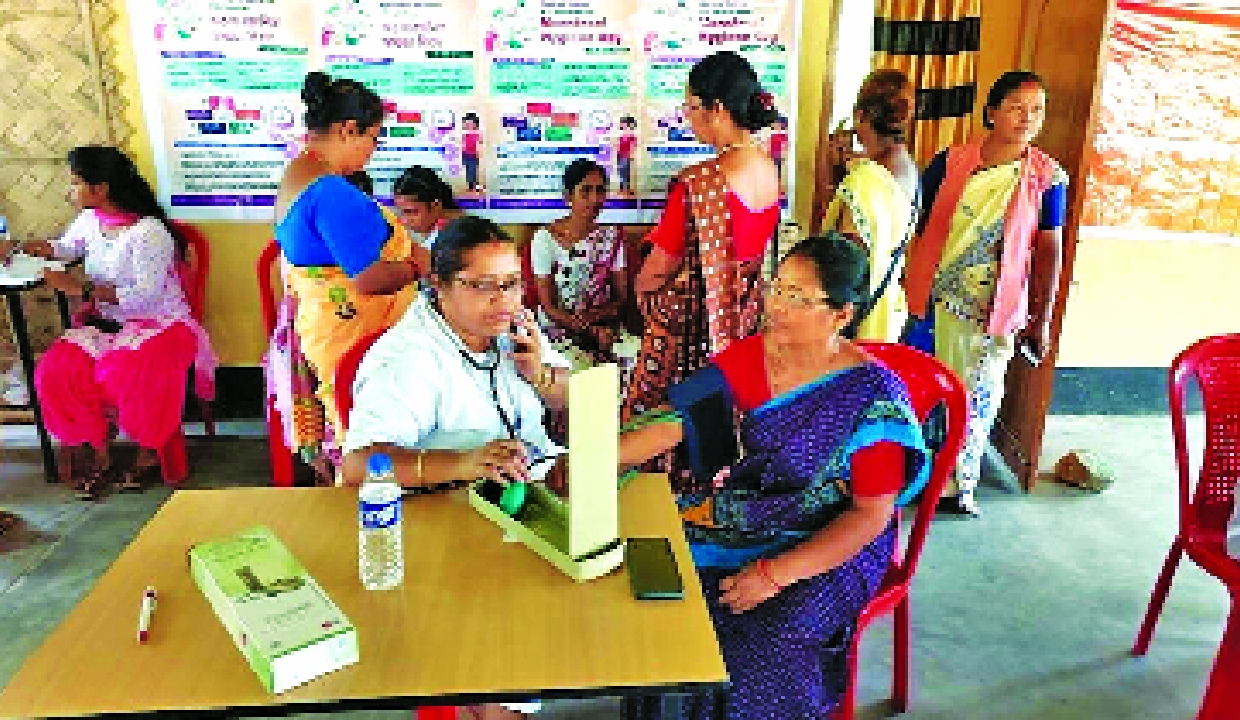
Thousands of retired Air India employees are today trapped in a distressing cycle of humiliation and medical insecurity under the Central Government Health Scheme (CGHS). For them, what was meant to be a dependable healthcare safeguard has instead turned into a nightmare of delayed reimbursements, and administrative apathy
As India pushes towards universal health coverage under Ayushman Bharat, which is one of Prime Minister Narendra Modi’s greatest gifts to the people, another flagship welfare scheme — the Central Government Health Scheme (CGHS) — is failing thousands of its most vulnerable beneficiaries. Senior citizens who served the national carrier, Air India, for decades are now caught in a web of red tape, delayed payments, and hospital harassment that has turned a promised seamless medical safety net into a source of constant anxiety and financial distress, and nobody bothers if one complains.
Following the 2022 privatisation of Air India to the Tata Group, the Government of India rightly extended CGHS benefits to eligible retired and retiring employees as a social safeguard. Official memoranda assured cashless treatment, medicines, and investigations at empanelled hospitals — benefits meant to replace or improve the earlier Retired Employees Medical Scheme (REMS). Yet, on the ground, the reality is starkly different.
Many of these pensioners, now in their 70s and 80s, are forced to pay huge sums upfront for treatment and then chase reimbursements for months, often receiving only partial settlements or rejected claims. The root of much of this suffering is an unnecessary detour through the callous and arrogantly incompetent UTI Infrastructure Technology and Services Limited (UTIITSL), which has been appointed as the Bill Clearing Agency (BCA) for Air India-related CGHS claims. Instead of routing everything through the efficient National Health Authority (NHA) system that handles the main CGHS operations, these beneficiaries have been shunted into a parallel, slower track.
A glaring example is Indresh Hospital in Dehradun, which has been harassed for the last two months by UTIITSL. Despite submitting its valid NABH accreditation certificate six times, UTIITSL continues to reject claims and refuses to recognise the accreditation. Even a formal complaint lodged on the PMO grievance portal was dismissed contemptuously, further eroding trust in the system. This has forced the hospital either to demand full cash payments from Air India retirees or to turn them away, directly impacting patients in Uttarakhand and surrounding areas.
The Additional Director, CGHS, is not authorised to supervise these matters and, even after his communication, UTIITSL does not bother. Hospitals all over India - from Delhi to Mumbai to Chennai — empanelled under CGHS report similar harassment: bills are rejected on minor technical grounds, accreditation certificates are questioned despite NABH compliance, and payments are delayed for 8 to 18 months. This has led several hospitals either to refuse cashless services to Air India cardholders or to demand full payment in advance.
One affected retiree from Delhi described the ordeal: “We served the nation’s airline through its toughest times. Now, in old age, we stand outside hospital counters begging for basic dignity in healthcare.”
Similar stories echo across Mumbai, Kolkata, Chennai, and smaller cities where Air India staff settled after retirement. In many Tier-2 locations, empanelled facilities are scarce, and those available are increasingly reluctant due to the UTIITSL bottleneck.
Systemic Failures Plaguing CGHS
The problems extend far beyond Air India beneficiaries. CGHS serves over 45 lakh central government employees, pensioners, and dependants, yet it grapples with outdated infrastructure and processes. Hospital empanelment remains inadequate, especially outside metropolitan areas. CGHS package rates for surgeries and procedures have not kept pace with inflation or private-sector costs, prompting many reputed hospitals either to opt out or to deliver compromised care to CGHS patients.
Claim settlements are notoriously slow. Digital portals exist but are not fully user-friendly, forcing many elderly beneficiaries to submit physical documents and face repeated queries over formatting or missing stamps. Advanced treatments often face caps or outright exclusions, leaving patients to bridge the gap from their meagre pensions.
For Air India retirees specifically, the situation is aggravated by card-related confusion. Many received yellow-strip cards meant for autonomous bodies instead of the promised special-category cards. Entitlements are not clearly printed, leading to disputes at hospital counters. While OPD services through CGHS wellness centres work somewhat smoothly, inpatient department (IPD), day-care procedures, diagnostics, and emergency care have been severely affected by the UTIITSL routing.
This detour appears to contradict the directives that envisioned seamless NHA integration. The result is a classic case of policy intent being defeated by poor execution. Hospitals, already operating on thin margins under CGHS rates, are now bearing the brunt of endless back-and-forth with UTIITSL, leading them either to turn away patients or to insist on cash payments.
Families are selling assets or borrowing money to fund treatment while waiting for reimbursements that may never come in full. It raises serious questions about the government’s commitment to welfare for disinvested public-sector employees. If the CGHS scheme — with a dedicated budget - cannot deliver basic cashless care efficiently, how can India scale more ambitious health programmes?
Due to mounting frustration, petitions have reached various High Courts, including notices issued by the Madras High Court on related matters. Retirees’ associations have repeatedly written to the Ministries of Health, Civil Aviation, and Finance, highlighting violations of earlier assurances.
CGHS requires bold, time-bound action rather than incremental tweaks. The most immediate step must be the removal of the UTIITSL detour for all Air India beneficiaries, who should be fully integrated into the NHA platform. NHA’s experience with large-scale digital processing under PMJAY can deliver settlements within 30-45 days, restore hospital confidence, and enable genuine cashless treatment.
Second, CGHS rates must be revised annually through a transparent medical inflation index linked to NABH standards, and coverage should include modern therapies without arbitrary caps. Empanelment drives should target at least 1,000 additional hospitals in Tier-2 and Tier-3 cities.
Third, complete digital transformation is overdue. Auto-approval for high-compliance claims and penalties on clearing agencies for delays beyond 60 days would enforce accountability.
Fourth, all retirees should receive standardised CGHS cards with lifelong validity.
Finally, the government should consider a dedicated medical corpus for these beneficiaries and explore convergence with other schemes for hybrid coverage.
CGHS was envisioned as a model of dignified healthcare for public servants. Today, it risks becoming a symbol of bureaucratic indifference. The suffering of Air India retirees, exemplified by cases like Indresh Hospital in Dehradun, and the broader challenges within the scheme deserve national attention.
The media, civil society, and policymakers must push for reforms that place patients — especially senior citizens - at the centre. The government must act decisively to repair CGHS before more lives are compromised by avoidable administrative hurdles.
CGHS was envisioned as a model of dignified healthcare for public servants. Today, it risks becoming a symbol of bureaucratic indifference. The suffering of Air India retirees, exemplified by cases like Indresh Hospital in Dehradun, and the broader challenges within the scheme deserve national attention
The writer is a former Principal Secretary to the Government of Tripura and Chairman of the Centre for Resource Management and Environment; Views presented are personal.
Leave a Comment
Comments (4)
Live in hope and suffer in despair. We are doomed with such inept people at the helm.
Absolutely frustrating , Medanta at Gurgaon also unable to provide cashless treatment due to UTIITSL issue, AIESL retirees who gets cghs cards as AirIndia retirees are facing these problems regularly
Very well articulated. It appears that no one is ensuring that the Government’s commitment to provide seamless medical services to Air India retirees—who are contributing to CGHS on par with Government pensioners—is being upheld. Denial of cashless IPD facilities reflects bureaucratic apathy. A shift from UTIITSL to NHA, as originally envisaged, could address many of these shortcomings. This change would not involve any additional financial burden on NHA; rather, the Government could save on UTIITSL fees and avoid potential incorrect payments to HCOs, given their limited infrastructure and lack of robust processes compared to NHA, which has long experience in handling CGHS and HCO-related systems.
Include Air India Retirees to NHA, most of problems will be solved.