Assam polls reveal India’s hardening electoral politics
High-intensity poll-eve rows, particularly involving corruption and sleaze allegations, are a known phenomenon in Indian electoral history. This has become more pronounced during the last decade, with even top leaders indulging in no-holds-barred personalised attacks, and allegations of corruption at high places becoming a familiar theme.
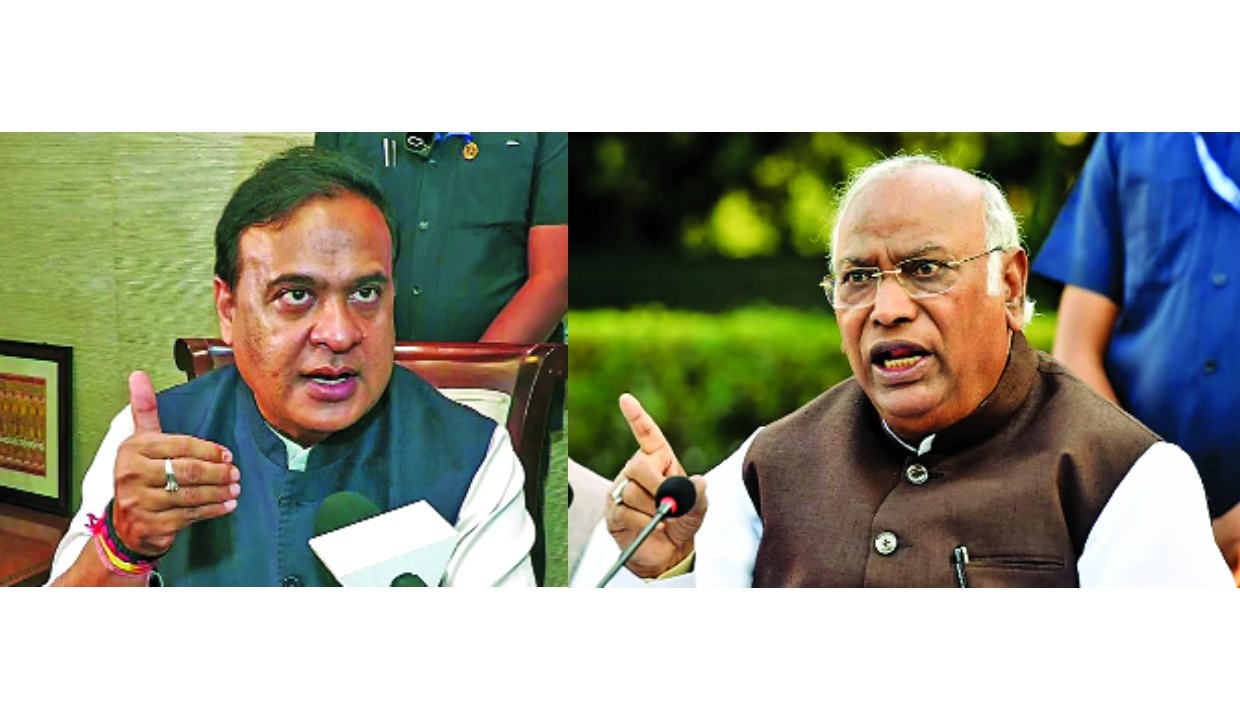
However, by and large, this has been a one-way traffic, with the ruling BJP-led National Democratic Alliance having the upper hand. The strategy of treating political rivals as enemies — also a relatively new concept in over seven decades of the country’s democratic history — and fixing them using the might of statecraft, squarely to win elections, has become increasingly visible. By hook or by crook. This one-way traffic ran smoothly and effectively for the ruling dispensation until Pawan Khera, Chairman, Media & Publicity (Communication Department), AICC, broke the monotony with a set of serious corruption allegations targeting Assam Chief Minister Himanta Biswa Sarma and his wife. As Khera chose an opportune moment - two days before campaigning for the Assembly elections was to end — to target Sarma, it naturally created a furore, with the latter baying for the former’s blood and turning vituperative not only against Khera, but also the octogenarian Congress president, Mallikarjun Kharge, and Rahul Gandhi.
Ironically, at the state level, it is a showdown between two contrasting political models that have been at play on the national political horizon since 2014. The line-up has been “Hurricane Strategist vs Guarded Challenger”, represented by Prime Minister Narendra Modi and Leader of Opposition in the Lok Sabha Rahul Gandhi, with Kharge repeatedly getting trapped in the crossfire.
A true reflection of this model came to the fore in the form of a duel between Sarma and Gaurav Gogoi — the incumbent Chief Minister spearheading the BJP campaign, and the Congress’s CM hopeful. Khera’s tirade against Sarma has not only taken the confrontation to the next level, with the only difference being that the Congress, instead of the BJP, was the “instigator” and the BJP the target this time around.
As Sarma frothed with anger after his no-holds-barred model — a replica of the BJP’s national template — was jolted by an opponent trying to beat him at his own game, his frustration was visible when he burst into expletives targeting Kharge and Gandhi, apart from Khera.
Notwithstanding the fact that the reins of power during elections rest with the Election Commission of India, CM Sarma’s public outbursts resulted in the Assam Police losing no time in landing at Khera’s doorstep in Delhi, acting swiftly on an FIR filed overnight by Sarma’s wife.
What did he say about Kharge? “Kaun hai Kharge? Pagal hai woh…”
What did he say about Khera while impliedly targeting Gandhi? Khera would spend his “last moments” in an Assam jail, as he declared the allegations against him and his wife to be “fabricated”. “I would file a case against Khera first, then turn the others into ‘peda’ (sweets),” a remark ostensibly directed at Gandhi.
The backdrop to this conflict was Khera’s allegations, levelled at a press conference at the AICC headquarters in Delhi, that Sarma’s wife, Riniki Bhuyan Sarma, “holds multiple foreign passports and undisclosed overseas assets”. The genesis of Khera’s allegations lies in similar charges levelled earlier by Sarma against Gogoi, alleging his wife’s “Pakistan links”.
Interestingly, Sarma, a former Congressman, was once the blue-eyed boy of former Chief Minister Tarun Gogoi and a senior minister in his Cabinet before joining the BJP, after Gandhi had reportedly refused to entertain his claim to the Chief Minister’s chair. Of course, Gaurav Gogoi is Tarun Gogoi’s son.
Gaurav Gogoi, educated abroad, has gradually evolved into a mature politician and impressive parliamentarian before being appointed Assam Congress chief ahead of the Assembly elections. Unlike Himanta Biswa Sarma’s aggressive political style, Gogoi has maintained a calm and calculated approach while carrying forward his father Tarun Gogoi’s legacy.
He strengthened his position politically after winning the Jorhat Lok Sabha seat despite strong BJP opposition and Sarma’s towering presence in Assam politics. The victory boosted Gogoi’s confidence and established him as a serious challenger with Rahul Gandhi’s backing.
How will these contrasting political models of rivalry manifest in the ongoing Assembly elections in Assam?
Surely, the stakes are much higher this time for both the BJP and the Congress than they were in the Lok Sabha polls. Assam has been the BJP’s gateway to the North-East region, where it once had virtually no presence and where Sarma played an important role after defecting from the Congress, leading eventually to the fulfilment of his chief ministerial ambitions. It is equally important for both the BJP and Sarma that the party returns to power in order to retain its grip over the region, especially with an eye on the 2029 Lok Sabha elections.
Even at a personal level, Sarma has far more at stake this time than ever before. Leading the BJP to victory will not only help him retain the chief ministership but also add to his political clout. A defeat — that too at the hands of the Rahul Gandhi-Gaurav Gogoi combine, who have long been his principal targets — would considerably weaken his political standing and could raise serious questions about his future.
The Congress, meanwhile, has an opportunity to stage a comeback in its former citadel of North-Eastern India. A victory in Assam, the largest state in the region, would provide a significant boost to the party, which has been pushed into political oblivion in the area by the BJP, with Sarma playing a stellar role in settling scores with his erstwhile party and Gandhi.
A Congress victory under Gogoi, in the absence of his father, would be a major boost both for him personally and for the party. For Gogoi, it would be a landmark achievement if the Congress were to choose him as Chief Minister following an electoral victory.
The writer is a political analyst; Views presented are personal.