Familiar waters, fatal neglect: Lessons from the Narmada Disaster
India already has the laws, expertise, and resources needed to prevent such disasters. What is required now is the determination to implement them. As has been rightly pointed out, the challenge is not the ability to act, but the willingness to do so. If this incident leads to genuine reform, it may serve a purpose beyond the tragedy itself
The recent capsizing of a tourist cruise at Bargi Dam in Madhya Pradesh claimed several lives. This is not just a tragic accident; it highlights a serious failure that keeps costing lives across India. The image of a mother holding her four-year-old son in his last moments shows both human bravery and a failure of institutions. These tragedies are not due to fate; they are the result of neglect, complacency, and poor enforcement of safety rules.
What happened on the Narmada was sadly familiar, not because it was inevitable, but because it reflects a pattern India has seen too often. Survivors describe how the weather changed suddenly. Strong winds hit the reservoir, and the boat began to tip. Panic spread fast as water poured into the vessel. Passengers realised too late that there were no effective safety measures. There were not enough life jackets, no safety briefing, and no clear effort from the crew to handle the emergency. Within minutes, a relaxing outing turned into a desperate fight for survival.
This incident mirrors earlier tragedies, like the recent boat accident in the Yamuna near Mathura. There, similar issues — overcrowding, lack of safety gear, and ignoring weather warnings — led to multiple deaths. These ongoing problems raise an urgent question: why does India keep facing such avoidable disasters when it has clear laws and regulations?
The answer lies not in the absence of rules, but in their consistent violation. India’s legal framework for inland water transport is strong. The Inland Vessels Act, 2021, and related safety regulations clearly require vessel certification, regular inspections, limits on passenger capacity, and mandatory safety equipment. On paper, the system looks thorough. In practice, though, enforcement is weak and often superficial.
Boats continue to operate without proper certification or inspection. Operators often ignore passenger limits, especially in tourist areas. Safety equipment is sometimes inadequate or completely missing. Weather advisories, when issued, are not always taken seriously. As noted in earlier discussions, the real issue is the “large gap between policy and practice”, where compliance becomes optional and safety negotiable.
Operators are also a concern. Their main motivation often seems to be profit rather than safety. Each extra passenger means more revenue, and spending on safety is seen as an unnecessary cost. In the Bargi incident, there are claims that warnings about worsening weather were ignored and that the crew did not respond effectively as conditions deteriorated. The fact that the captain survived with a life jacket while passengers faced dangers without basic protection raises serious ethical questions about responsibility and preparedness.
However, it would be too easy to blame only the operators. Regulatory authorities also share the responsibility. If a vessel can operate without meeting safety standards, it shows a failure in oversight. Inspections, when they happen, are often brief. Monitoring systems are either weak or non-existent. Furthermore, having multiple agencies involved - such as tourism departments, local administration, police, and disaster response teams - often leads to fragmented accountability. In such a system, lapses can go unnoticed until a tragedy occurs.
Another key issue is the failure to consider weather information in operational decisions. Sudden storms and high winds are common in large bodies of water like reservoirs. Modern forecasting systems can provide timely warnings, yet these are often ignored or downplayed. Choosing to go ahead with a leisure cruise despite bad conditions shows a deeper culture of risk denial.
At the heart of these problems is a lack of a safety culture. Safety is often seen as a formality rather than a crucial requirement. Passengers rarely question overcrowding or ask for life jackets. Operators seldom give safety briefings. Authorities rarely enforce compliance with the seriousness it needs. As long as safety is secondary to convenience or profit, such incidents will keep happening.
The Bargi tragedy also shows a consistent failure to learn from past incidents. India has experienced many boat accidents over the years - in Assam, Bihar, Kerala, and Uttar Pradesh - each met with public outrage, official statements, and promises of tougher enforcement. Yet, over time, these promises fade, and the system returns to its former state. As noted in previous reflections, the lessons that could prevent future disasters are often lost in a cycle of reaction and forgetfulness.
Breaking this cycle requires more than small changes; it needs a fundamental shift in approach. Enforcement of safety regulations must be strict and unwavering. Vessels should not be allowed to operate without proper certification, and violations should lead to significant penalties. In cases of gross negligence that result in loss of life, criminal liability must be clearly defined.
Technology has the potential to be a game-changer. With real-time vessel monitoring via GPS, digital tracking of passenger counts, and the integration of weather alerts into operational systems, safety can be greatly improved. But technology is not a magic fix for accountability. It needs to be backed by a strong commitment from institutions and a culture of transparency.
Building capacity is just as crucial. Crew members should receive training not just in navigation, but also in handling emergencies. Regular drills and safety audits should become the norm, especially in high-risk areas like popular tourist spots. Preparedness should not be an afterthought; it should be woven into the fabric of operations.
Public awareness is another vital piece of the puzzle. Passengers need to be empowered to take their safety seriously - asking for life jackets, questioning unsafe practices, and refusing to board overcrowded boats. A safety culture cannot simply be dictated from the top; it has to become a shared social value.
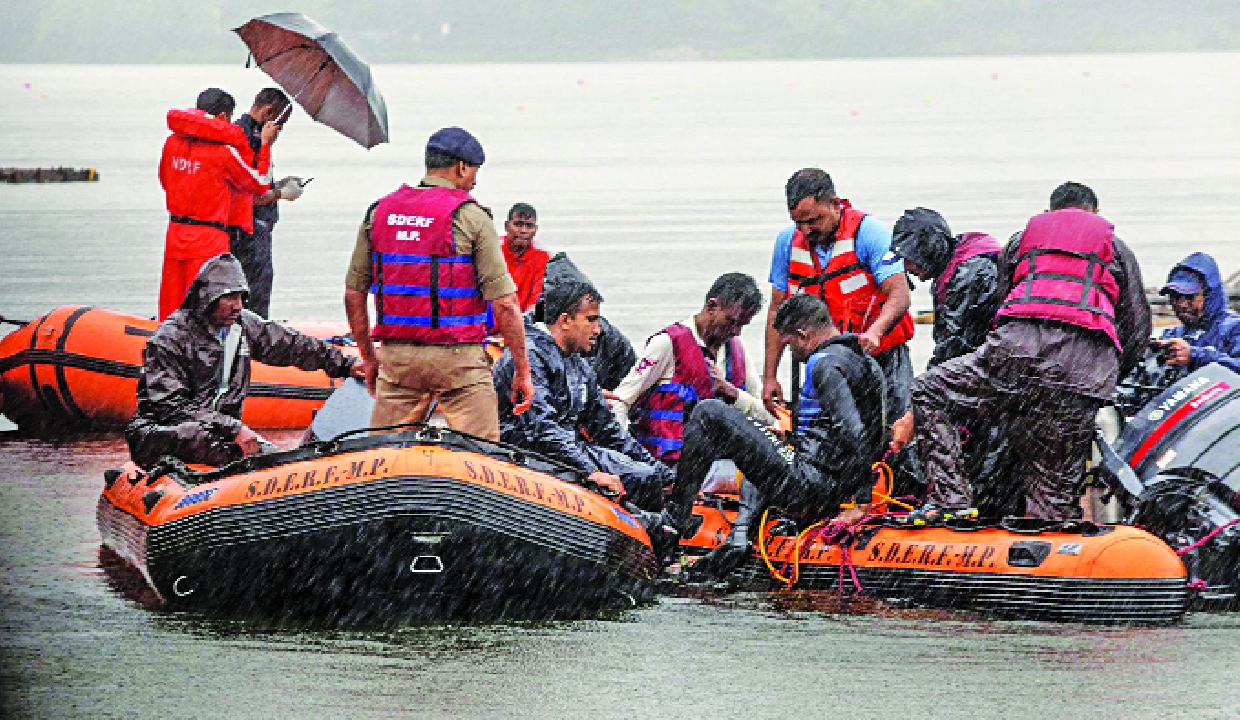
Lastly, emergency response systems must be strengthened. Quick and coordinated rescue efforts can save lives. In the Bargi incident, rescue teams managed to save several people, but delays and limitations in response capabilities may have cost others. Pre-positioning rescue resources and improving coordination among agencies can make a significant difference in critical situations.
The tragedy at the Narmada is not just a local issue; it resonates nationally. As India expands its tourism industry and promotes more recreational activities around water bodies, the risks associated with these activities will also rise. Addressing these risks requires a proactive and sustained commitment to safety.
At the end of the day, it all comes down to what society chooses to prioritise. Development loses meaning if it comes at the cost of human lives. Safety should not be viewed as something negotiable; it must be treated as a fundamental requirement for progress.
The heartbreaking losses at Bargi Dam should serve as a wake-up call. They force us to confront uncomfortable truths about negligence, failures in governance, and society’s approach to safety. More importantly, they compel action to ensure that such tragedies are not repeated.
India already has the laws, expertise, and resources needed to prevent such disasters. What is required now is the determination to implement them. As has been rightly pointed out, the challenge is not the ability to act, but the willingness to do so. If this incident leads to genuine reform, it may serve a purpose beyond the tragedy itself.
If not, it will become just another entry in a long list of preventable disasters — briefly mourned, then forgotten, until the next one occurs.
The heartbreaking losses at Bargi Dam should serve as a wake-up call. They force us to confront uncomfortable truths about negligence, failures in governance, and society’s approach to safety. More importantly, they compel action to ensure that such tragedies are not repeated
The writer is former Executive Director, National Institute of Disaster Management, Government of India; Views presented are personal.