Assam victory & the 3-H model
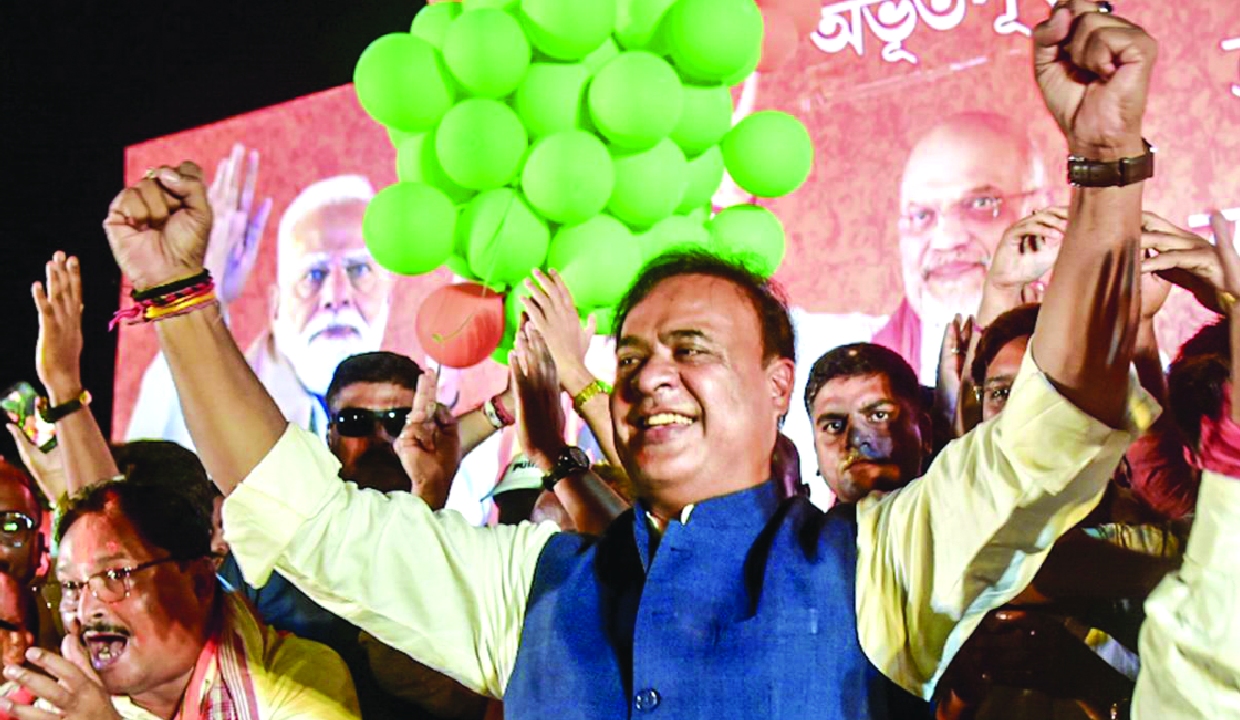
The verdict of the Assam Assembly elections of 2026 marks a decisive political moment. The Bharatiya Janata Party’s return to power for the third consecutive term is not merely an electoral victory, but the consolidation of a distinct political model. This outcome can be best understood through what may be described as the “3H framework” — Himanta, Hindutva in the Assam context, and Holistic Development. These three elements have not operated in isolation. They have worked together to produce a stable and expanding mandate.
At the centre of this framework stands Chief Minister Himanta Biswa Sarma. His leadership has acted as the integrating force between ideology, governance and cultural assertion. Unlike conventional leadership models that rely either on identity politics or welfare delivery, this model combines both. The result is a political structure where narrative and performance reinforce each other.
The first pillar of this framework is ideology, but in a contextualised form. In Assam, Hindutva has not followed a uniform national template. It has been adapted to address specific regional concerns related to identity, land and migration. Historically, these concerns have shaped political mobilisation in the state, particularly during the Assam Agitation. The BJP’s narrative of “Jati, Mati, Bheti” gave political expression to these anxieties by linking cultural identity with territorial rights.
What is significant in the period from 2021 to 2026 is the shift from articulation to materialisation. Identity was not left as a rhetorical tool. It was operationalised through governance measures such as land protection initiatives, delimitation exercises and administrative interventions. The delimitation process, in particular, played a crucial role in redefining political representation. It provided a practical framework for addressing the unresolved question of who constitutes the Assamese political community. In this sense, identity moved from being an abstract concept to a lived administrative reality.
The second pillar is holistic development, which has functioned as the most visible dimension of governance. The emphasis has been on delivery, scale and inclusion. Welfare schemes have been designed to reach households directly, ensuring that governance outcomes are experienced at the grassroots level. Programmes such as Orunodoi have provided financial support to vulnerable sections, while initiatives like the Mukhyamantri Mahila Udyamita Abhiyan have aimed to transform beneficiaries into economic participants. These schemes are not merely distributive. They are part of a broader development logic. Direct benefit transfer mechanisms have improved efficiency and transparency. They have also strengthened trust between the state and citizens. Governance, in this model, becomes measurable and visible, reducing the gap between policy formulation and implementation.
At the same time, infrastructure development has complemented welfare delivery. Increased capital expenditure, improved connectivity and investment initiatives such as Advantage Assam 2.0 have expanded the state’s economic horizon. The shift from traditional sectors like oil and tea to emerging sectors such as electronics, digital ecosystems and green energy indicates a transition from a limited economic base to a diversified growth model. This transformation has enhanced Assam’s investment absorption capacity and repositioned it within the national economic framework.
A notable aspect of this development model is the focus on women and youth as distinct political constituencies. Women-centric schemes have strengthened household stability and increased political participation. Similarly, youth engagement through employment generation, skill development and entrepreneurship has created an aspirational voter base. The fulfilment of large-scale job commitments and the expansion of educational support schemes have contributed to this consolidation. The election consolidated first-time voters in the eulogised adornment of Sarma as “Mama”, and created a strong subterranean connect amongst young voters to relate to narratives about building a future-ready Assam.
The third pillar is the pride of the Assamese, which operates at the level of cultural and symbolic politics. Over the past few years, there has been a conscious effort to reposition Assamese heritage within a broader national narrative. Historical figures such as Lachit Borphukan have been elevated to national prominence. Cultural achievements, including the recognition of Assamese as a classical language and the global visibility of heritage sites like the Charaideo Maidams, have reinforced a sense of collective pride.
These initiatives are not merely symbolic. They strengthen cultural consolidation and turn identity into a source of political capital through participatory cultural events like mass Bihu performances.
At the centre of these three pillars is the leadership of Himanta Biswa Sarma. His role has been crucial in translating ideological narratives into governance outcomes and cultural initiatives into political legitimacy. His leadership style combines administrative efficiency with direct public engagement. Regular field visits, rapid decision-making and a strong communication strategy have contributed to the perception of responsiveness. Another important dimension of this leadership is coalition building. The expansion of the BJP’s social base through alliances with regional parties has created what may be described as a “rainbow coalition”. This has enabled the integration of diverse communities, including tribal groups, into a broader political framework. The party’s growing presence in Scheduled Tribe constituencies reflects this structural shift.
The electoral data supports this analysis. The steady increase in seat share, from around 60 seats in 2016 to over 100 in 2026, indicates not just continuity but expansion. This trend is significant because it challenges the conventional pattern of anti-incumbency in Indian state politics. It suggests that when governance delivery, ideological clarity and cultural assertion are aligned, electoral support can deepen over time.
The 2026 verdict, therefore, reflects a reconfigured political compact in Assam. Identity remains a central concern, but it is now stabilised through governance. Development is not treated as a standalone objective but as part of a larger socio-political ecosystem. Cultural assertion bridges the gap between regional pride and national visibility. In conclusion, the Assam election of 2026 demonstrates how a political framework built on the integration of leadership, ideology and development can produce durable outcomes. The “3H framework” offers a useful lens to understand this shift. At its core lies the ability to convert governance into a lived experience, identity into policy and leadership into trust.
The writer is the Vice Chancellor of Gauhati University; Views presented are personal.