The forgotten martyrs: India’s forest guards are dying to save the forests
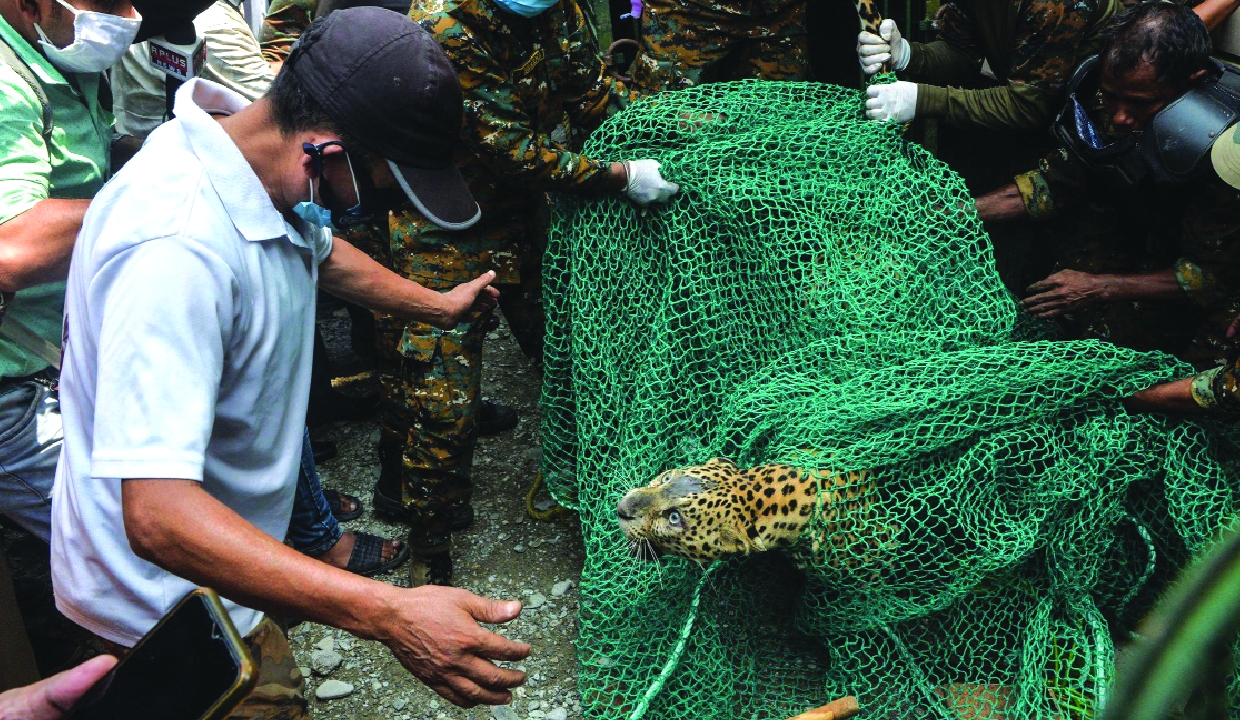
There is no uniform, no applause, and often no backup. Deep inside India’s forests, far from public view, frontline foresters — guards, rangers, and wardens — fight a relentless war against timber smugglers, mining mafias, and armed poachers, even as they confront wild animals and unforgiving terrain
Forest protection is becoming a real challenge for frontline field foresters like Forest Guards, Rangers, and Wildlife Wardens in view of emerging, well-coordinated mafias with the latest superior weaponry. Over the last 30 to 35 years, thousands of forest personnel have lost their lives to protect natural resources all over the world. India is frequently cited by the International Ranger Federation (IRF) as the most dangerous country for foresters. In a typical three-year period, IRF statistics have shown that India accounts for nearly 30-40 per cent of all global forester deaths. India has the highest number of forest staff fatalities in the world, with reports highlighting hundreds of injuries and deaths in the line of duty. Between 2012 and 2017, India accounted for nearly 31 per cent (162) of the 526 forest ranger deaths reported globally. Compared to this, between 2006 and 2021, the IRF recorded approximately 2,351 casualties across 82 countries.
Thus, thousands of foresters’ lives are lost in the line of duty due to attacks by timber smugglers and poachers; conflicts with elephants, tigers, leopards, and other wild animals during patrolling; and occupational hazards such as forest fires, malaria, and water-borne diseases. Not only frontline staff but also senior IFS officers like DFOs, Conservators, and National Park Directors have been killed in India.
P Srinivas, a 1979 IFS officer, who was beheaded by the sandalwood smuggler Veerappan in 1992, is now an icon of civil service sacrifice for the sake of duty, and at the Lal Bahadur Shastri Academy and other such academies, a P Srinivas Memorial Lecture is arranged every year during the foundation course of civil servants by the Government of India. P Srinivas was awarded the Kirti Chakra for his sacrifice. Similarly, Sanjay Singh, a 1992 batch IFS officer and DFO Rohtas, was killed by Maoists in February 2002.
Apart from foresters, large numbers of local people are also killed by wild animals in conflicts. Over the last 25 years, 1,296 people were killed by animals, mostly in recent years. In Uttarakhand alone, during 2025, 40 people were killed by leopards and 72 were attacked by bears. In this article, however, I want to discuss more about the problems of forest department staff because, if remedial measures are taken, then attacks on locals will also be reduced.
Members of the IFS, as also other ranks, work in difficult areas where civic facilities are poor, and they have to battle organised timber and mining mafias and well-equipped wildlife poachers with very primitive tools, while the mafias are equipped with advanced gadgets and weapons. When personnel are killed or seriously injured, they are left to their own fate, and their families suffer ignominiously. Compensation from state governments is poor, delayed, and sometimes ignored completely.
The Indian Forest Service Association (IFS) took note of the pitiable conditions of such personnel and constituted the Indian Forest Service Benevolent and Welfare Trust (IFSBWT) to bridge that gap with immediate financial relief and to complement the support extended by the states. Initially, this was meant for IFS officers but has now been made applicable to all categories of forest personnel in the country.
The Trust was originally established in July 2008 by a group of Indian Forest Service officers in Delhi as a public charitable trust under the provisions of the Registration Act, 1908, so that bereaved families of IFS officers who die in harness can be assisted. Recently, it has been noted that largely frontline forestry personnel are killed or grievously injured while attempting to stop illegal mining, smuggling, encroachment, and poaching across several states; therefore, in January 2026, the Trust substantially widened its scope to include all frontline staff, as the majority of casualties and injuries occur mainly among Foresters, Guards, and Watchers, who are the real green warriors at the delivery point and the only line of defence for the country’s forests.
Supporting these frontline warriors and their families was therefore made the foremost priority of the Trust. Accordingly, the Trust was re-registered on February 11, 2026, with an expanded mandate covering all categories of forestry field personnel in the country, from IFS officers to Forest Guards and below.
Notwithstanding the attempts by the IFS Central Association, society and government must take the lead to ameliorate the pitiable working conditions under which Forest Guards, Foresters, and Rangers have to work in a hostile environment, which is more often than not made vicious by the political patronage of mafias, especially the mining mafia.
To address this issue and improve the welfare of “Green Soldiers”, concrete measures need to be taken. First and foremost is to vest frontline staff with legal powers by granting forest officers the authority for the “minimal and proportionate use of force”, similar to the police, to deter organised crime such as sand, timber, and poacher mafias.
Further legal protection should be provided against frivolous counter-complaints filed by offenders to harass forest staff. Amend state rules to provide Section 187 of BNSS protection to all field staff, ensuring they cannot be prosecuted for actions taken in the line of duty without prior government sanction. Second, provide modern and effective firearms and tactical training to field staff working in high-conflict zones so they are not outgunned by poachers.
Third, provide financial and social security by ensuring a minimum uniform ex gratia of at least `50 lakh for unnatural deaths in the line of duty across all states, and continuing their last drawn salary for the family of the deceased until the retirement date. In addition, the government must extend schemes like the PM Scholarship for children of deceased armed forces personnel to the children of forest martyrs.
Next is to ensure better infrastructure for frontline staff, as in the police, by improving remote forest beats with basic amenities such as potable water, electricity, and high-quality field gear like satellite phones, fast-moving, good-quality vehicles, drones, night vision, GPS, etc. A Forest Housing Corporation should be established in each state with 100 per cent grants from the Central Government on the same pattern as in the police department. Immediate access to emergency medical support and air evacuation for staff injured in remote areas must also be ensured.
Last but not least is to institute the President’s Green Gallantry Medals specifically for foresters, on a par with police or military medals, to boost morale and public respect for the service.
On the organisational front, it is necessary to separate protection and enforcement from development and silviculture. States need to create dedicated anti-poaching and protection units at the division level.
These teams should consist of physically fit, tactically trained personnel whose only job is patrolling and enforcement, leaving plantation and other work to a separate administrative wing. States also need to create an intelligence wing at the range level to build an intelligence network.
The Ministry of Environment and Forests needs to take up these suggestions on a war footing, as the country’s ecological warriors can only be neglected at the peril of destabilising food, water, and ecological stability.
The Ministry of Environment and Forests needs to take up these suggestions on a war footing, as the country’s ecological warriors can only be neglected at the peril of destabilising food, water, and ecological stability
The writer is former Principal Secretary Government of Tripura and Chairman of Centre for Resource Management; Views presented are personal.