Strong polling, split Signals: Bengal opens to a competitive race
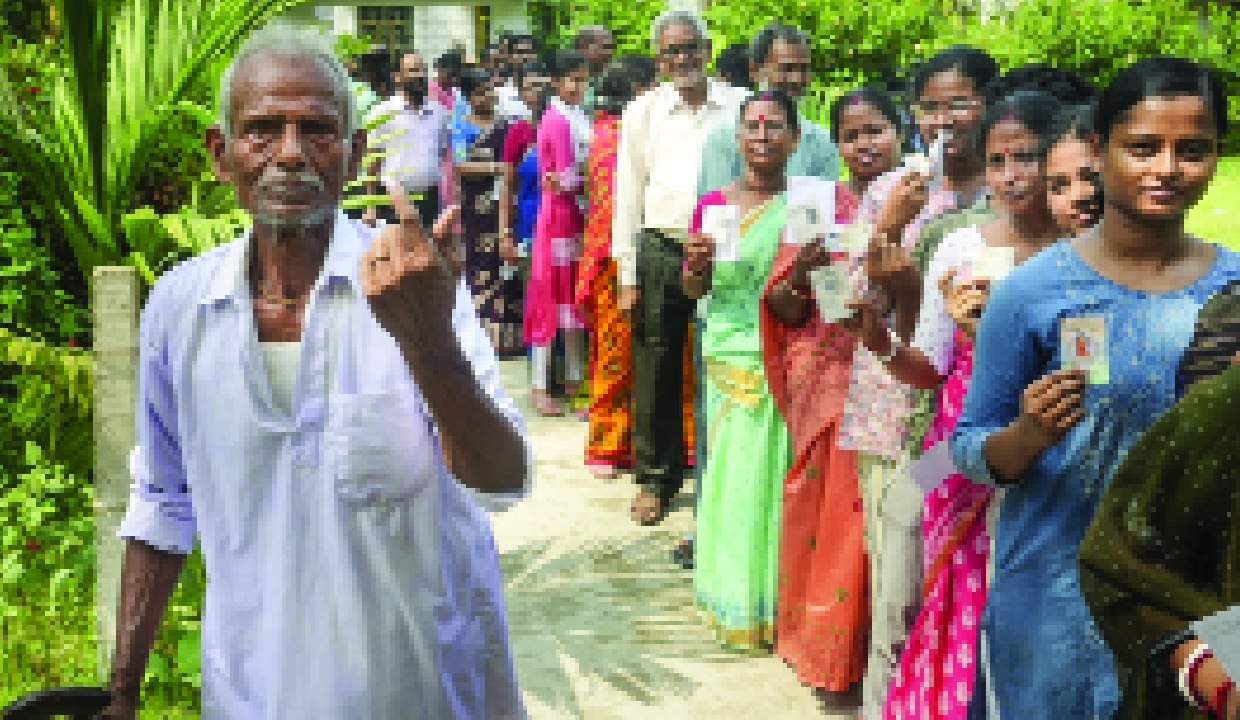
West Bengal’s election has begun on a familiar note—high turnout, long queues, and a visible seriousness among voters. The first phase has recorded polling in the mid-to-high 70 per cent range, consistent with the state’s long-standing trend of strong participation. But beyond the numbers, the early signals from the ground suggest something more nuanced is taking shape.
The day largely remained peaceful, with central forces maintaining a strong presence across sensitive booths. Voting progressed steadily, with only scattered, localised disruptions. One clear trend stood out—women voters turning up in significant numbers, in some pockets even outpacing men. Rural turnout, once again, was higher than in urban centres, reinforcing a pattern that has held across multiple elections in the state.
The contest continues to revolve around Mamata Banerjee and the All India Trinamool Congress, which still retains strong grassroots connect. Welfare delivery and booth-level organisation appear to be working in its favour, particularly in rural and semi-urban belts where beneficiary networks remain intact and visible.
Yet, the contest is far from one-sided. The Bharatiya Janata Party has managed to stay firmly in the race. Its campaign, especially in this phase, appears more focused—less about sweeping narratives and more about consolidating gains in specific constituencies. On the ground, this is translating into tighter contests in several seats that were previously seen as comfortable.
What stands out most is the absence of a uniform trend. In some areas, there are signs of consolidation in favour of the ruling party. In others, the fight appears evenly balanced. Bengal, once again, seems to be voting locally—where candidate credibility, community equations, and micro-level issues are shaping outcomes more than broad narratives.
The space for smaller parties continues to narrow. The Communist Party of India (Marxist) and Congress remain present, but largely on the margins. In most constituencies, the contest has effectively become bipolar, which raises the stakes for even marginal vote shifts.
There are also smaller, telling observations. Early morning queues were dominated by older voters—often a sign of committed voting bases—while turnout broadened across age groups as the day progressed. Urban participation remained relatively lower compared to rural areas, a trend that continues to hold.
Voter sentiment, however, is not moving in one clear direction. Welfare schemes continue to carry weight, particularly among women and economically weaker sections. At the same time, conversations around employment, local corruption, and governance are becoming more visible. It is neither a wave of discontent nor a clear endorsement—it sits somewhere in between.
Even external factors are quietly influencing the mood. Rising fuel prices, linked in part to tensions around the Strait of Hormuz, are adding to everyday cost concerns, though they are not dominating the electoral narrative.
So what does the first phase really indicate? At this stage, it does not point to a decisive wave. The ruling party appears to retain an advantage, but the opposition has done enough to keep the contest competitive. This is shaping up to be an election where outcomes may be decided seat by seat, rather than through any sweeping trend.
More importantly, it reflects a certain maturity in voter behavior. There is no visible rush for change, but neither is there unquestioned continuity. Voters appear to be weighing their choices carefully—balancing what they have received with what they expect going forward.
That makes this election harder to predict—but also more telling. Because when an election is decided not by momentum, but by measured choices, the final verdict often reveals far more than the headlines leading up to it.
The writer is an educationist and senior columnist; Views presented are personal.