Linguistic wealth: Understanding the Bhartiya Bhasha Pariwar
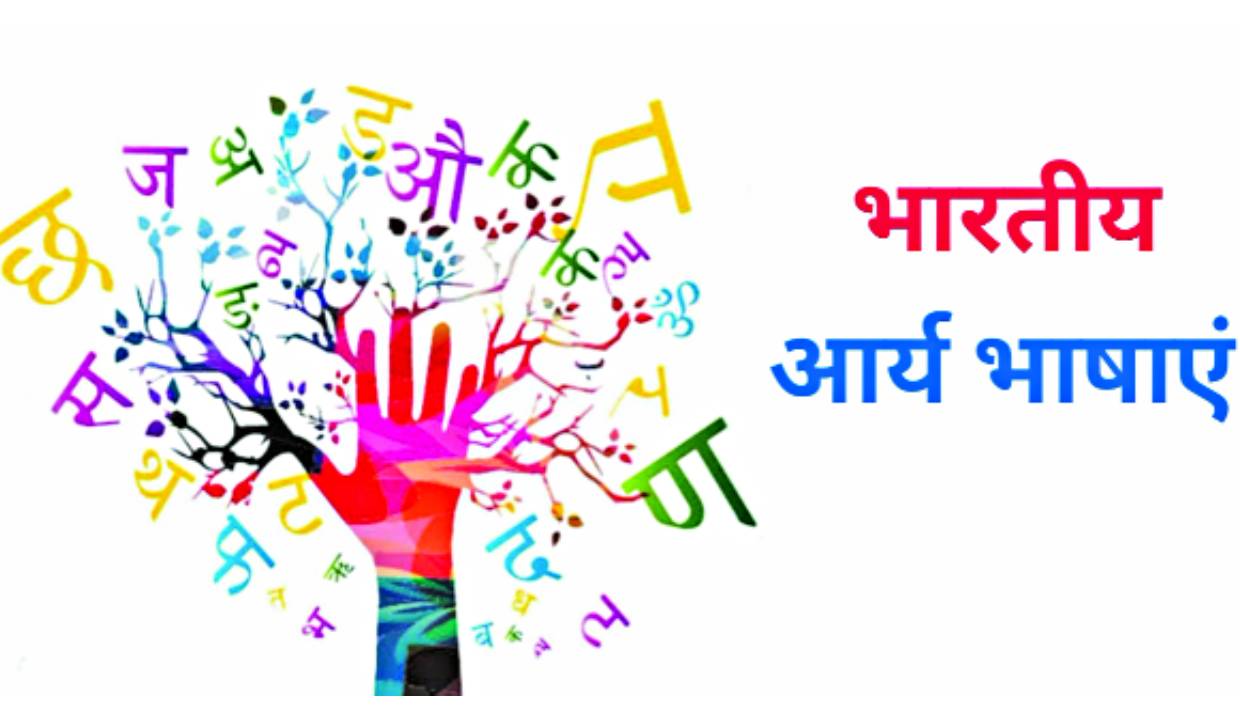
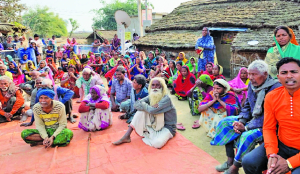
India is home to one of the most complex and diverse linguistic ecosystems in the world. This diversity is not accidental; it reflects centuries of social interaction, migration, philosophical inquiry, and cultural exchange. The Bhartiya Bhasha Pariwar includes languages along with hundreds of dialects and speech varieties spoken throughout the country.
Indian languages are not merely instruments of daily communication. They carry centuries of accumulated knowledge - ranging from metaphysics and ethics to medicine, astronomy, mathematics, ecology, and aesthetics. Ancient Sanskrit texts engage with geometry and planetary motion, Tamil literature preserves ecological wisdom and moral philosophy, and Pali and Prakrit texts document early debates on society, governance, and human suffering. When such languages are sidelined in modern
technology, it is not merely linguistic diversity that is lost; it is knowledge diversity and epistemic plurality too.
From a linguistic perspective, many Indian languages can be traced back to proto-languages - reconstructed ancestral languages that were never written down but are inferred through comparative analysis. For the Indo-Aryan languages, scholars identify Proto-Indo-European as a distant ancestor, which later gave rise to Proto-Indo-Iranian, and subsequently Vedic Sanskrit.
This lineage connects Sanskrit to many European languages such as Greek, Latin, and English. Among the many Indian linguistic traditions, Sanskrit deserves special attention, not as a language that overrides others, but as one that offers an exceptionally systematic and codified model of linguistic analysis.
Its importance lies not in cultural dominance, but in methodological clarity and historical influence.
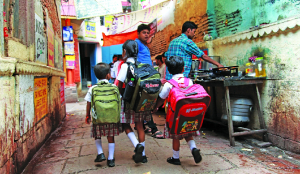
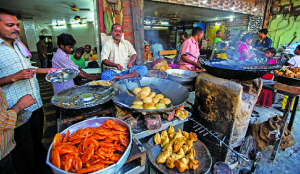
Walk through any Indian street, and language reveals itself not as a boundary but as a bridge. A shopkeeper switches registers mid-sentence, a student reads in one script and speaks in another, and a household carries two or three languages without naming the shift. This everyday ease is rarely captured in formal definitions. India's linguistic life is not simply diverse; it is interwoven.
The 2011 Census records 1,369 rationalised mother tongues; this number is striking, but the deeper insight lies in how these languages live together.
Indian multilingualism is not a layered addition in which one dominant language is supplemented by others; rather, it is a networked condition. Speakers inhabit multiple linguistic worlds at once, moving across them according to context, region, profession, and memory. A person may grow up with Urdu at home, Hindi in the neighbourhood, and Bengali through education or migration. Another may navigate Telugu, Kannada, and Marathi within a single social geography.
This is not exceptional proficiency; it is ordinary competence. Yet, the frameworks through which languages are studied have often struggled to account for this lived complexity. Classical methods in linguistics sought to measure relationships between languages by comparing core vocabulary and estimating time.
These approaches assumed that languages behave like branching trees, splitting from a common ancestor and gradually moving apart. While such methods offered important insights in many contexts, their explanatory limits become evident in a setting like India, where languages have not merely diverged but have continuously converged.
Despite constitutional recognition and cultural pride, Indian languages remain marginalised in higher education, scientific research, and advanced technology. In India, languages have long existed in sustained contact. Words travel, sounds adapt, grammatical structures align, and meanings shift across communities. A shared cultural space has enabled features to diffuse across linguistic boundaries in ways that do not fit neatly into linear models of descent.
When viewed through purely genealogical lenses, these interactions appear as anomalies; when viewed as part of a broader continuum, they become central.
It is within this context that the idea of Bharatiya Bhasha Parivar has gained attention. Rather than organising languages into rigid, separated families, this framework foregrounds interaction, continuity, and coexistence.
It does not deny historical relationships or methodological tools developed in comparative linguistics. Instead, it shifts the focus from distant reconstructions to observable patterns of contact and shared evolution.
Consider how phonological features, such as retroflexion, cut across languages otherwise assigned to different families, or how syntactic tendencies, including SOV word order and postpositional structures, display convergence shaped by prolonged contact.
Even semantic domains, particularly those linked to culture, ecology, and social organisation, reveal patterned overlaps. These are not incidental similarities but well-attested outcomes of areal diffusion within a linguistic area, where structural features spread through sustained multilingual interaction.
Such evidence points to a more precise understanding of Indian multilingualism, not as a set of separate competencies, but as an integrated multilingual repertoire. Speakers operate within a fluid system, routinely engaging in code-switching, register variation, and cross-linguistic transfer. Multilingualism in India is therefore not merely functional or instrumental; it is a stable sociolinguistic condition shaped by long-term contact and continuity.
This has important implications for both pedagogy and research. Educational models that treat languages as discrete, bounded systems fail to reflect the interconnected nature of linguistic competence in India.
A more appropriate framework would recognise the cumulative and overlapping character of language knowledge. Similarly, linguistic inquiry must move beyond strictly genealogical classifications and engage with contact-induced change, convergence, and shared structural patterns.
It is in this context that Bharatiya Bhasha Parivar gains analytical relevance. The framework foregrounds sustained interaction, areal features, and civilisational continuity, shifting emphasis from divergence alone to a more balanced account incorporating convergence and co-evolution.
It does not displace established methods but situates them within a broader model accommodating both inheritance and contact.
India's linguistic landscape calls for an approach that understands languages as interconnected systems, where multilingualism is foundational and shaped by continuity and interaction.
Leave a Comment
Comments (6)
The emphasis on linguistic convergence over strict genetic affiliation aptly captures the India, where prolonged contact has fostered areal diffusion, structural borrowing, and shared typological traits beyond families. This contact-driven evolution challenges tree models and underscores how multilingual ecology shapes grammar, phonology, and lexicon beyond ancestry. Good piece of work.
The emphasis on linguistic convergence over strict genetic affiliation aptly captures the India, where prolonged contact has fostered areal diffusion, structural borrowing, and shared typological traits beyond families. This contact-driven evolution challenges tree models and underscores how multilingual ecology shapes grammar, phonology, and lexicon beyond ancestry. Good piece of work.
If technology doesn’t adapt to India’s linguistic view point, it risks leaving millions behind in access and opportunity. Important point—great article
This is an insightful and much-needed article highlighting India’s extraordinary linguistic heritage. The concept of Bhartiya Bhasha Pariwar is important because it encourages us to see Indian languages not as isolated entities, but as interconnected traditions shaped by centuries of cultural exchange, shared knowledge, and civilisational continuity. It reminds us that our languages carry deep wisdom in philosophy, science, literature, ecology, and social thought. Such discussions are essential for strengthening mother-tongue education, preserving linguistic diversity, promoting national integration, and building confidence in India’s own knowledge systems. A timely contribution to rethinking language through an Indian lens. Dr.Shiva Ram Reddy-Assisant Professor,Hyderabad Central University .
The focus on convergence over just ancestry captures how Indian languages truly evolve through contact and exchange. Insightful read congratulations!