Pakistan’s grand strategic plot for survival
The dramatic collapse of Pakistan’s high-profile attempt to mediate between the United States and Iran in April 2026 has done more than embarrass Islamabad—it has exposed the deeper fault lines of a state struggling to balance ambition with capability
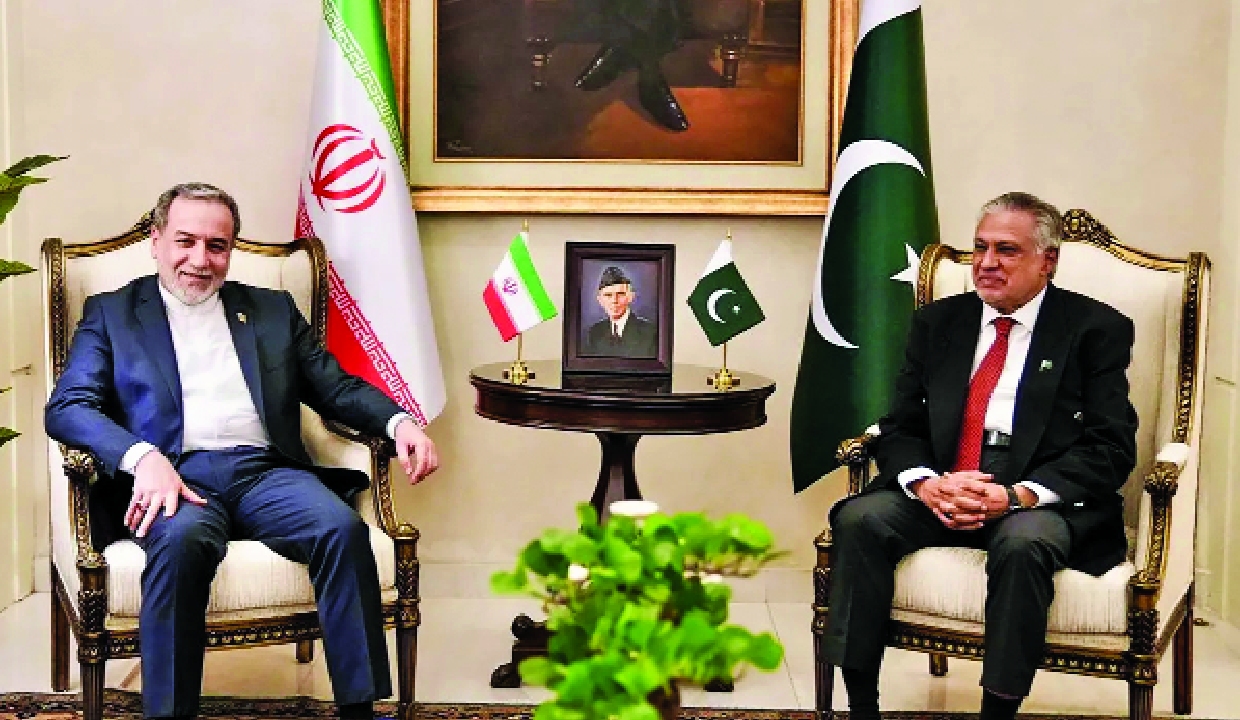
The swiftly moving tides and currents of recent events have proved beyond a shadow of doubt that Pakistan has proved to be abjectly incapable of making the United States and Iran smoke the proverbial peace pipe in Islamabad and has created an unholy mess beyond redemption. The 21-hour-long overtly publicised maiden peace talks disastrously collapsed on 12th April, 2026, to the chagrin of the entire international community. Incredulously, the untrustworthy Pakistan glibly offered to host yet another round of peace negotiations as an ingenious face-saver, which from the very word go bristled with ominous possibilities! It’s indeed a travesty of fate that even the second attempt by Pakistan to broker the US-Iran peace talks proved to be utterly abortive on 25th April, 2026, marking a crumbling setback for Pakistan’s attempt to mediate between the two nations. The Iranian delegation, led by Iran’s Foreign Minister Abbas Araghchi left Islamabad in a huff (prompting President Donald Trump to summarily cancel the trip of the American delegation, including his Special Envoy Steve Witkoff and his Senior Advisor and son-in-law Jared Kushner, to Islamabad!), leaving Pakistan’s ambitious pipe dream of brokering a US-Iran peace deal in shatters and exposing Pakistan’s abysmally woeful political impotence. In a surprise move, Araghchi returned to Islamabad on 26th April, 2026 and met Field Marshal Syed Asim Munir Ahmed Shah (notoriously known as “Mullah Munir”), Pakistan’s highly touted hardline Islamist first Chief of Defence Forces, widely recognised as the de facto ruler of Pakistan, in his lair in a renewed effort to keep the peace pot boiling. The visit proved to be futile to the hilt, and a thoroughly distraught Aarghchi was obliged to pack up and leave Pakistan, albeit empty-handed, and head for Moscow for talks with the Russian President Vladimir Putin. Semantics aside, the deceitful Pakistan has been universally ridiculed as a global laughing stock! In this context, the towering American 16th President Abraham “Abe” Lincoln in a speech delivered on 8th September, 1858 in Clinton, Illinois, had aptly remarked, “You can fool all the people some of the time and some of the people all the time, but you cannot fool all the people all the time.”
Pakistan today stands at a critical inflexion point, economically strained, geopolitically stretched, and strategically compelled to recalibrate its position in a rapidly shifting regional order. Beneath the surface of its diplomatic engagements and security posturing lies a deeper, more complex design: a state navigating near-bankruptcy while leveraging its military, geography, and ideological positioning to remain relevant and solvent. At the heart of this posture is an unspoken but evident imperative, economic survival. With mounting debts, dwindling foreign exchange reserves, and repeated reliance on bailout packages, Pakistan’s leadership has been forced to think beyond conventional economic reforms. Instead, it appears to be crafting a geopolitical strategy that monetises its strategic location, military capability, and ideological alliances. This “grand strategic survival plot” is not merely reactive; it is structured, with Islamabad positioning itself as indispensable in regional security to convert geopolitical relevance into economic relief through monetary aid, defence partnerships, and strategic concessions.
Internally, Pakistan faces a convergence of debilitating economic hardship and crumbling political fragility. Rampant inflation, crippling unemployment, and persistent instability have eroded public confidence, while the enduring civil-military imbalance ensures that the armed forces continue to overwhelmingly dominate key policy decisions. The weakness of democratic institutions, combined with economic distress, has created a volatile domestic environment. Yet this instability also feeds into Pakistan’s external strategy. Like many nations under pressure, it often externalises its crises, amplifying external threats and projecting itself as a frontline state to secure both legitimacy and leverage on the global stage.
A key pillar of this strategy is Pakistan’s deepening defence relationship with Saudi Arabia. Historically rooted in close ties, this partnership has evolved into a quasi-security arrangement where Pakistan provides military training, advisory support, and even troop deployments. In return, Saudi Arabia has extended crucial financial lifelines, including deferred oil payments, direct assistance, and diplomatic backing. The contours of an emerging defence pact suggest a more institutionalised framework, effectively integrating Pakistan’s military capabilities into the Kingdom’s broader security architecture.
At the same time, Pakistan continues to metamorphose its ties with the United States. Despite a history marked by irreconcilable mistrust and misgivings, Islamabad recognises Washington’s enduring influence on global finance and security. The post-Afghanistan withdrawal landscape has opened fresh avenues for engagement, particularly in counter-terrorism and regional stability. Pakistan appears keen to reposition itself as a strategic partner once again, offering intelligence cooperation and logistical support in exchange for military aid and economic assistance-a pragmatic reset driven by sheer necessity rather than mere sentiment.
Pakistan’s alignment with the Gulf Cooperation Council further underscores its commitment to Sunni geopolitical consolidation. This alignment is both strategic and ideological, embedding Pakistan within a bloc that provides financial support, diplomatic backing, and strategic depth. However, this positioning inevitably places it at odds with Iran, the principal Shia power in the region. While often understated in official discourse, the sectarian dimension continues to shape regional alliances and rivalries, forcing Pakistan to carefully balance its commitments to Sunni allies with the realities of sharing a border with Iran.
Pakistan is a lifelong opponent of Israel. Significantly, the founding father of Pakistan Mohammad Ali Jinnah, who was suffering from an advanced state of “secretly hidden” incurable tuberculosis, pejoratively described Israel as an “illegitimate child of the West” and called upon fellow Muslims to resist Israel’s “nefarious designs “on Jerusalem and even went on to the extent of asserting that “Israel is an artificial creation, born out of injustice and oppression”. It’s little wonder then that Pakistan’s sabre rattling Defence Minister, Khawaja Muhammad Asif, launched a scathing anti-Semitic attack on Israel on 10th April, 2026 on X ranting, “Israel is evil and a curse for humanity…I hope and pray people who created this cancerous state on Palestinian land to get rid of European Jews burn in hell.” In a severe denouncement, the Israeli Prime Minister’s Office retaliated on X, “Pakistan Defence Minister’s call for Israel’s annihilation is outrageous…This is not a statement that can be tolerated from any government, especially not from one that claims to be a neutral arbiter for peace.” Interestingly, while Pakistan maintains a strong, openly rhetorical stance against Israel that flagrantly reeks of anti-Semitism, Pakistan’s antagonism towards Israel remains largely notional in operational terms. Unlike other regional actors with a history of confrontation, Pakistan’s opposition is primarily ideological and symbolic. This allows Islamabad a certain degree of strategic flexibility, enabling it to uphold pro-Palestinian positions without becoming entangled in direct conflict, thereby preserving focus on more immediate geopolitical concerns.
Central to Pakistan’s external strategy is its military, which remains one of its most potent assets. Highly trained and battle-hardened, the armed forces have increasingly been deployed as instruments of statecraft. From peacekeeping missions to bilateral security arrangements, Pakistan has demonstrated a willingness to provide military services in exchange for financial and strategic benefits. This quasi-mercenary dimension, though rarely acknowledged officially, is evident in its engagements across West Asia and beyond. It allows Pakistan to generate revenues, strengthen alliances, and maintain operational readiness, all while reinforcing the military’s overbearing role in national policy.
In Asia, Pakistan’s most consequential partnership remains with China. Anchored by the China-Pakistan Economic Corridor, this relationship extends beyond infrastructure into defence, technology, and diplomatic cooperation. For Islamabad, Beijing serves as a vital counterweight to India’s expanding regional and global influence. Chinese support provides Pakistan with military hardware, investment, and diplomatic cover, particularly in multilateral forums. However, this deepening alignment also raises concerns about overdependence, with long-term implications for Pakistan’s strategic autonomy.
Meanwhile, the situation in Afghanistan continues to cast a long shadow over Pakistan’s security landscape. The resurgence of militant groups, coupled with cross-border terrorism and refugee pressures, has created a complex and often volatile environment. Despite its historical involvement in Afghan affairs, Pakistan now faces the unintended consequences of instability across its western frontier. Managing this persistent threat remains one of Islamabad’s most pressing challenges, complicating both its internal security and regional diplomacy.
Beyond immediate alliances, Pakistan appears to be scrupulously cultivating a broader ideological network inextricably rooted in pan-Islamic solidarity. By invoking the concept of Muslim brotherhood, it seeks to strengthen ties with countries such as Turkey and Azerbaijan, alongside traditional Sunni monarchies. This outreach enhances Pakistan’s diplomatic reach, reinforces its ideological identity, and creates alternative axes of support beyond the Western sphere. The emphasis on shared religious and cultural ties provides a unifying narrative that transcends economic and political divides.
Lamentably, Pakistan is increasingly earning the dubious reputation of being a failed, rogue, radicalised state and, worse still, an epicentre of global terrorism. According to the 2026 13th edition of the Global Terrorism Index (GTI), which provides a comprehensive summary of the key global trends and patterns in terrorism over the last two decades, “Pakistan recorded the highest score on the Index and is the country most impacted by terrorism” and “Deaths from terrorism in Pakistan are now at their highest level since 2013, with the country recording 1,139 terrorism deaths and 1,045 incidents in 2025”. And India has time and again, since the very inception of Pakistan, been a hapless victim, nay studied target, of Pakistan’s state-sponsored export of terrorism leading to unwanted, bloody wars and skirmishes! Reprehensively, Pakistan is the largest exporter of donkeys, particularly to China. Joining the unusual list of Pakistan’s exports are beggars. According to Zeeshan Khanzada, the well-known Pakistani Senator and Chairman of the Senate Standing Committee on Overseas Pakistanis and Human Resource Development, 90 per cent of the beggars imprisoned in West Asian countries are from Pakistan and are being held in prisons in Saudi Arabia and Iraq.
The problem has gained such enormous proportions that countries like Saudi Arabia and Iraq have tersely requested the Pakistani government to stem the inflow of beggars. Not only that, most of the pickpockets arrested from within Mecca’s Masjid al-Haram, the Great Mosque of Mecca, the largest mosque in the world and the holiest site in Islam, are Pakistanis! What an incorrigible nation!
Ultimately, Pakistan’s trajectory reflects a strategy shaped more by compulsion than choice. Confronted with economic crisis, political friability, and regional pressures, the state is leveraging every available asset: military strength, ideological alignment, and geopolitical positioning to sustain itself. Yet, this approach carries inherent risks. Overdependence on external patrons, deepening sectarian alignments, and the increasing militarisation of its foreign policy may perforce constrain Pakistan’s options in the long term. The real challenge lies in transitioning from a survival-driven framework to a more stable and sustainable model of statecraft. Until then, Pakistan will continue to walk a precarious tightrope, balancing alliances, managing crises, and striving to maintain relevance in a world where strategic utility often defines national endurance.
The author is a social and political analyst; Views presented are personal.