India asserts its maritime power to ensure energy shipping
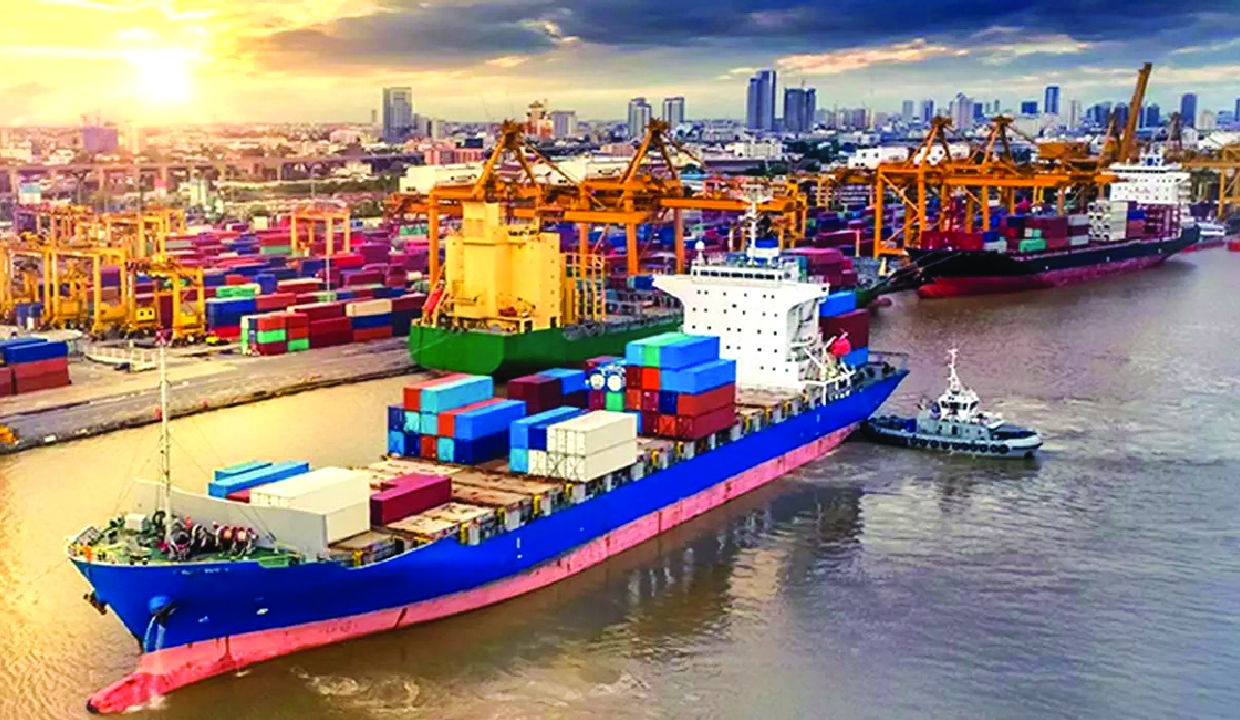
Following a major escalation in the US-Iran conflict since February-March 2026, along with strict controls imposed by the Iranian Revolutionary Guard Corps (IRGC) in the Strait of Hormuz, the Indian Navy, under Operation Urga Suraksha (energy protection), began maintaining a high-alert deployment in the Gulf of Oman and the northern Arabian Sea to secure Indian commercial shipping passing through the vicinity of the Strait of Hormuz.
While Iran’s theocratic leadership has maintained relations with India based on historic ties and a strategic partnership centred around the development of Chabahar Port, the IRGC has pursued its own agenda, which has included targeting Indian or India-bound merchant ships and tankers — perhaps not every time, but often enough. On December 8, 2025, the IRGC forcefully detained 16 Indian crew members aboard the merchant tanker MT Valiant Roar in the Gulf over alleged fuel smuggling. While ten of these sailors were initially moved to a prison in Bandar Abbas, the eight who remained on board were subsequently released in February 2026. By early 2026, 348 other Indian citizens from Iran had also returned home.
All this and more has been coordinated by India’s Ministries of External Affairs (MEA), Ports, Shipping and Waterways (MoPSW), through the Directorate General of Shipping (DGS), Defence (MoD), Petroleum and Natural Gas (MoPNG), Information and Broadcasting (MIB), Indian missions in the region and, on the waters, a powerful flotilla of the Indian Navy.
By March 20, 2026, the IRGC had established a designated “safe corridor” closer to the Iranian coastline and warned against any deviation. Indian officials coordinated with regional authorities to facilitate the passage of Indian ships through this area. Despite a temporary and fragile ceasefire in early April, the area remained a high-risk zone, partly owing to reports of unrecorded mines laid by the IRGC and its offensive actions, including firing at ships, thereby necessitating close-protection escorts for critical fuel imports.
Following an incident on April 18, 2026, when IRGC personnel fired upon two Indian-linked vessels, India summoned the Iranian envoy in New Delhi on the same day to demand safe and uninterrupted passage for Indian ships. Iran maintained that “Indian friends” were in safe hands, even while conducting strict monitoring and allowing only selected vessels to pass.
The Indian Navy significantly enhanced its maritime posture by deploying two aircraft carrier battle groups, led by INS Vikrant and INS Vikramaditya. Operating together in the Persian Gulf, they amounted to a formidable force for sea control, with over 35 aircraft, numerous warships and submarines, thereby highlighting India’s commitment to security in the Indian Ocean region, clearly projecting power and strengthening maritime diplomacy.
This move, combined with New Delhi’s high-level diplomatic pressure on Iran, proved effective against the IRGC and resulted in Indian-flagged vessels being allowed passage through the highly volatile region where shipping from other nations faced severe restrictions. In early May 2026, the Indian Government decisively asserted maritime rights and informed Tehran that no special permission or “protection fees” were required for Indian vessels, which would move under active guidance from the Indian Navy. A significant outcome of these actions was that over 14 (another version places the figure at 22) India-bound ships carrying energy cargo were escorted through the Strait of Hormuz with the assistance of the Indian Navy.
The Indian Navy has reportedly received praise for its effective, independent and proactive security operations, as well as for being a rapid-response security provider in the Indian Ocean Region. By successfully tackling piracy and maritime threats - such as the MV Lila Norfolk, FV Al Naeemi, FV Iman (all in January 2024), and the MV Ruen hijacking in March 2024, to name a few — while utilising advanced surveillance and ensuring open, rules-based sea lanes, the Indian Navy has come to be recognised as a force that guarantees stability and safeguards regional interests. Its task forces continue securing Sea Lanes of Communication (SLOCs) and conducting daring rescue missions for commercial vessels targeted in the Red Sea and Gulf of Aden. By hosting the International Fleet Review (IFR) 2026 in February, India showcased its growing indigenous shipbuilding capabilities and strong international partnerships, with participation from 75 nations, making it one of the largest maritime engagements in the region. Also in February, the Indian Navy assumed command of the 47-nation Combined Task Force 154 to focus on training and maritime security — an indicator of growing trust in India’s professional expertise.
India has also increasingly come to be viewed as a nation that maintains its security role independently rather than formally joining US-led coalitions, a significant aspect of its foreign policy.
The US Navy, on the other hand, has reportedly faced operational challenges in the Red Sea. One major report indicated that the USS Harry S. Truman carrier strike group encountered significant difficulties during its deployment there. Reports also cited multiple F/A-18 Super Hornets lost in 2025-26, with some incidents involving jets going overboard due to failed landings and hangar accidents. These losses occurred during a high-tempo campaign against Houthi forces in Yemen. Investigations into these incidents reportedly pointed towards training gaps, equipment failures and intense operational pressure.
On April 9, 2026, the US Navy confirmed that a highly advanced and expensive MQ-4C Triton high-altitude, long-endurance (HALE) surveillance drone had been lost over the Persian Gulf. Each unit is estimated to cost between $200 million and $240 million. The drone disappeared near the Strait of Hormuz after sending an in-flight emergency signal. The US Naval Safety Command classified the incident as a “Class A mishap”, indicating that the drone was destroyed and that the loss exceeded $2.5 million.
The incident occurred amid rising tensions in the region involving Iran. While some reports speculated about possible interception or electronic warfare interference, official reports at the time stated that the drone had “crashed”, with no injuries to personnel. This was the first known operational loss of an MQ-4C Triton, considered a major financial and strategic setback, as only about 20 of these drones were reportedly in service as of 2025. The incident followed a series of reported drone losses in the region, bringing the total value of lost or damaged aerial assets to over $700 million at the time. Despite such massive losses and the suffering of millions of innocent people, the US President appears to have no plans for peace.
The writer is a VSM (Retd), a strategic affairs analyst and former spokesperson, Defence Ministry and Indian Army; Views presented are personal.