Fuel conservation must begin with the Government
Prime Minister Narendra Modi’s appeal to citizens to save fuel in the national interest is both timely and necessary. At a time when rising global crude prices, environmental degradation and growing urban congestion are placing enormous pressure on India’s economy, energy conservation cannot remain merely a matter of public responsibility. The government itself must lead by example through serious structural reforms and policy changes that reduce unnecessary fuel consumption and discourage the culture of excessive automobile dependence.
One of the first steps should be a complete ban on extravagant political roadshows and large election rallies that involve thousands of vehicles, helicopters, diesel generators and massive logistical arrangements. Political parties often preach austerity to citizens while practising excess themselves. Such events not only consume enormous quantities of fuel but also create traffic chaos and environmental pollution. Public messaging on fuel conservation will carry credibility only when political leadership demonstrates restraint.
Similarly, the government should review the size of official convoys accompanying ministers and senior bureaucrats. Security considerations are important, but there is ample scope to reduce unnecessary layers of vehicles without compromising safety. Long convoys of SUVs and luxury cars moving through crowded cities send the wrong message in a country where ordinary citizens are repeatedly urged to conserve fuel and reduce consumption.
Government expenditure on luxury vehicles must also be curtailed. All central and state government departments, along with public sector undertakings, should be required to purchase only economy-range vehicles, except for constitutional authorities such as the President, Vice-President, Prime Minister and visiting foreign dignitaries. Over the years, several state governments have faced criticism for purchasing expensive luxury cars even during periods of economic distress. Such decisions create public anger because they reflect misplaced priorities. Public money should be directed towards healthcare, education, public transport and infrastructure rather than official extravagance.
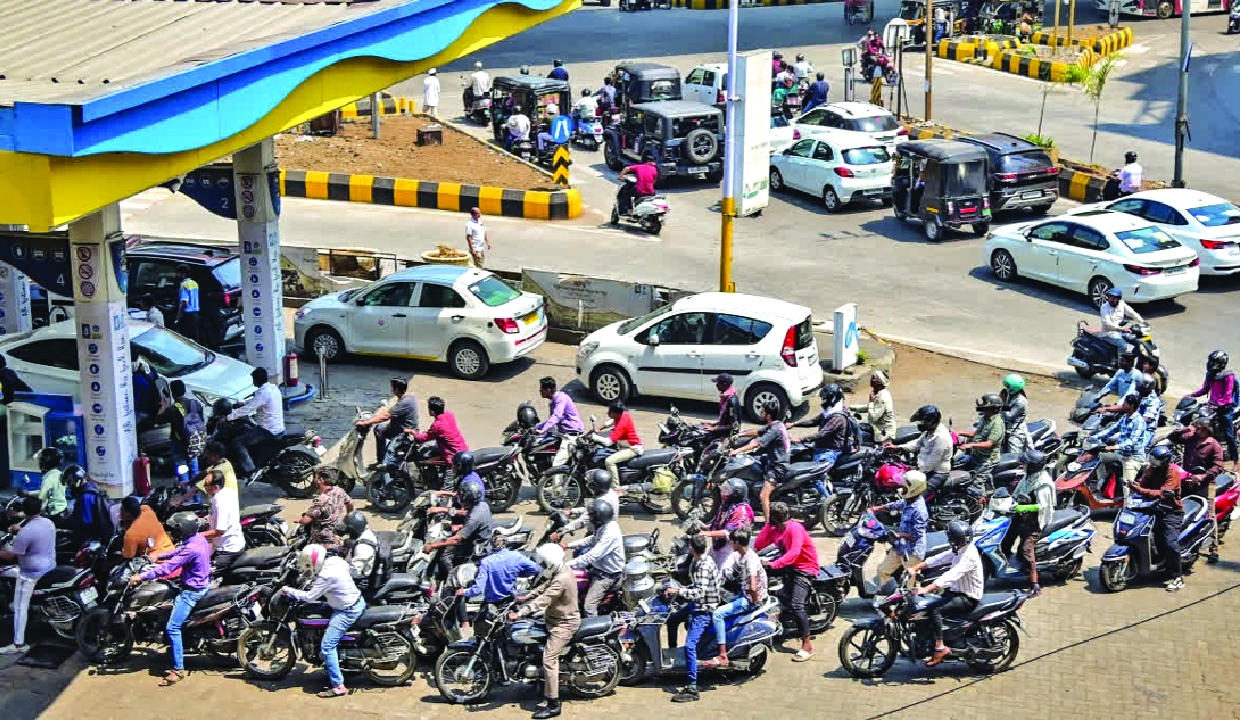
India must also rethink its broader transport culture. The obsession with private cars has reached unsustainable levels in major cities. Roads are congested, parking space is shrinking and pollution levels continue to rise. Instead of encouraging ever-growing car ownership, policy should focus on efficient, affordable and eco-friendly public and shared transport systems. One practical solution could be the promotion of modern, air-conditioned auto-rickshaws powered by electricity or CNG. Such vehicles occupy less road space, require less parking, consume less energy and are more environmentally sustainable. If designed properly with safety and comfort in mind, they could become a preferred mode of transport even for sections of the middle class.
Government departments should adopt public and shared transport alternatives instead of maintaining large fleets of cars. India must expand metro rail networks, electric buses and integrated urban transport systems rather than encouraging private automobile growth. At the same time, luxury vehicles should attract higher taxes and stricter loan norms, as such consumption often reflects status rather than necessity.
The government should further reconsider policies that indirectly encourage the expansion of large private vehicles. Former Union Environment Minister Jairam Ramesh once accurately described SUVs as “Socially Useless Vehicles” because they consume excessive fuel and occupy disproportionate road space. Large cars worsen congestion while offering little public benefit. India requires a fresh automobile policy that prioritises compact, energy-efficient and environmentally responsible vehicles over oversized luxury models.
Another critical issue is diesel usage in private cars. Diesel has historically been subsidised because it powers public transport, goods carriers and essential logistics. Allowing luxury private vehicles to benefit from lower-priced diesel distorts the purpose of the subsidy. Diesel engines in private cars should therefore be gradually phased out while investments are directed towards electric mobility, CNG infrastructure and cleaner technologies. At the same time, environmental regulation should become more practical and scientific. Blanket scrapping policies that force owners to abandon diesel cars after ten years and petrol cars after fifteen years often unfairly burden middle-class families and senior citizens who use their vehicles sparingly. Vehicle fitness should instead be determined through rigorous pollution and safety testing rather than arbitrary age limits. Authorised workshops should conduct computerised fitness checks after a fixed number of years, and only vehicles failing those tests should be scrapped.
Pollution-control systems also need major reform. Automobile workshops should be mandated to install pollution-testing facilities so that every vehicle leaving a service centre is certified for emissions compliance. Presently, vehicle owners are forced to repeatedly visit separate pollution-testing centres, causing inconvenience and unnecessary fuel consumption. A more integrated system would improve efficiency and compliance.
The automobile industry itself requires greater regulation in the interest of consumers. Excessive variants of the same car model confuse buyers and artificially inflate prices. Standardisation of components such as tyres, batteries and spare parts across manufacturers could significantly reduce costs through economies of scale. Car manufacturers currently enjoy enormous profit margins on spare parts because of limited competition and lack of standardisation. The government’s anti-profiteering mechanisms should ensure that consumers are not exploited through unreasonable pricing.
India must ultimately redefine what progress means in the transport sector. Development cannot simply be measured by rising sales of expensive cars or expanding highways crowded with private vehicles. A truly modern transport vision is one that prioritises efficiency, sustainability, affordability and public welfare. Fuel conservation is not merely about reducing imports or saving money; it is also about environmental responsibility, urban livability and economic discipline. Citizens certainly have a role to play, but meaningful change will come only when governments, policymakers and industries demonstrate the same commitment they expect from the public.
The writer is a Delhi-based RTI consultant; Views presented are personal.