West Asia, Hormuz, and the price India is avoiding
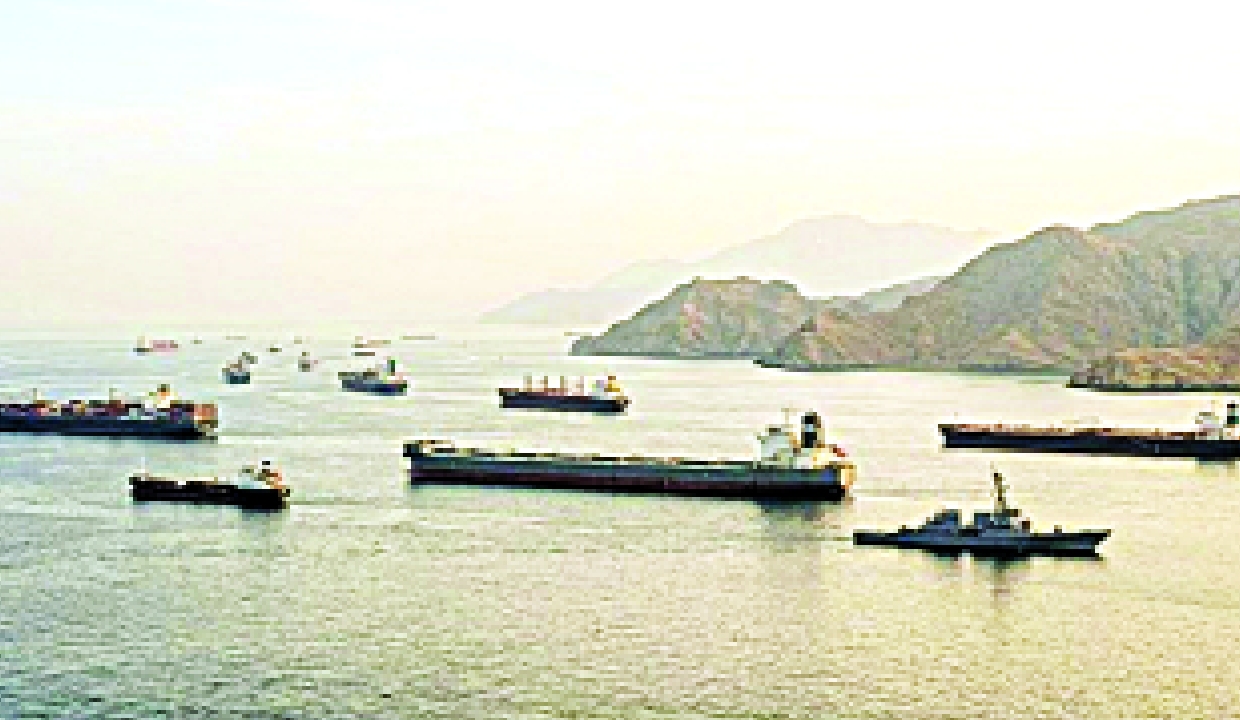
The West Asia crisis has once again exposed the central vulnerability of India’s energy economy: it is still dependent on a narrow and fragile supply corridor, and the Strait of Hormuz remains its biggest strategic choke point.
When that route is disrupted, India does not merely face a supply problem. It faces a fiscal problem, an inflation problem, and a policy problem all at once.
For the moment, the government has chosen to absorb the shock rather than pass it on to consumers. That has prevented panic and preserved supply stability. But it has also pushed the cost of the crisis into the public balance sheet, where it is beginning to crowd out other priorities. This is why the current fuel pricing strategy deserves a harder review than it is likely to get in public debate. The Strait of Hormuz matters because it is not just one shipping lane among many. It is one of the world’s most important energy arteries, and India remains deeply exposed to it. A crisis there quickly becomes a crisis in refinery margins, import bills, freight rates, insurance premia, and ultimately government finances. The geopolitical risk is obvious. The economic cost is what gets hidden.
What the government has bought
India’s immediate response has been competent. Domestic LPG production was raised, allocation priorities were reset, alternative crude sourcing was widened, and public sector oil companies were used as shock absorbers. Recent government briefings have also said that supply remains stable, refineries are operating normally, and the country is now drawing crude from more than 40 suppliers, with a much smaller share of imports dependent on Hormuz than in the past.
That is not trivial. It is the result of years of work on terminals, pipelines, refining capacity, import diversification, and strategic stock planning. The country is better prepared than it was a decade ago, and that has clearly helped. But preparedness and affordability are not the same thing. The fact that India can absorb the shock does not mean it should absorb it forever at the same price.
The government’s fuel policy has already done what it was designed to do in the short term: keep the pump stable and avoid a visible consumer crisis. The question now is whether that stability has become too expensive to maintain.
Why prices matter
Fuel prices are not just a retail issue. They are a signal mechanism. When the state suppresses them for too long, it distorts consumption, weakens the incentive to conserve, and forces the burden onto the exchequer. That may be acceptable in a short, acute emergency. It is less defensible if the shock is prolonged and global crude remains elevated.
There is also a political illusion at work here. A stable petrol pump looks like stability in the economy, but it may simply mean the cost has been moved elsewhere. It shows up in foregone revenue, in oil company under-recoveries, and in reduced room for strategic investment. That matters at a time when India needs more money for storage, refining, logistics, and the energy transition.
In other words, keeping fuel artificially cheap is not free public policy. It is deferred payment. And deferred payment is a poor way to manage a recurring strategic risk.
The case for a gradual rise
This is not an argument for a sudden shock at the pump. That would be politically reckless and economically unnecessary. It is an argument for a gradual upward correction once the immediate crisis stabilises. A phased increase would be easier to absorb, easier to explain, and far more sustainable than indefinite price suppression.
There is a strong macroeconomic case for this. If global crude stays high, the difference between import cost and domestic retail price has to be financed somewhere. Either consumers pay it, taxpayers pay it, or public sector balance sheets pay it. The last two options are effectively the same burden, just hidden differently. A controlled increase in fuel prices would make that burden explicit and reduce the long-term fiscal drag.
The deeper argument is strategic. India is trying to build a more resilient energy system, and that requires capital. Strategic reserves need expansion. Domestic refining needs more flexibility. Logistics need more redundancy. Clean-energy transition assets need scale. All of that requires fiscal space. Higher fuel prices, if introduced carefully, can help create that space.
What India should learn
The real lesson of the West Asia crisis is not that the government should have done less. It is that resilience has a price and that the bill cannot always be paid by the state alone. India has already made meaningful progress in diversification and infrastructure, and that has clearly softened the blow. But the next phase of policy cannot be based on the assumption that the government will permanently stand between the global oil market and the Indian consumer. That model works only up to a point. Beyond that, it becomes fiscally corrosive. If the crisis continues, then some of the adjustment must be shared by the consumer, even if gradually. That is the only way to preserve the state’s capacity to spend on the buffers that make future shocks less painful. The government should therefore begin preparing the political ground for a calibrated rise in fuel prices, ideally linked to a broader energy security narrative. The message is simple: India is stronger than it was, but not strong enough to pretend that global energy shocks can be absorbed without cost.
Conclusion
The West Asia crisis has tested India’s energy system and, for now, it has held. That is a success. But the very measures that protected consumers have also revealed the limits of the current pricing framework. India should not rush to raise fuel prices, but it should stop pretending that permanently low prices are a sustainable answer to a permanent strategic vulnerability. A gradual increase in fuel prices would not be popular. It would, however, be more honest, more fiscally responsible, and more consistent with the long-term task of building energy security. In a crisis like this, the right question is not whether consumers should feel pain. It is whether the state can afford to keep hiding it.
The writer is Director and the Printer & Publisher of The Pioneer; Views presented are personal.