BJP reshapes Bengal politics
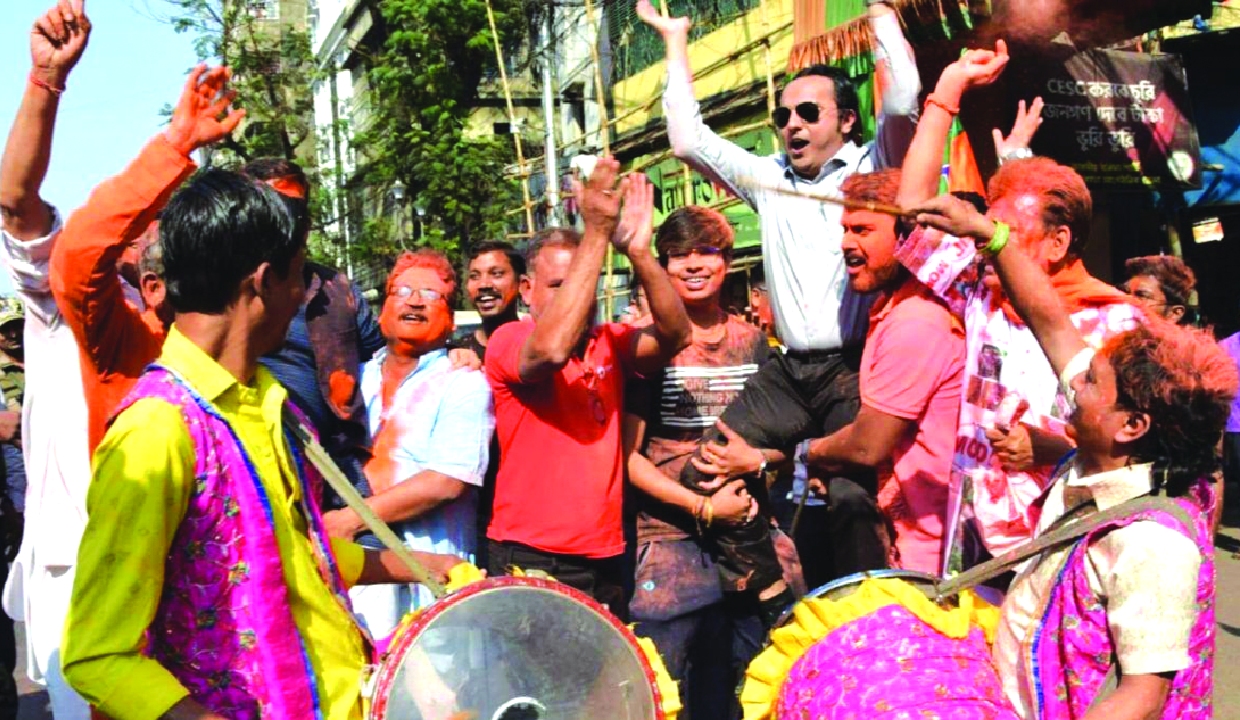
There are electoral victories, and then there are moments that alter the very grammar of politics. The Bharatiya Janata Party’s triumph in West Bengal belongs unmistakably to the latter category. Much like 1977 marked the defeat of authoritarianism, or 2014 heralded a new aspirational India, Bengal’s verdict represents a tectonic civilisational shift — one that transcends the arithmetic of seats and speaks to the deeper churn within the Indian psyche.
For decades, Bengal had politically remained an ideological outlier — first under Left hegemony and later under the violent authoritarian grip of the All India Trinamool Congress. The victory of the Bharatiya Janata Party is therefore not merely political — it is civilisational. It is a homecoming.
At its core, this moment is a tribute to Shyama Prasad Mukherjee, the founder of the Jana Sangh, who envisioned a united India where cultural nationalism would serve as the binding force. Bengal, his karmabhoomi, had long seemed estranged from that vision. Today, it has reclaimed it with conviction.
Equally, this victory must be dedicated to the countless foot soldiers of Sanatan Dharma - ordinary karyakartas who faced unspeakable violence merely for supporting the BJP. The post-poll violence of 2021 stands as one of the darkest chapters in Bengal’s history, a grim reminder of how dissent was crushed under a regime that mistook coercion for governance.
What changed this time?
Two words: Bhoy versus Bharosa.
The BJP’s articulation of this fault line was not just politically astute - it was existentially resonant. For years, the people of Bengal had lived under a pervasive climate of fear, where political allegiance was dictated not by conviction but by coercion. Leaders of the TMC repeatedly issued veiled and overt threats to BJP supporters during the campaign, reinforcing the perception of a political formation that had morphed into a mafia-like enterprise. Against this backdrop, the BJP’s promise of “bharosa” - trust, rule of law, and constitutional governance — struck a powerful chord.
Equally significant were the turning points that exposed the moral bankruptcy of the incumbent regime. The episodes in RG Kar and Sandeshkhali were not isolated aberrations; they became symbols of a deeper rot. They revealed a disturbing pattern where the ruling dispensation appeared complicit in shielding criminal elements, eroding the faith of the average Bengali bhadralok. Bengal’s proud legacy of intellectualism and moral courage found itself suffocated under a culture of impunity. This election became a referendum on that betrayal.
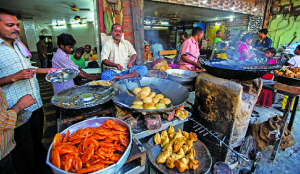
In the midst of this charged atmosphere, the Prime Minister once again demonstrated his unmatched ability to connect with the cultural pulse of the masses. His now-iconic “jhal muri moment” was not a trivial anecdote — it was a masterstroke in political communication. By embracing a quintessentially Bengali symbol, he dismantled the TMC’s propaganda that painted the BJP as culturally alien or insensitive to local traditions. It was a reminder that the BJP’s nationalism is inclusive, not exclusionary; rooted, yet expansive.
Perhaps the most decisive factor, however, was the silent but resolute assertion of women voters. In overwhelming numbers, women in Bengal chose the BJP - not merely as a political alternative, but as a guarantor of dignity and safety.
This carries a profound lesson for Indian politics: welfare schemes for women can yield electoral dividends only when accompanied by an environment that ensures their basic security. In a state where lawlessness had become normalised and perpetrators enjoyed political patronage, women voters delivered a verdict that was as much about self-preservation as it was about empowerment.
The implications of the verdict
History offers a clear pattern: political formations dislodged by the BJP rarely regain their former dominance. The decline of the RJD in Bihar post-2005 and the prolonged eclipse of the Samajwadi Party in Uttar Pradesh after 2017 are instructive precedents. The TMC now faces a similar existential crisis. Stripped of state power, it will find it increasingly difficult to sustain its patronage networks.
More importantly, as institutions regain their autonomy, the long arm of the law may begin to catch up with those who operated with impunity. The party that thrived on fear may well fade into irrelevance in an environment governed by accountability.
Bengal’s verdict is thus not an isolated political event - it is a reaffirmation of India’s democratic resilience and civilisational continuity. It signals that no region, however historically entrenched in a particular ideological mould, is immune to the winds of change when governance fails and people’s aspirations are betrayed.
In choosing Bharosa over Bhoy, Bengal has not just elected a new government — it has rewritten its destiny.
The writer is the national spokesperson of the Bharatiya Janata Party and an acclaimed author; Views presented are personal.