The social erasure of domestic violence victims
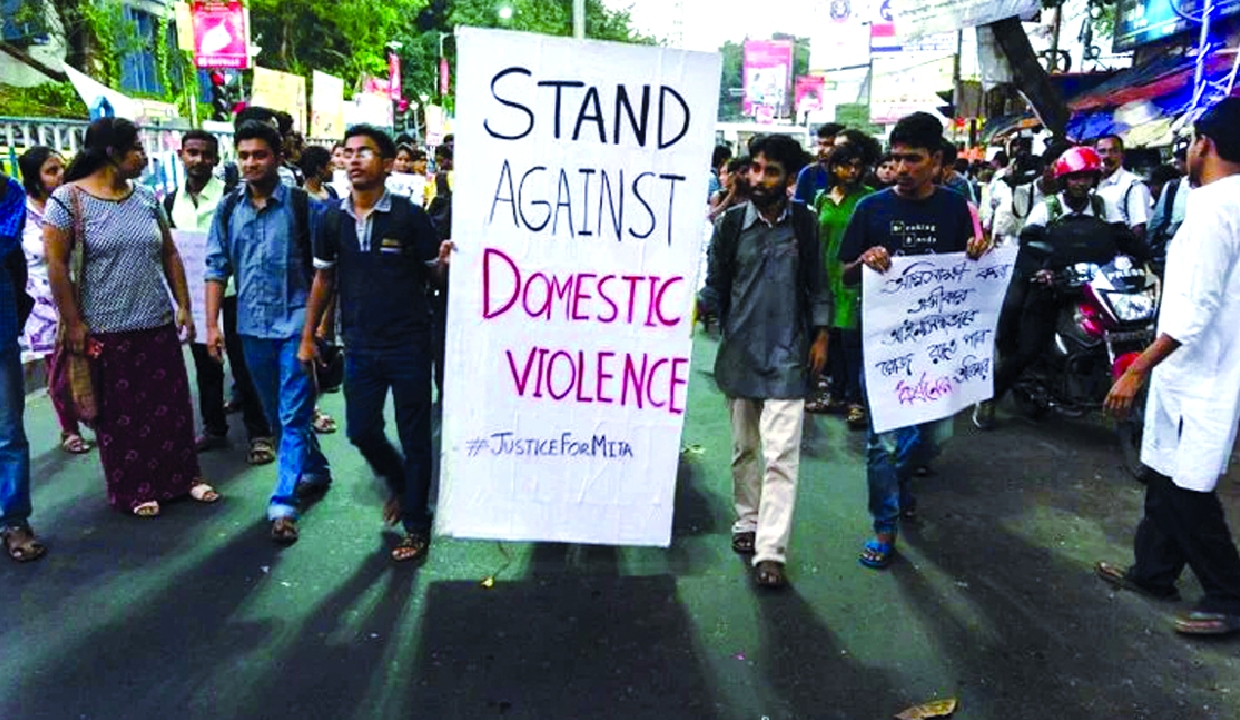
Domestic violence is often sustained not only by abuse but by disbelief. Victims are frequently labelled, dismissed, and silenced, while their repeated cries for help go unheard, shifting attention away from accountability and towards questioning their credibility
In India, domestic violence is often not experienced as a single visible act of harm but as a prolonged process of emotional erosion followed by narrative control. What begins as private distress is frequently transformed into a public story about the victim’s personality rather than the behaviour she is responding to. A woman who repeatedly raises concerns about emotional neglect, humiliation, or control is often met not with inquiry or support, but with minimisation. She may be told she is “overthinking”, “too sensitive”, or “mentally unstable”. In more extreme cases, informal psychiatric labels such as “bipolar”, “schizophrenic”, or “crazy” are casually introduced into family conversations, not as clinical observations but as tools to weaken her credibility. In the context of ongoing public discussions around emotional abuse and psychological manipulation-reflected in cases like Twisha Sharma’s-the pattern that emerges is not isolated to one case but indicative of a broader social system where disbelief often arrives before understanding, and where labels are used more quickly than listening.
A critical issue in such situations is that mental health terminology is frequently removed from its clinical foundation and used as a social weapon. In reality, psychiatric diagnoses can only be made by qualified mental health professionals after structured assessment, observation, and the application of recognised diagnostic criteria. However, in domestic disputes, these terms are often used informally to end uncomfortable conversations rather than to describe actual medical conditions. Statements like “she is schizophrenic” or “she is imagining things” are rarely grounded in clinical evaluation; instead, they function as rhetorical devices that shift attention away from the conduct being questioned and towards the supposed instability of the person raising the concern. Once this shift occurs, the conversation is no longer about harm or accountability, but about credibility. The victim’s experience becomes secondary to the question of whether she can be trusted at all. This is where labelling becomes powerful-it does not need to prove anything; it only needs to create doubt.
Another recurring pattern is the consistent minimisation of abuse through the framing of it as a “family dispute” or a “difference of opinion”. Such language appears neutral, even reasonable, but it often serves to depoliticise and privatise harm. When something is classified as a family matter, it is removed from scrutiny and external intervention. Victims are then encouraged to adjust, compromise, or remain silent in the interest of preserving family harmony. Phrases like “ghar ki baat bahar nahi jani chahiye” are frequently invoked, reinforcing the idea that maintaining the family’s image is more important than addressing internal harm. While cultural emphasis on privacy is often framed as tradition, in practice it can operate as a mechanism of containment that discourages disclosure and protects existing power structures. In such environments, the cost of silence is borne disproportionately by the person experiencing distress, while the cost of acknowledgement is avoided by those responsible for the environment in which that distress arises.
Within this dynamic, repeated cries for help often go unacknowledged. Victims rarely remain silent from the beginning; instead, there are often multiple attempts to communicate discomfort, ask for support, or seek resolution. However, these attempts are frequently met with dismissal. The response is often to “adjust”, “ignore it”, or avoid escalation for the sake of family peace. Over time, this creates a pattern in which communication is met not with engagement but with deflection. The message becomes implicit: speaking will not change anything. In such circumstances, silence is not a choice but an outcome shaped by repeated invalidation. Yet, when the situation later becomes visible or reaches a breaking point, the same social environment often asks why the victim did not speak earlier. This contradiction overlooks the fact that speaking may have occurred repeatedly, but it did not lead to recognition or support. The failure lies not in communication alone, but in the absence of a response to that communication.
A particularly misunderstood consequence of prolonged emotional invalidation is reactive abuse. This refers to situations in which a person subjected to sustained psychological pressure, control, or humiliation eventually reacts with distress, anger, or an emotional breakdown. This reaction is then isolated from its context and used as evidence that the person is unstable, irrational, or abusive. What is often missing in public interpretation is the sequence of events: sustained emotional strain, repeated dismissal, lack of support, and eventual visible breakdown. The reaction becomes the focal point because it is observable, while the slow accumulation of distress remains invisible. In this way, the most visible moment of emotional collapse is often misinterpreted as the origin of the problem rather than its consequence.
Within this broader framework, labelling also serves a secondary function: it shields the accused from accountability. Once a victim is framed as unstable, attention shifts away from the behaviour she is describing. Instead of asking what happened, the focus becomes whether her account is reliable. This inversion is powerful because it changes the direction of inquiry. Harm is no longer investigated; perception is. The individual allegedly causing harm is indirectly protected by the instability attributed to the person reporting it. Over time, this dynamic can also lead to social isolation. Friends, relatives, or extended networks may withdraw, not necessarily out of malice, but because of confusion or fear of becoming involved in what is framed as a “complicated” situation. Isolation further weakens the victim’s support system, making it more difficult to seek help or maintain confidence in her own perception of events.
Another important layer in contemporary contexts is the role of social media, which is often misunderstood as a transparent reflection of reality. In truth, social media represents fragments of life rather than its full emotional landscape. For individuals experiencing distress or abuse, it may function as an escape rather than a representation of stability. A curated photograph, a moment of laughter, or silence online does not necessarily indicate the absence of suffering. Similarly, emotional expressions online may represent only partial visibility of a much larger internal or relational reality. Assuming otherwise can lead to misjudgement, where appearance is mistaken for wellbeing and visibility is mistaken for truth.At the centre of this issue lies a persistent accountability gap. A more difficult but necessary question is often avoided: when a person repeatedly expressed distress, what response was provided by those closest to them? Partners and family members are not passive observers in such dynamics; they are part of the relational environment that either enables support or reinforces silence. Before concluding that someone is unstable, it becomes important to examine whether emotional support was consistently provided, whether concerns were acknowledged or dismissed, and whether professional help was encouraged responsibly or used as a form of control. In many cases, labelling replaces this inquiry altogether, allowing responsibility to be displaced rather than examined.
Ultimately, the issue extends beyond individual relationships to how society interprets distress and assigns credibility. When labels are used to silence rather than understand, and repeated cries for help are ignored, the system fails not only the victim but also the principle of accountability. The real question is not what was said about the victim, but why attempts to be heard were replaced with labels that were easier to accept than the truth.
And yes, an entire system fails when people remain silent while abuse is happening next door and is ignored simply because it is convenient.
In India, domestic violence is often not experienced as a single visible act of harm but as a prolonged process of emotional erosion followed by narrative control. What begins as private distress is frequently transformed into a public story about the victim’s personality rather than the behaviour she is responding to
The writer is a litigation attorney practising in New York. She is also a legal writer and has participated in media discussions and television debates; Views presented are personal.