Hydrogen trains are a green leap — but only if the hydrogen is truly green
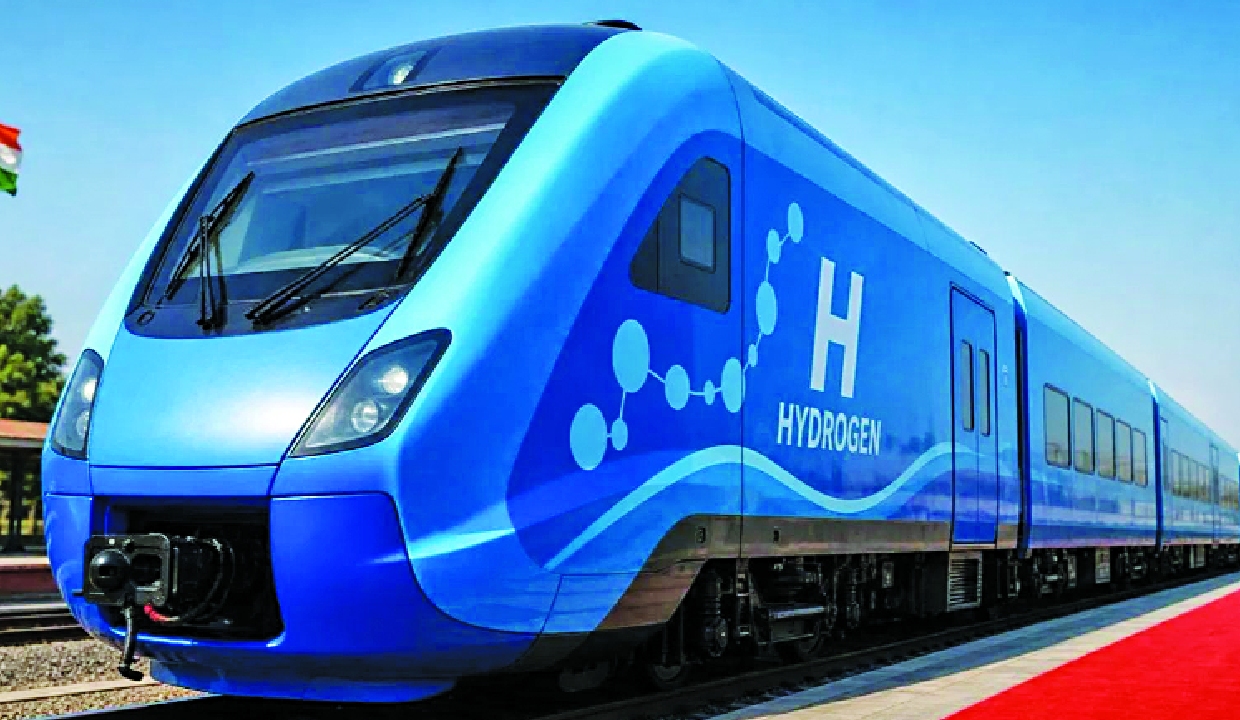
Hydrogen trains may prove invaluable on remote, non-electrified routes where overhead power lines are impractical, but they are no substitute for renewable electricity. The real challenge lies not in building hydrogen trains, but in ensuring that the entire ecosystem powering them is as green as the technology promises
India’s first hydrogen-powered passenger train, flagged off by our PM a few days ago on the Jind-Sonipat route, is supposed to be marching its way towards carbon-neutral Indian Railways and eventually a carbon-neutral country by 2070. The only fuel the train engine uses is hydrogen and no other fossil fuel. Hydrogen is used to generate electricity on board that energises the movement of the train. Water vapour is the only direct emission, and there are no other by-products in the process. In other words, a hydrogen train is an electric train with its power generation on board.
Clearly, the process does not require the burning of hydrogen inside the engine, and thus the possibility of accidents on account of hydrogen leakage is ruled out. Hydrogen is a highly inflammable, colourless and odourless gas. The train is equipped with leak detectors, sensors for locating flame and smoke, and an automatic shutdown facility.
Apart from passenger coaches, two hydrogen-powered driving cars, one at each end of the train, are deployed. The cylinders in the driving cars are especially designed to maintain the pressure of hydrogen at 350 Pascal or newtons per square metre. The energy generated by hydrogen at normal pressure is quite low, but under pressurised conditions, the weight goes up and a substantial amount of energy is stored in this fuel. It is necessary that hydrogen be compressed and liquefied. Strong cylinders, special pipelines and valves are an absolute necessity to handle the fuel.
Hydrogen is stored inside the engine in high-pressure cylinders. As the process begins, the hydrogen is fed to a proton exchange membrane (PEM), which can also be termed a fuel cell. Oxygen from the surrounding air is drawn into the fuel cell, which splits the hydrogen molecules into protons and electrons. The protons pass through the membrane, while electrons are guided to pass through an external circuit, generating electricity. The electricity powers the traction motor of the train and, in turn, brings it into a state of motion. The fuel cell is supported by lithium iron phosphate batteries so that the system can adjust to the requirement for excess energy and can operate steadily. At the other end of the fuel cell, protons, electrons and oxygen recombine to form water. The reaction being exothermic, heat is generated in the process. Only water vapour and heat are released, and no other greenhouse gases like carbon dioxide, etc., are released.
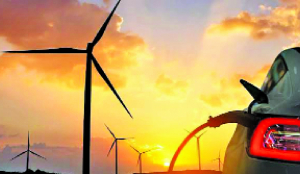
To understand the real carbon footprint in the process, it is necessary to examine the source of hydrogen. As we know, hydrogen is usually bonded with other elements and is also present in compounds like water, natural gas and biomass. It is obtained as a result of the electrolysis of water. The main agent that causes the electrolysis of water and splits it into oxygen and hydrogen is electricity. If the electricity is produced from renewable sources like solar, wind and nuclear sources, the hydrogen generated is known as green hydrogen. Electricity, however, is generated using fossil fuels like coal, oil and gas, and also hydroelectricity generated after sacrificing millions of trees and compromising carbon sequestration potential. If this is used for the electrolysis of water, the hydrogen so produced is not green hydrogen; it carries a lot of carbon footprint. Besides producing hydrogen, we also need to examine the process of its compression, transportation and storage. If any of these processes are completed without using renewable energy, they will also impart a carbon footprint. Further, if hydrogen is extracted from natural gas without capturing the carbon, it may leave quite a huge carbon footprint, and our journey in a hydrogen train would result in aggravating the warming of the globe.
The loss of electricity at each stage of generation, transmission and use is a well-known phenomenon. Besides, electricity theft in rural and semi-urban areas is also not uncommon. The hydrogen obtained from electrolysis after using electricity is to be reconverted into electricity in the train’s engine; there are many stages in this process. The electricity is used to make hydrogen fuel, which is then compressed, stored, transported and finally converted back into electricity on the train, undergoing losses at each stage. This makes the proposition quite expensive and sufficiently inefficient.
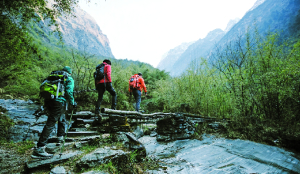
Nevertheless, it has distinct advantages. While we lay several rail lines in remote and hilly areas, providing continuous overhead electric lines to power the train engines is uneconomical and not environmentally friendly; the easier solution is to go for hydrogen trains. Landslides in the Himalayas often disrupt the running of heritage trains for a considerable period. If train tracks are restored after disruption, they can easily be used to run hydrogen trains without waiting to restore a continuous power supply line. This would minimise the carbon footprint.
The entire broad-gauge network in the country is electrified at the cost of huge investment. As long as the power is generated from renewable sources, the existing infrastructure is enough to run electric trains without any carbon footprint. No useful purpose would be served by replacing existing electric trains with hydrogen trains. Germany, the US and China have used the technology and have been running hydrogen trains for the last few years. These countries are encountering certain technical issues, and the endeavours are still under experimentation. India has also exhibited its technological prowess in starting a hydrogen train on the Jind-Sonipat route.
A number of new rail tracks through inaccessible and hilly areas are in the pipeline in this country. Quite a few of them are at the proposal stage, and the viability of each of these is still under examination. Laying rail lines on several hilly routes is an environmental disaster, which cannot be compensated for by a hydrogen train. The inaccessible and hilly areas are generally covered with very good-quality forests, and any linear infrastructure through these forests would fragment them and compromise their potential to sequester carbon. Other ecological services like soil conservation, forested catchments from where rivulets drain into tributaries and rivers, and the control of floods and landslides are likely to be badly hit. The Institute of Social Change, Bengaluru, has published a study on the valuation of forests recently, and it concludes that Indian forests provide ecological services worth $2.5 trillion annually, which is nearly two-thirds of our GDP.
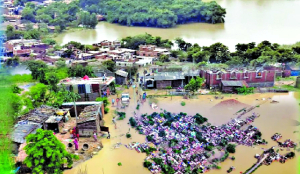
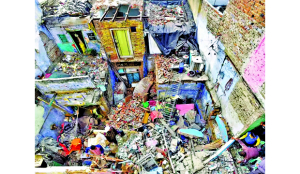
In the warming world, the downpours are always heavy. 400 mm of rain in 48 hours can bring misery to the people. Within two years, Wayanad in Kerala has experienced another landslide, claiming several human lives and damaging properties. Heavy downpours and landslides in J&K’s Poonch and other areas, as well as in Assam during the last few days, are testimony to this. Linear fragmentation of forests is detrimental to wildlife, too. There are studies concluding that the forests from the coast, through the ghat section and further up to the interior of the continent are useful in setting a convection current that can transport moisture from the ocean up to 1,000 km into the interior of the continent and can bring rain there. The impact of deforestation in one area can bring drought 1,000 km away.
The advent of hydrogen train technology and its implementation will not be able to undo the disasters in waiting. In conclusion, I recommend hydrogen trains in regions where tracks are newly constructed, but care must be taken to ensure that forests are not sacrificed in the hills for laying new train lines.
In the warming world, the downpours are always heavy. 400 mm of rain in 48 hours can bring misery to the people. Within two years, Wayanad in Kerala has experienced another landslide, claiming several human lives and damaging properties
The writer is the retired Head of Forest Force, Karnataka, and teaches Economics at the Karnataka Forest Academy; Views presented are personal.