If nation-building begins with people, then human capital begins at home
Every nation debates how to build stronger institutions, better economies and safer societies. Few ask where nation-building actually begins. It begins long before a child enters the classroom, long before a young adult joins the civil services or the armed forces. Nation-building begins at home.
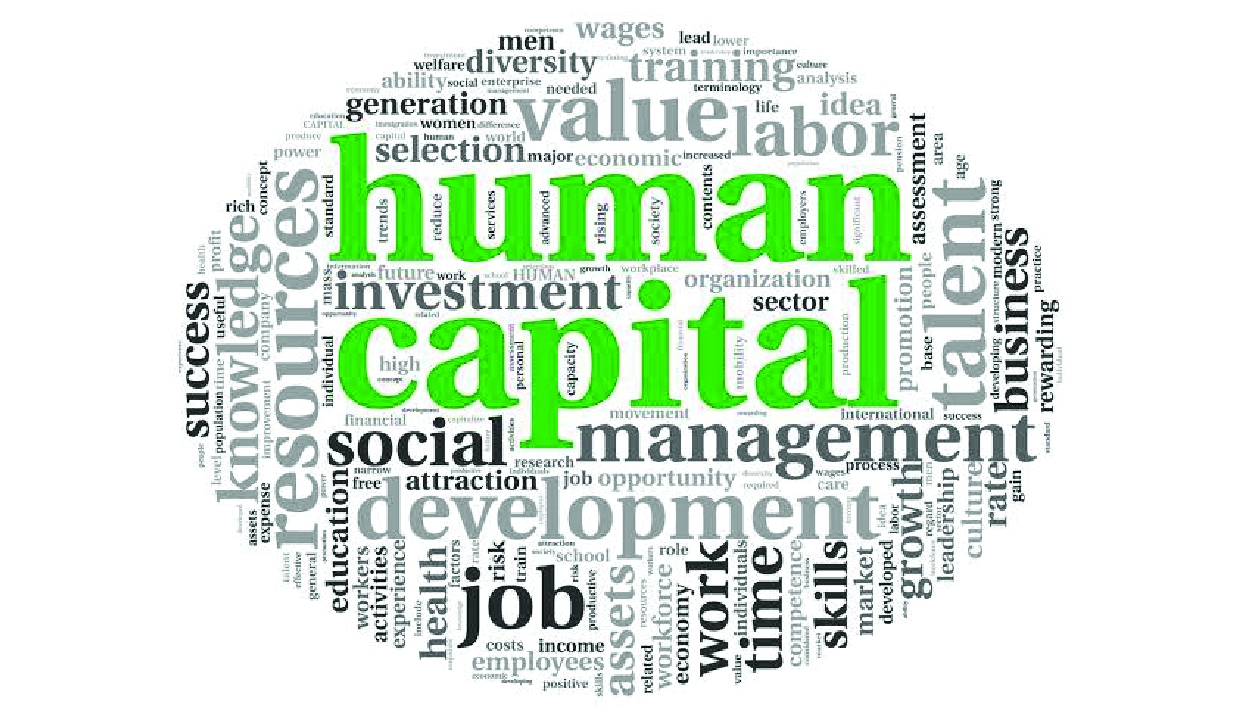
This is not merely a cultural or philosophical argument; it is also an economic and developmental one. Multilateral institutions increasingly recognise that a nation’s greatest asset is not its natural resources or infrastructure, but its people. The World Bank’s Human Capital Index reflects this reality: a country’s future productivity depends upon the health, education and development of its children today. Human capital begins long before a young adult enters the workforce. It begins in early childhood. In that sense, parenting, and particularly the nurturing that takes place during a child’s formative years, is among a nation’s earliest and most important investments in human capital. Human capital is therefore not simply an economic indicator; it is a measure of how effectively societies prepare future generations to become productive, responsible and peaceful citizens.
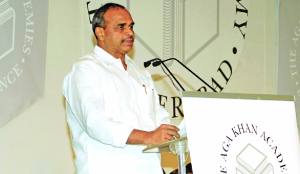
Viewed through the lens of preventive governance, social development and development economics, the larger truth behind Uttar Pradesh Governor Anandiben Patel’s remark, “Whether you become an IAS officer or a teacher, first become an expert mother,” becomes clear. The Governor’s remarks invited a deeper reflection: Who builds the future of a nation? A nation is built one generation at a time. Every child who grows into a responsible citizen, ethical public servant, entrepreneur, scientist, soldier or judge begins life within a family. Before any profession is chosen and before any institution imparts knowledge, a child’s earliest values, emotional security, discipline and sense of responsibility are nurtured at home.
Modern societies rightly celebrate professional achievement. Yet they often overlook perhaps the most demanding and consequential responsibility of all: raising children who embody compassion, integrity and civic responsibility. The child of today will determine tomorrow’s rule of law, social harmony, innovation, economic productivity and whether societies choose peace over conflict.
While her words generated controversy, they also opened an important conversation that extends beyond politics to development economics and preventive governance. They invite a collective reflection at all levels - global, regional and national - on how societies invest in human capital from the earliest years of life.
Far from being regressive, the Governor’s remarks can be understood as forward-looking because they place human development at the centre of nation-building. Governments invest in schools, hospitals, policing, courts and infrastructure. Yet the foundation of a safe, healthy and prosperous society is laid much earlier, through the care, values, nutrition, education and emotional resilience children receive during their formative years. An “expert mother” should not be understood as someone confined to domesticity, but as a woman who consciously nurtures responsible, compassionate and resilient future citizens.
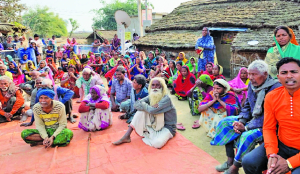
My conviction is also shaped by professional experience. During my investigative work in Colombia, including efforts to support the reintegration and mainstreaming of families of former Revolutionary Armed Forces of Colombia (FARC) into civilian life, I witnessed first-hand the transformative role women played in rebuilding fractured communities. One of our approaches was to engage and economically empower women so they could stand on their own feet while envisioning a different future for their children, one centred on education, dignity, opportunity and social inclusion.
In communities emerging from conflict, we found that empowering women and strengthening their role as mothers was among the most sustainable pathways to long-term resilience. When a mother begins to see realistic opportunities for her child’s education, employment and integration into mainstream society, she becomes a powerful force for change within the family and the wider community. That experience taught me an enduring lesson: investing in women and motherhood is not merely a social welfare measure. It is an investment in human capital, peacebuilding and national resilience. In many fragile settings, the long-term challenge is not simply ending conflict but preventing its recurrence. Mothers often become the first line of defence against the intergenerational transmission of violence by helping shape aspirations grounded in opportunity rather than conflict.
Across much of the world, motherhood and professional life are not separate identities but parallel responsibilities. Women routinely balance parenting with demanding careers, managing homes while leading institutions, businesses and global teams. Be it Sweden’s generous parental support or Switzerland’s emphasis on parental involvement in a child’s formative years through the traditions such as the ‘Mittagspause’ and ‘Tagesmutter’ convinced me that across Europe, valuing and supporting parenthood was viewed not merely as a private family matter but as a societal investment. Similar thinking was evident at the World Bank and Novartis, where family-friendly policies enabled parents to devote meaningful time to their children. The corporate world in India was no different. While spearheading Ernst & Young’s Diversity & Inclusion Portfolio alongside my role as Partner and National for Fraud Investigation & Dispute Services. I consistently advocated for enabling workplaces where women in client-facing leadership roles did not have to choose between professional excellence and family responsibilities. The debate, therefore, should not be framed as a choice between motherhood and professional achievement. Women have every right to pursue careers, lead institutions and shape public life. Equally, if they choose motherhood, society should recognise it not as an interruption to achievement but as one of its highest forms. Raising responsible, ethical and compassionate citizens is itself an act of nation-building and one of the earliest investments in a country’s human capital.
It is no coincidence that across civilisations humanity continues to invoke the metaphor of “Mother Earth” to symbolise nurturing, preservation and renewal. These are qualities essential to building resilient societies. Public discourse is best served when ideas are evaluated on their substance rather than through partisan lenses. Whether one agrees entirely with the Governor’s choice of words is secondary. The more important question is whether modern societies have undervalued one of their greatest investments in the future: nurturing the next generation.
The author is a financial, governance, geopolitical and security analyst; Views presented are personal.