When algorithms enter the field: What AI means for India’s small farmers
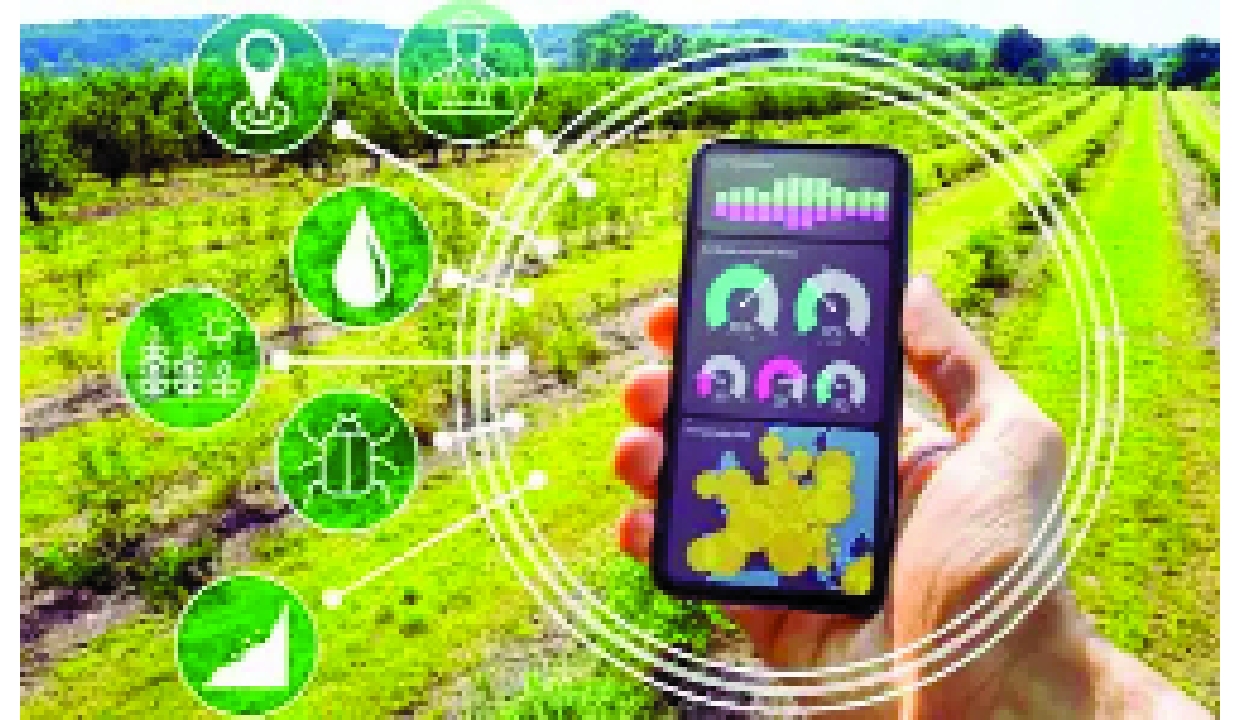
While sowing, a farmer in India checks an agri-tech app that advises him to delay planting due to an expected dry spell. The advice is based on satellite imagery, historical rainfall data and machine learning models. But the rain arrives earlier and more heavily than predicted. The sowing window is lost, along with the seeds and other resources the farmer has invested. Stories like these are increasingly common as farmers rely on predictive tools and artificial intelligence (AI) to guide agricultural decisions. These technologies are promoted as one-stop solutions to climate uncertainties, stagnant yields and distress in the agriculture sector. Algorithm-based advice is presented as “informed decision-making”, influencing everyday decisions and raising a question: who benefits from agricultural algorithms and who should be held responsible when their predictions go wrong?
With advances in science and technology, agricultural practices have evolved. Traditionally, agriculture relied on human labour, animals and knowledge of soils, seasons and risks. This was Agriculture 1.0, marked by modest productivity and dependence on traditional knowledge. Production increased sharply in the 19th and 20th centuries with Agriculture 2.0, driven by mechanisation and chemical fertilisers. But this came with a high ecological cost: greater dependence on agricultural inputs, falling groundwater levels and soil degradation. Information and communication technologies entered farming in the late 20th century, marking the advent of Agriculture 3.0. Precision farming, automated machinery and satellite monitoring became more common, while chemical use could be reduced. This paved the way for Agriculture 4.0, where data, algorithms and predictive models are increasingly used. AI systems use data from soil sensors, drones and weather forecasts to advise farmers on when to sow, irrigate, fertilise and harvest. Farming that once relied largely on experience is now increasingly guided by prediction.
India’s shift towards digital agriculture is driven by climate change, unreliable monsoons, extreme weather and pressure on limited land and water. Predictive analytics and AI tools are promoted as scientific solutions to raise farmers’ incomes, reduce climate risks and use resources efficiently. But agriculture is shaped by social, ecological and socio-political conditions, which AI cannot always capture. Predictive technologies run on data collected through mobile applications, sensors and other tools. This includes soil properties, crop images, yield patterns, weather records and farmer behaviour. Farmers generate this data continuously, often without realising it.
Farmers have less control over data generated from their fields. Most agri-tech firms, insurance providers and input suppliers have unclear data policies, offering little information on how data is stored, shared and utilised. Data collected from millions of farmers becomes a valuable asset for these firms, while farmers seldom benefit from it. Data-driven systems can influence farmers’ access to credit, insurance payouts or government schemes. This imbalance reduces farmers to data profiles rather than decision-makers. As knowledge moves from the soil to servers, authority shifts from those who work in the field to distant digital systems.
Predictive technologies rely heavily on past data to identify patterns and project them into the future. But climate change has unsettled these models. Erratic rains, prolonged heatwaves, unseasonal storms and shifting pest cycles mean historical data is less reliable. Most Indian farmers depend on rain-fed agriculture, where predictions may fail to capture local differences. Yet digital advisories continue to be issued, leaving farmers to choose between the algorithm and their own experience. When predictions fail, the cost falls most heavily on smaller farmers, who are least able to bear the losses.
For generations, Indian agriculture has drawn on indigenous practices, community experience and ecological knowledge. AI systems, however, tend to favour data that can be measured and standardised, often overlooking local knowledge. Their advice may ignore differences in soil, cropping patterns and household circumstances.
This can sideline effective local practices and reinforce farming methods that depend heavily on external inputs. Farmers may feel pressured to follow these recommendations rather than adapt them to local conditions or learn from others in their communities. Over time, this could weaken their independence and increase reliance on software and off-farm inputs. Technology, therefore, does more than support farming. It can shape what counts as agricultural knowledge, how it is tested and how much value is placed on it.
One of the most critical concerns with introducing AI into agriculture is responsibility. Suppose an algorithm’s advice leads directly to crop failure; who should be held accountable - the app developer, data provider, government bodies promoting these platforms, or the farmer who acted on the suggestion? At the moment, there is little clear guidance. Most digital tools in agriculture lack systems for handling complaints or established rules about liability. Farmers are urged to trust these systems, but when they fail, responsibility scatters and accountability goes missing.
Without transparency and safeguards, these technologies can shift the burden of managing uncertainty from institutions to individual farmers.
AI and predictive technologies are not inherently problematic. If developed and used responsibly, they can improve decisions, reduce physical burden and make better use of scarce resources. But they should support, not replace, farmers’ judgement and local knowledge. Data governance must recognise farmers’ rights over their data, backed by genuine consent and transparency. Public platforms and open systems can also provide an alternative to the growing dominance of private firms in agricultural data.
These technologies should also be part of wider efforts to promote climate-resilient and agroecological farming. They cannot be treated as miracle solutions to long-standing agrarian problems.
The future of Indian agriculture will depend not only on technology but also on the values and institutions shaping its use. Predictive tools can either deepen existing inequalities or help build fairer and more sustainable farming systems. The question is not whether India should use AI in agriculture, but how it is used and in whose interest. Without accountability, farmer participation and respect for ecological realities, “smart farming” may fail those who need it most.
Dr Nehra Sehra is a Research Associate at CSLG, JNU, and Reeta Sony is an Associate Professor at CSLG, JNU; Views presented are personal.