YSR’s legacy lives on: Jagan’s journey from welfare to empowerment
Seventeen years after the untimely death of YS Rajasekhara Reddy, his political legacy continues to be defined not merely by welfare schemes but by a larger idea of governance: that social justice must translate into tangible economic security, opportunity and dignity
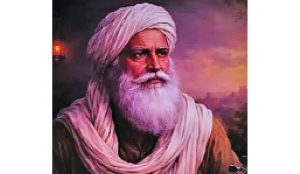
It has been seventeen years since we lost YS Rajasekhara Reddy in a fatal helicopter crash. His untimely demise drastically altered the destiny of Andhra Pradesh. A charismatic statesman, his footprint is the largest in the social sector, and every family claimed him as their own.
During his gruelling padayatra, he comprehended the needs of the common person. Farmers, women, youth, Backward Classes, the socially disempowered, and the economically vulnerable formed his foremost concern.
With these sections in mind, his government discarded the World Bank’s conservative playbook and came up with sweeping reforms across the power, agriculture, public health and higher education sectors. It is worth mentioning some of his salient schemes as we observe his anniversary today. The first government order he signed was to provide free electricity for agricultural use.
The second major relief measure that he extended to the farming community was to waive agricultural loans. He initiated massive irrigation schemes that changed the landscape of agriculture in the Telugu states and ensured that farmers had constant access to water throughout the crop seasons.
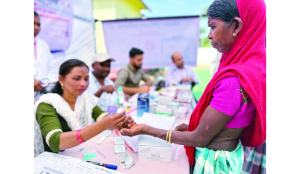
His Aarogyasri was India’s first public health insurance scheme, which ensured that the health needs of every vulnerable family were covered. He instituted the historic post-matric fee reimbursement scheme that provided every student with the government’s financial backing to pursue higher education.
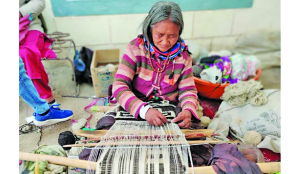
The Backward Classes form the bulk of our state’s population. To reduce them to a mere social category does injustice to their massive contribution to our economy. They are our farmers, weavers, fishermen, potters, masons, small traders, skilled workers, artisans and those who form the service backbone of our society and economy.
When YSR assumed the stewardship of the state in 2004, Andhra Pradesh was not a welfare state. For the preceding nine years, the state, which was governed by the rulebook of neoliberal economics, withdrew from providing direct relief to its citizenry.
Recognising that social justice should not be limited to an abstract constitutional promise but must be anchored in material security and institutional access, he took up a slew of welfare measures.
For him, welfare was never charity but a precondition on which a state could promise its citizenry opportunities that would lead to upward social mobility. Thanks to the policies listed above, within the span of a generation, millions of families from otherwise socially vulnerable and economically deprived sections emerged empowered out of debilitating poverty.
When the YSRCP formed its government in Andhra Pradesh in 2019, our leader Jaganmohan Reddy believed that carrying forward his father’s legacy required a clear three-pillar approach to the empowerment of the Backward Classes: Welfare, Development and Leadership.
Our government provided direct support to BC households and traditional occupations. YSR Cheyutha provided 75,000 over four years to eligible women from BC, SC, ST and minority communities. YSR Nethanna Nestham ensured handloom weavers received 24,000 annually.
YSR Matsyakara Bharosa strengthened assistance to fishermen and offered financial support during those periods when fishing was banned. Through YSR Vahana Mitra, we provided financial succour to auto, taxi and maxi-cab driver-owners, while Jagananna Chedodu assisted tailors, Rajakas and Nayee Brahmins.
YSR Aasara provided relief to members of self-help groups and waived outstanding loans.
For the first time in the state’s political history, we created 56 corporations that addressed the needs of 139 communities that are listed under the Backward Classes.
We created a dedicated institutional framework for economic advancement, self-employment and livelihood development. Through Nadu-Nedu, government schools were upgraded, and English was adopted as the medium of education. CBSE and IB syllabi were adopted to help children from ordinary families access better educational pathways. We established 17 medical colleges with large teaching hospitals to ensure that the best medical care was available to all. We established ports, fishing harbours and landing centres to support fishing communities. We launched Fish Andhra to ensure that these sections had access to processing and cold storage plants. We worked to develop the MSMEs to help students improve their skills and find job opportunities closer to their communities.
Our leader Jaganmohan Reddy’s padayatra taught him that economic advancement without political power is incomplete. He decided to create a new generation of organic leadership by transforming the Backward Classes from a vote bank to decision-makers. In the YSRCP government, 11 of 25 members in the state cabinet of ministers were from Backward Classes. That was a staggering 44 per cent and included a Deputy Chief Minister.
We had Deputy Chief Ministers from communities such as Setti Balija, Koppula Velama and Turpu Kapu. 11 of the 25 candidates fielded for the Lok Sabha seats and four of the 11 nominated for the Rajya Sabha were from the Backward Classes. In the Legislative Council, 28 of 58 seats (48 per cent) were held by representatives from these sections. At the local government level, nine of 13 Mayoral positions (69 per cent) and six of 13 Zilla Parishad Chairperson posts (46 per cent) were headed by individuals from these communities. We earmarked 34 per cent of positions for Backward Classes in local bodies through government orders issued on December 28, 2019. This was challenged in the courts. YSR showed us that the dignity of the poor and the marginalised is not a political slogan; it is a responsibility of government.
Our leader Jaganmohan Reddy’s constant engagement with the public taught him that while welfare protects communities, development strengthens them, and ultimately the ability to self-govern empowers them. The journey he began in the footsteps of the exemplar YSR was never a radical departure from his vision, but an evolution from where he stopped.
A strong Andhra Pradesh requires communities that are empowered and are forward-facing.
Our leader Mr Jaganmohan Reddy’s padayatra taught him that economic advancement without political power is incomplete. He decided to create a new generation of organic leadership by transforming the Backward Classes from a vote-bank to decision-makers
The writer is a former Minister for Fisheries, Animal Husbandry & Dairy Development, Government of Andhra Pradesh; Views presented are personal.