Yamuna water agreement ends 32-year dispute
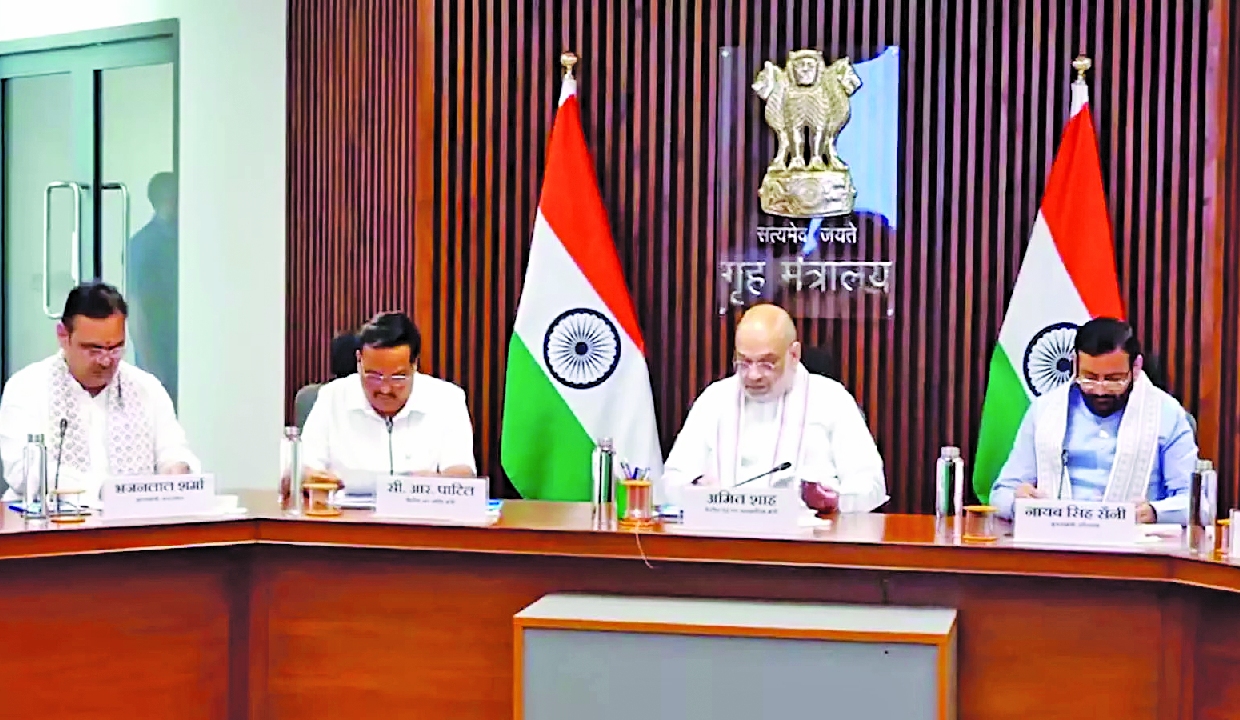
In the arid heartlands of Rajasthan, water has never been merely a resource. It has been an absolute lifeline, directly linked to not just survival but food production, livelihoods, resilience and stability. Rajasthan, India’s largest state by area, accounting for nearly 10.5 per cent of the country’s geographical landmass but possessing barely 1.16 per cent of its surface water resources, has long encountered a severe imbalance between demand and availability. For generations, people, especially in the Shekhawati region, comprising Churu, Sikar and Jhunjhunu districts, have had to witness cracked earth and empty wells, with the worst sufferers being farmers and women. Therefore, ensuring water security and effective water management have been the key policy focal areas for the present government. Against this backdrop, the historic Yamuna Water Agreement, signed on 29 June 2026 between Rajasthan and Haryana, is not just a water-sharing agreement. It is a successful example of cooperative federalism, of partnerships built on value, in securing a historic deal on water security towards inclusive development and economic stability.
Cooperative federalism in action
Prime Minister Narendra Modi has repeatedly emphasised cooperative federalism for India’s progress, where the Union and states work as partners in nation-building. Initiatives such as the Jal Jeevan Mission and the Ken-Betwa River Linking Project have already demonstrated its success in governance. The Yamuna Water Agreement is the latest and one of the most significant milestones of this approach.
Resolving water-sharing disputes is never easy, as they involve network gaps, infrastructure barriers and moreover, competing regional aspirations. The implementation of the Yamuna Water Agreement 1994 between Rajasthan and Haryana was blocked predominantly because of such challenges.
Under PM Modi’s vision, Home Minister Amit Shah played a pivotal role in fostering consensus between Rajasthan and Haryana, turning a three-decade-old impasse into a workable solution. At the heart of this success also lies the determination of Rajasthan Chief Minister Bhajan Lal Sharma. Long dismissed as a “parchi CM” and questioned for his ability to deliver big outcomes by his critics, he has altered this perception by breaking a deadlock that persisted since 1994 for Rajasthan to utilise its allocated share of water. Since assuming charge as CM, he has engaged persistently on the subject with the state of Haryana and Union authorities to fast-track its implementation. The resultant successful outcome stands as a definite testament to his commitment and leadership.
Ensuring water security, transforming lives
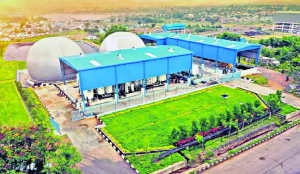
The scale and ambition of the project are massive. At an estimated infrastructure cost of Rs 34,102 crore, Rajasthan will receive nearly 580 million cubic metres (MCM) of Yamuna water from Haryana’s Hathnikund Barrage through a sophisticated 295.5-kilometre underground pipeline network. Thereafter, water will be transported and stored in the Hansiyawas Reservoir in Churu district for local regional distribution. Other infrastructure would include modern water management systems, inspection roads and supporting facilities.
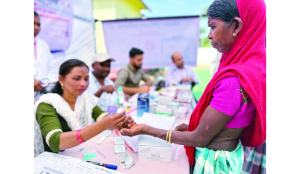
Implementation of the agreement will benefit lakhs of families in Rajasthan who have long been struggling with water shortages. Reliable water supply will not just address drinking water crises but provide a big boost to agricultural productivity through reliable water access, directly benefiting farmers. Additionally, it would facilitate industrial growth, groundwater recharge, new livelihood opportunities and curb distress migration due to water shortages. Women, in particular, stand to gain significantly, as cultural norms and caregiving roles have long compelled them to fetch water across long distances, often at the cost of their education, health and safety. Addressing this burden is therefore not merely about a water-related crisis but a step towards promoting inclusive development and dismantling structural inequalities. The agreement also covers financial responsibilities, cost-sharing, water allocation, monitoring and dispute-settlement mechanisms. The state leadership is also making additional efforts on groundwater recharge, reviving traditional water conservation practices and other inter-state water projects towards ensuring water security in Rajasthan.
The state of Haryana, too, is set to derive considerable benefits as a result of the agreement through enhanced regional infrastructure and drinking water provisions, especially in Bhiwani and Fatehabad districts. It exemplifies mature cooperative federalism, where both states emerge as beneficiaries.
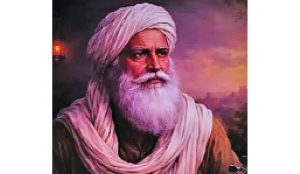
The Yamuna Water Agreement conveys a clear message about governance, where long-stalled projects can be unlocked when long-term vision, active coordination and effective execution converge. It demonstrates the importance of partnerships built on purpose towards nation-building. For Rajasthan, this is more than a water accord. It is a crucial step towards realising the longstanding dream of Bhairon Singh Shekhawat of eradicating water scarcity in Rajasthan.
Shehzad Poonawalla, National Spokesperson, BJP. Vijeta Rattani, Sustainability and Development Professional; Views presented are personal.