Geopolitics — need for a new communication strategy
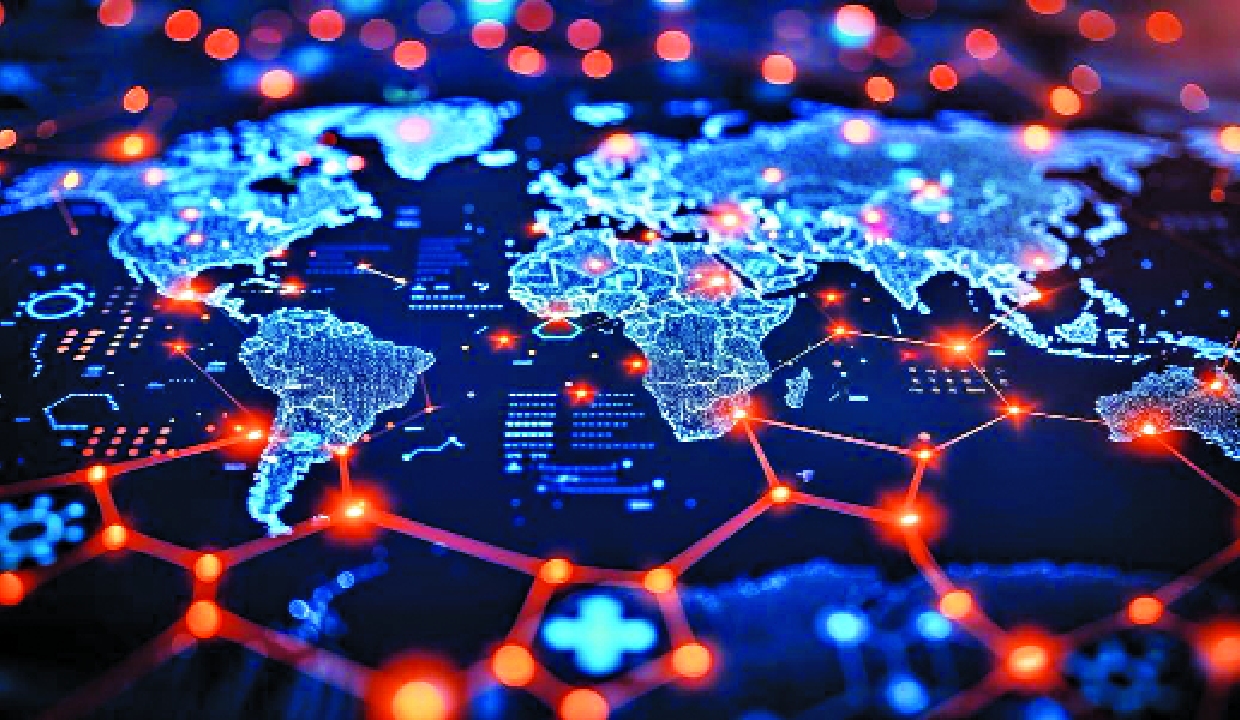
As artificial intelligence and disinformation reshape the geopolitical landscape, the need for an integrated geostrategic communication architecture has become urgent. The challenge is to build a credible, coordinated and inclusive framework that aligns information, influence and public diplomacy without compromising truth or trust
The world today is in a state of constant and consistent flux, wherein disruption and distortion dominate proceedings, ideas and outreach simultaneously. Geopolitics today is witnessing an unprecedented ‘tug of war’: a war of ideas, resources, markets, communication tools and narrative-building. It is a battle of perception, survival and struggle across the borderless world, with the objective of attracting attention, reinforcing legitimacy and restoring credibility on a sustainable basis.
In such a scenario, the moot question remains: what should be the ideal ‘Geopolitical Communication Architecture’ that explains policies, actions and outreach with clarity and conviction? How does the architecture bring about ‘Geopolitical Convergence’ on narratives that dominate the power-play matrix globally? What should be the inputs, partnerships and scale of measurement that reinforce the story foundation of geopolitics and narrative-building strategy? The challenge in the remaining months of 2026 is to design a geostrategic communication structure that integrates perception, influence and information under one roof. The idea is to create an inclusive structure that brings all stakeholders together under one communication architecture.
When we talk about global power today, we rarely talk just about weapons or borders anymore; we talk about stories. We talk about who controls the narrative. That is essentially what geostrategic communication is: shaping how a country is perceived in the global mind space and making that perception work in its favour.
Today, geostrategic communication has become a unique matrix, a blend of old-school credibility and new-age immediacy. On one side, you have in-depth think-tank reports, policy briefs and scholarly analyses; on the other, the rapid-fire social media blitzes that can alter global narratives in hours. Both coexist; both influence. Enter the era of podcasts, YouTube diplomacy, Twitter handles run by embassies, and viral reels of leaders meeting citizens. Communication is no longer just press releases and speeches; it is about aesthetics, relatability and digital fluency. Hence, do we need a strategic communication secretariat, a one-stop solution to all?
The reasons are manifold. Geopolitics today is no longer a mere messaging process. It serves several purposes and addresses diverse themes that shape perceptions in the long run. Hence, the narrative-building process in the geopolitical space requires multi-level interventions, tools and levels of mobilisation. The emerging perception is critical to understanding the role of geostrategic communication in the process.
While geostrategic communication is critical in defining outcomes and results, the structure to support it should be inclusive, innovative, visible and integrated. The structure should have the inherent capacity to understand real-time analytics, delve deeply into predictive analysis and study audience reactions. It should be able to comprehend the depth and dimensions of algorithmic tabulation, and the role of AI in facilitating the search for solutions, while avoiding technological overload and dependence. In view of the large-scale flow of content, any structure for geostrategic communication should be able to dissect and separate rhetoric and fakery from reality. The credibility quotient remains the key challenge in reducing the trust deficit in communication.
Any geostrategic communication structure needs to be adaptable to communication challenges and crises. There needs to be a clear understanding of the mandate and areas of coverage. While long-term objectives qualify as strategic goals and vision, there is an urgent need to address issues related to global monitoring, an aspect sometimes ignored due to the multiplicity of issues. Strategists ignore the impact of reputational risks and perceptions when viewed vis-à-vis social media tools, international media reportage and disinformation arising from negative perceptions. A critical component of the structure requires engagement at the people-to-people level, which, in diplomatic parlance, is called ‘public diplomacy’, utilising the dynamics of soft power, the diaspora and institutions. The structure should also incorporate the dynamics of crisis communication.
A new geostrategic communication framework cannot be an abstract idea; it needs a tangible structure. The United Nations General Assembly (UNGA) should spearhead discussions on an international information governance framework, establishing a ‘Threshold Agreement for Global Communication’. Such an initiative should include ethical standards for AI-generated content to ensure transparency and reduce algorithmic biases. It must also introduce a crisis communication protocol to prevent misinformation spirals during global emergencies. Additionally, a global fact-checking consortium should be established to unite journalists, researchers and policymakers in a collaborative effort to combat digital disinformation. Lastly, balanced digital sovereignty measures are essential to allow countries to maintain narrative control without suppressing free speech.
What we need is a renewed collaborative effort to establish a new ‘Global Information Order’, a platform established institutionally to bridge the gap in the medium-and-message equation. The 7Rs in communication, i.e., relevance, relatability, response, revival, reconnection, reconstruction and repositioning, need to be mainstreamed in the geopolitical setting. The new global order must work towards a framework that calibrates perceptions, builds relationships and drives action based on mutually agreeable communication tools. This mode should integrate rather than disconnect, create gaps or promote division, and establish a narrative that addresses opportunity, experiences and the vision of mutual coexistence. The changing geopolitical reality of 2026 highlights the need for adaptability in communication. Traditional media must evolve to remain relevant, embracing digital innovations and audience-centric approaches. Meanwhile, social media must grapple with issues of misinformation, polarisation and echo chambers, striving to become a platform that unites rather than divides. In this era, communication is no longer just about delivering a message; it is about shaping perceptions, building relationships and driving action.
One of the critical areas in which visible changes are being witnessed in 2026 is the geopolitical communication landscape. This year is positioned to redefine the very pathways of global communication, with a pivotal question arising: are we on the verge of a 360-degree transformation in communication delivery, content orientation, outreach mechanisms and the tools we deploy? Geopolitically, the communication ecosystem embraces a new language-a language of immediacy, focused messaging, results-driven delivery and the prioritisation of measurable outcomes to identify realistic patterns and global impacts. The era demands a communication framework that not only transcends borders but also bridges divides with precision, creativity and authenticity. In 2026, the phrase ‘a picture is worth a thousand words’ takes on greater resonance. Visual communication has become one of the most impactful ways to deliver messages. A single, well-composed image has the power to convey emotions, ideas and narratives that words may struggle to encapsulate. Building on this, the explosion of short-form videos and 30-second reels, for instance, has transformed the landscape further.
As the world awaits the impact of the changes taking place in the global order, the important question remains: does the communication and information landscape address the transformations occurring at multiple and multilayered levels? The changing communication landscape has an important role to play in the shifting paradigm across nations, regions and continents. It is undeniable that information overload, stress and the influx of data can cause a sort of information fatigue due to the constant flow from multiple sources. This phenomenon continues to make huge waves in the multipolar geopolitical world. In today’s interconnected society, every issue is debated, analysed and perceived through tools of instant communication on a 24/7 basis. The rapid dissemination of information has led to narratives that evolve swiftly, influenced by shifting perceptions and biases. This constant flux presents new challenges, obstacles and limitations that restrict the role of communication in the geopolitical space. The immediacy of information exchange can exacerbate misunderstandings and escalate conflicts before there is time for measured responses.
What we need is a renewed collaborative effort to establish a new ‘Global Information Order’, a platform established institutionally to bridge the gap in the medium-and-message equation.
In 2026, the phrase ‘a picture is worth a thousand words’ takes on greater resonance. Visual communication has become one of the most impactful ways to deliver messages. A single, well-composed image has the power to convey emotions, ideas and narratives that words may struggle to encapsulate. Building on this, the explosion of short-form videos and 30-second reels, for instance, has transformed the landscape further
The writer is Former Civil Servant. Writes on strategic communication and cinema. Inputs provided by Zoya Ahmad and Vaishnavie Srinivasan; Views presented are personal.