Closing the protection gap: India’s journey from health insurance to health security
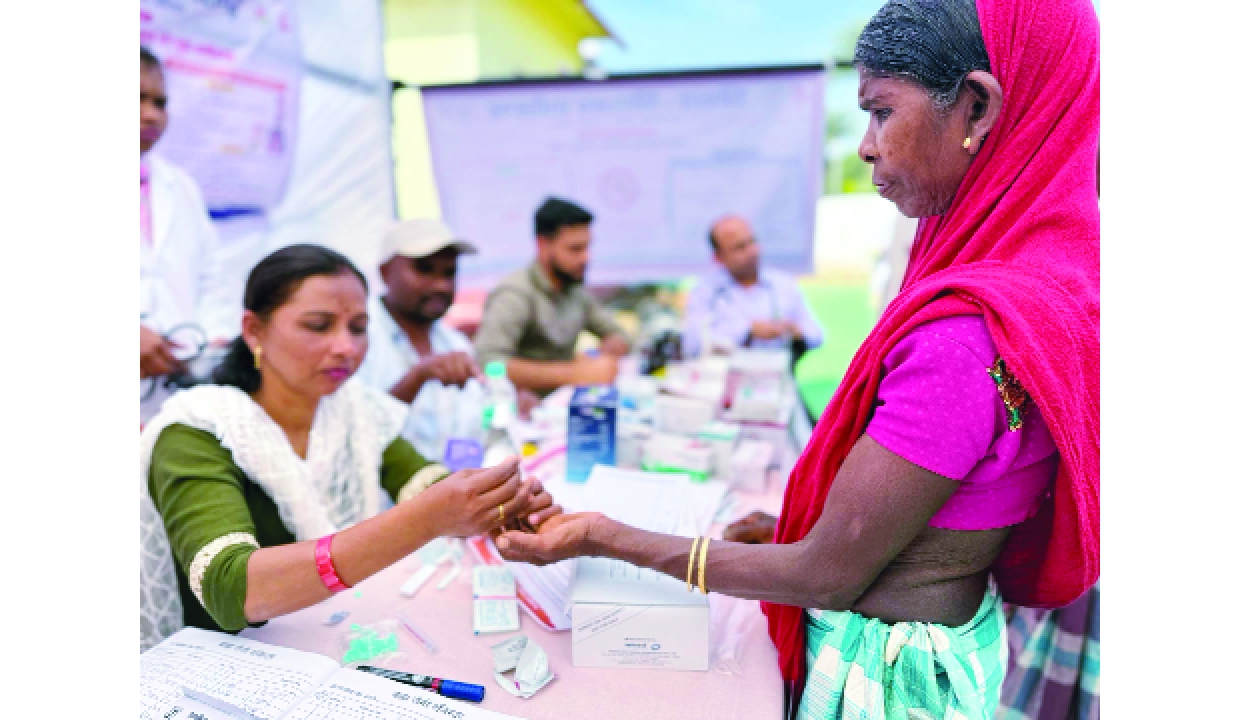
With an alarming rise in double disease, Communicable and Non-Communicable Diseases (NCDs), India faces unique healthcare challenges which require innovative solutions. In pursuance of the Universal Healthcare Coverage goal, health insurance remains a major catalyst. Over the years, India has made significant progress in health insurance coverage. But the main challenge is to ensure that a medical emergency does not become a financial catastrophe for the family. It is promising to note that a transformation is underway.
The latest National Family Health Survey points to the scale of the transformation, with 60.2 per cent of households reporting coverage. This is an encouraging jump from 41 per cent, as per the previous survey. It is evident now that the expansion of Ayushman Bharat-Pradhan Mantri Jan Arogya Yojana (AB-PMJAY), alongside state-sponsored schemes, has been a major growth driver.
But coverage is only the first test. The real test is financial protection. According to research by the Indian School of Business, there was a 35 per cent reduction in loan delinquency in districts where the scheme was implemented, with increased liquidity for loan repayment emerging as an important mechanism. The study shows that if insurance absorbs a substantial part of that medical shock, household liquidity improves and the probability of financial distress falls.
Health insurance, therefore, should no longer be seen simply as a healthcare instrument. It is also an economic resilience instrument. India’s health-financing architecture, however, cannot be built around one model. As India’s problem is unique, solutions need to be comprehensive of national assurance, state-level schemes, public healthcare and private insurance. At the national level, PM-JAY augurs well, while states can adapt financial protection to their own demographic and healthcare realities.
This is where Goa offers an instructive example of a universal health insurance model. Goa was among the states that recognised relatively early that universal access to healthcare required protection against the cost of treatment. The Goa Government, led by Chief Minister Dr Pramod Sawant, has now enhanced the protection under the state-run flagship health insurance scheme, Deen Dayal Swasthya Seva Yojana (DDSSY). Under the revised structure, families with three or fewer members will receive annual medical insurance coverage of Rs 4 lakh, up from Rs 2.5 lakh. Families with four or more members will receive Rs 6 lakh, compared with the earlier Rs 4 lakh. This is more than a routine revision of insurance limits. The enormous increase in the cost of treatment, medical inflation and the growing burden of non-communicable diseases have altered the financial risks faced by households.
The decision of Dr Pramod Sawant, therefore, reflects an important principle: health protection must evolve with the cost of healthcare. Goa’s advantage, however, is not DDSSY alone. The state’s health-financing model increasingly rests on several layers: state insurance, AB-PMJAY, government healthcare facilities and publicly supported services.
It is evident that the layered approach can work well for a country as diverse as India. At the top, national schemes provide scale and portability, whereas individual state schemes can respond to local requirements. It is a fact that public hospitals provide the essential infrastructure, and private providers surely add capacity and specialised care.
The experience of smaller states demonstrates why this combination can work. Sikkim, Manipur and other smaller states offer similar lessons in the importance of per capita public investment. But Goa’s experience is particularly relevant because it combines a state-funded insurance platform with national health assurance and a substantial public healthcare system.
The next challenge is to ensure that insurance protection does not stop at hospitalisation. The country is facing an alarming rise in NCDs such as diabetes, hypertension, cardiovascular disease, cancer and other chronic illnesses. These diseases need continuous management rather than a one-time hospital intervention. Hence, the health insurance architecture needs to move to the next level, from hospitalisation cover to protection. Preventive healthcare must become a larger part of the equation. Dr Sawant’s emphasis on preventive interventions in Goa is relevant in this context.
The national system also needs better integration. The insurer and the beneficiaries should not face any bureaucratic hurdles. Especially, beneficiaries should not have to understand the differences between a Central scheme, a state scheme and private insurance. Now, digital health infrastructure can make eligibility, portability, claims and treatment records more seamless.
It is important to note that nearly four out of ten households still remain outside reported health insurance coverage. And coverage itself says little about whether a family can afford the treatment it needs. India’s next target should be adequate, accessible and usable health protection. India has made the transition from limited insurance penetration towards mass coverage. The next transition must be from universal health insurance coverage to comprehensive protection.
The writer is a senior journalist and columnist with over three decades of experience. He writes extensively on rural affairs, agriculture, economic issues, healthcare and public policy, with a particular focus on developments impacting the grassroots economy and rural communities; Views presented are personal.