Delhi’s clean-air battle moves from promises to action
Every November, Delhi holds its breath, quite literally. Schools shut, construction stops, the elderly stay indoors and families who can afford it buy one more air purifier. The families who cannot afford it simply breathe what the city gives them. We have lived with this cycle for years. Pollution never lacked political debate in Delhi. There were committees, odd-even experiments, smog towers and full-page advertisements blaming someone else. What was missing was action that actually reached the common household. That action has now begun. Under Chief Minister Rekha Gupta, the Delhi Government has taken two decisions whose effect will be felt not in press conferences but in people’s homes and on their daily commute — rooftop solar at zero upfront cost for ordinary families and a new Electric Vehicle Policy. Both stand firmly on the national vision of Prime Minister Narendra Modi, through PM Surya Ghar: Muft Bijli Yojana and PM E-DRIVE. When the Centre and the State work in the same direction, schemes stop being files and start becoming rooftops.
“Muft Bijli” that a family can own
Free electricity has been Delhi’s favourite political slogan for ten years. But there is a difference between free electricity handed out as a subsidy and free electricity produced on your own roof. The first depends on the government’s budget every year and the family owns nothing. The second is a productive asset that belongs to the household and keeps working for 25 years.
This is what the new solar policy offers. Under PM Surya Ghar, the Centre gives up to `78,000 for a rooftop system. The Delhi Government now adds support of up to another `78,000 of its own. A family using up to 400 units a month can get a system of up to 3 kW installed without paying a single rupee upfront. Maintenance is free for the first five years, the existing electricity subsidy continues and any surplus power can go back to the grid, reducing the family’s bill and creating additional value.
On September 21, 2026, Chief Minister Rekha Gupta launched the registration portal, www.solar.delhi.gov.in, where any eligible family can apply online. Power Minister Ashish Sood rightly described the scheme as one that gives residents free electricity as well as a chance to earn from it. The target is to reach 2.3 lakh families by March 2027, and applications have been coming in steadily since the portal opened.
The smallest house, the biggest gain
Think of a family living in a two-room house on a 25-square-yard plot in a resettlement colony. The husband drives an e-rickshaw, the wife runs a small tailoring business from home and the children study under a single fan. For such a family, rooftop solar was always something for bungalows in South Delhi. Spending two lakh rupees on panels was simply unthinkable.
That is exactly the family this policy is meant for. The scheme now covers homes with limited roof space, and even a small system of one or two kilowatts on a small roof can meet most of the monthly needs of a modest household. For the first time, the poorest homes in Delhi are not at the end of the queue for clean energy. They are at the front of it. This is real empowerment and it is Antyodaya in practice. Pandit Deendayal Upadhyaya taught that development must be judged by the rise of the last person in society, and that vision has guided the BJP from its very beginning. Here, the family at the end of the line is the first to benefit.
And here lies the political difference. Free power given as a subsidy keeps a citizen dependent on the government. Free power from one’s own roof makes him independent. Those who built their politics on the slogan of free electricity for ten years must answer one simple question - why did rooftop solar remain a luxury of the few during their entire tenure? Delhi did not need more promises of “muft Bijli”. It needed a way for the poorest family to own it.
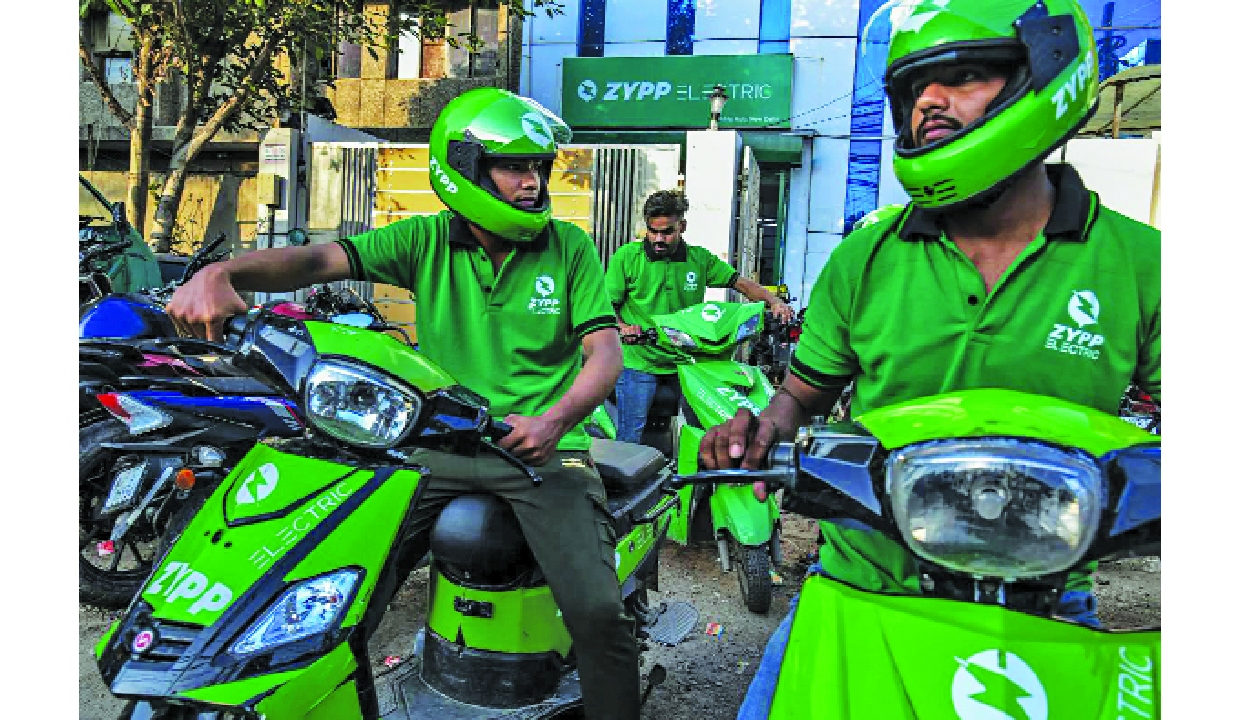
The same thinking runs through the Delhi EV Policy 2026, which came into force on July 1, 2026. A young delivery worker, a college student or a small shopkeeper buying an electric scooter can now get up to `30,000 in support, paid directly into the bank account, with no middlemen. Road tax and registration fees on eligible electric vehicles have been waived. Auto-rickshaw drivers, who spend most of their earnings on fuel, will move to cheaper electric autos in a planned way. Thousands of families applied for incentives within weeks of the scheme opening.
For those who cannot buy a vehicle at all, the change is visible at the bus stop. Under Chief Minister Rekha Gupta, Delhi now runs more than 5,000 electric buses, the largest such fleet in the country. The small DEVI buses reach narrow colony lanes where large buses never went, and women travel free. A cleaner commute has become available to the ordinary Delhiite, not only to those who drive a car.
Clean air and Aatmanirbhar Bharat
There is a larger purpose behind all this. India imports most of the crude oil it uses, and every scooter that runs on Indian electricity instead of imported petrol strengthens our energy security. Under PM Surya Ghar, the Central subsidy requires domestically manufactured solar modules using domestically manufactured cells. So every rooftop in Delhi means work for Indian factories and for the young electricians, installers and technicians in our own colonies who will set up and maintain these systems. Clean air, lower bills and local jobs are all part of the same Aatmanirbhar Bharat.
A good scheme succeeds only when it reaches the last house. As public representatives, we must take this scheme door to door. Every MLA, councillor and RWA can hold solar camps in the colonies, help families register on the portal and guide them through the process. Inspections and meter connections must be quick and simple, so that no poor family gives up halfway. Housing societies should be encouraged to set up common solar systems with charging points for electric scooters. And because pollution does not stop at Delhi’s border, closer coordination with our neighbouring States will multiply the benefit.
For too long, Delhi’s pollution debate has revolved around who was to blame. A government must begin with what lies within its own control. Clean buses are within its control. Solar on the roofs of the poor is within its control. Making electric vehicles affordable for the common man is within its control. Under Chief Minister Rekha Gupta, Delhi has finally started acting on all three.
The buses are on the road. The incentives are reaching buyers. The solar portal is open, and families from the smallest houses are applying. The task now is to keep going until November in Delhi, once again means the arrival of winter, not the arrival of a health emergency.
The writer is presently a Member of the Delhi Legislative Assembly and the convenor of the social initiative ‘Roti Bank’; Views presented are personal.