Every journey must end safely
There is something deeply disturbing about the way road accidents have become part of our daily news cycle. A headline appears, a few photographs circulate, condolences are expressed, and then life moves on. But for the families involved, there is no “moving on”. A road crash can turn an ordinary morning into a lifetime of grief.
Recent incidents across the country once again underline the urgency of the problem. In Mumbai, three young people were killed and another critically injured after a car crashed into a divider on the Coastal Road on September 20, with preliminary reports pointing to overspeeding. In Pune, a collision involving a container truck and several vehicles left one person dead and six injured. In Jammu, 699 accidents in four districts during the first seven months of 2026 resulted in 88 deaths and more than 1,000 injuries; two-wheelers were involved in 44 per cent of those crashes.
These are not merely statistics. Behind every number is a person, a family and a circle of people whose lives are permanently altered. India recorded more than 5.13 lakh road accidents and 1,83,382 road deaths in 2025, according to figures cited by the Union government. That translates into an average of nearly 59 crashes and around 21 deaths every hour. The uncomfortable truth is that a substantial proportion of road tragedies are preventable. The first lesson is perhaps the simplest: speed kills, and excessive speed leaves little room for correction. A modern vehicle may have powerful brakes, sophisticated safety systems and excellent road-holding ability. None of these can repeal the laws of physics. At higher speeds, stopping distances increase, reaction time becomes critical and the consequences of even a small error become dramatically greater. We must therefore change the social perception that fast driving is a demonstration of confidence or skill. It is neither. Responsible driving means reaching safely, not reaching first.
Every driver can adopt a few simple habits that can prevent tragedy: wear a properly fitted helmet every time you ride a two-wheeler, and insist that the pillion rider does the same. Use seat belts in every seating position where they are provided. Never use a mobile phone while driving. Never drive after consuming alcohol or drugs. Maintain a safe following distance, particularly behind heavy vehicles. Slow down near intersections, schools, markets, pedestrian crossings and construction zones. Avoid dangerous overtaking and never drive against traffic.
Fatigue deserves equal attention. A tired driver can be as dangerous as a distracted driver. On long journeys, planned breaks are not a luxury; they are a safety measure.
Parents also have a critical role. A child learns road behaviour long before obtaining a driving licence. If children repeatedly see adults jumping red lights, driving without helmets or using phones behind the wheel, they learn that rules are optional. Road safety begins at home.
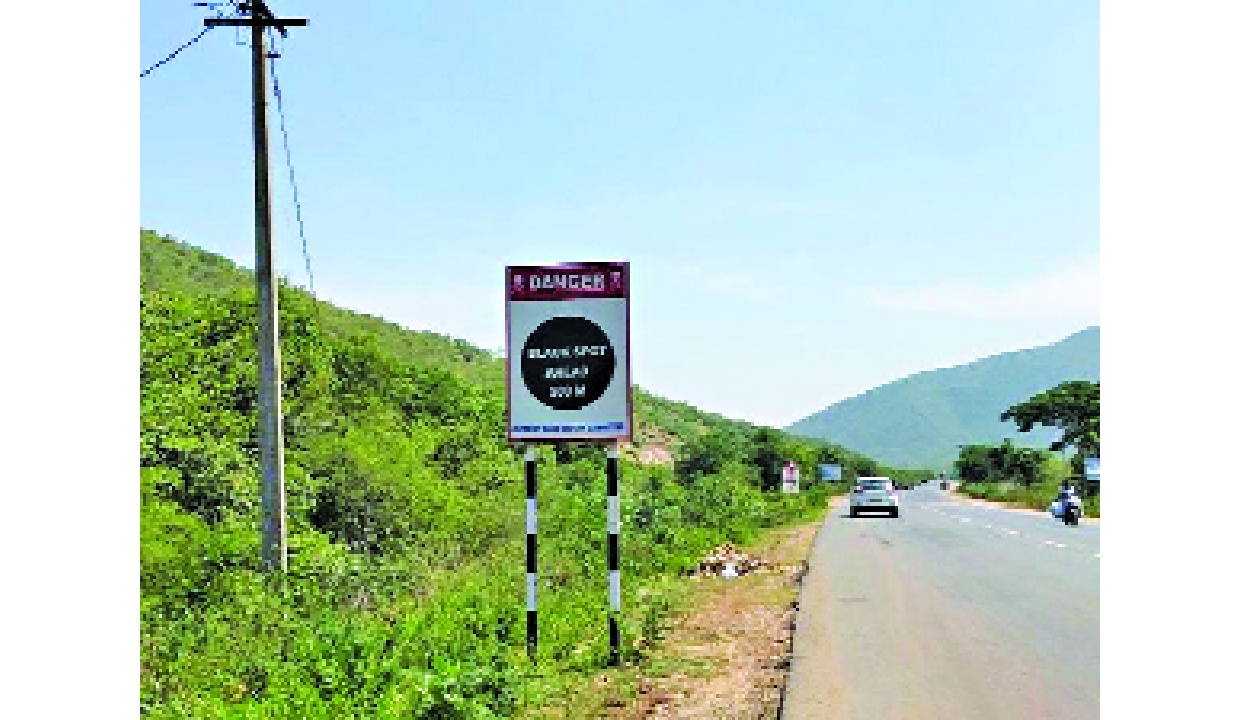
But responsibility cannot rest entirely on the individual driver. A genuinely safe road system recognises that human beings make mistakes. Road engineering must therefore be designed to prevent those mistakes from becoming fatal. Hazardous stretches and accident-prone black spots must be identified through reliable data and scientifically treated. The Ministry of Road Transport and Highways has identified thousands of accident-prone black spots and undertaken rectification measures; continued monitoring and independent safety audits remain essential.
Good road design means adequate lighting, visible lane markings, safe junctions, pedestrian facilities, crash barriers where required, proper signage, functioning signals and appropriate speed management. Construction zones need conspicuous warnings and disciplined traffic diversion. Roads must also be regularly inspected rather than waiting for repeated crashes to expose their weaknesses. Technology can make this process considerably smarter. Recent efforts to integrate detailed road information with electronic accident databases illustrate how crash data can be used to identify hazardous road characteristics and target interventions more precisely.
From a policing perspective, enforcement is not about issuing the maximum number of challans. It is about creating a credible expectation that dangerous behaviour will be detected and acted upon. Traffic enforcement should therefore be intelligence-led and focused on behaviours that cause serious crashes: speeding, drunk driving, dangerous overtaking, driving on the wrong side, mobile-phone use, helmet and seat-belt violations, overloading and driving by minors.
Equally important is consistency. A road user should understand that enforcement is not dependent on location, time or status. But enforcement alone cannot create a culture of safety. Awareness and enforcement must complement each other. Recent initiatives in Jammu, for example, combined enforcement with hundreds of awareness programmes and even counselling-based interventions for road users.
Transport departments must ensure competent licensing, vehicle fitness and effective regulation. Road-owning agencies must identify and rectify engineering deficiencies. Police must enforce the law impartially and respond rapidly to crashes. Hospitals and emergency services must provide timely trauma care. Vehicle manufacturers must continue strengthening occupant and pedestrian safety. Schools and colleges must teach road discipline as a life skill.
The media also has an important responsibility: report crashes accurately without glorifying reckless driving or turning tragedy into spectacle. And then there is the ordinary citizen, the most important stakeholder of all.
If you see an injured person after a crash, do not simply stop to record a video. Call for emergency assistance and, where safe and appropriate, help the victim. If a friend who has been drinking wants to drive, take away the keys. If a young person is driving dangerously, speak up. If a family member repeatedly ignores helmets or seat belts, do not normalise it.
Road safety is ultimately a matter of culture. We need to move from “traffic rules are imposed on me” to “traffic rules protect all of us.” Every journey involves a silent social contract: I will drive carefully because another person’s child, parent, spouse or friend is sharing this road with me. As police officers, we often encounter the consequences of unsafe driving after the damage has already been done. Our greatest success, however, is not the number of cases registered after a crash. It is the accident that never happens, the family that does not receive a midnight phone call, and the young life that reaches home safely.
India’s roads carry our children, workers, farmers, students, patients and families every day. Let us make safety the destination of every journey.
Kumar Ashish, IPS, DIG, Koshi Range, Saharsa, Bihar; Views presented are personal.