When disaster was averted: Lessons from a near-catastrophe in the sky
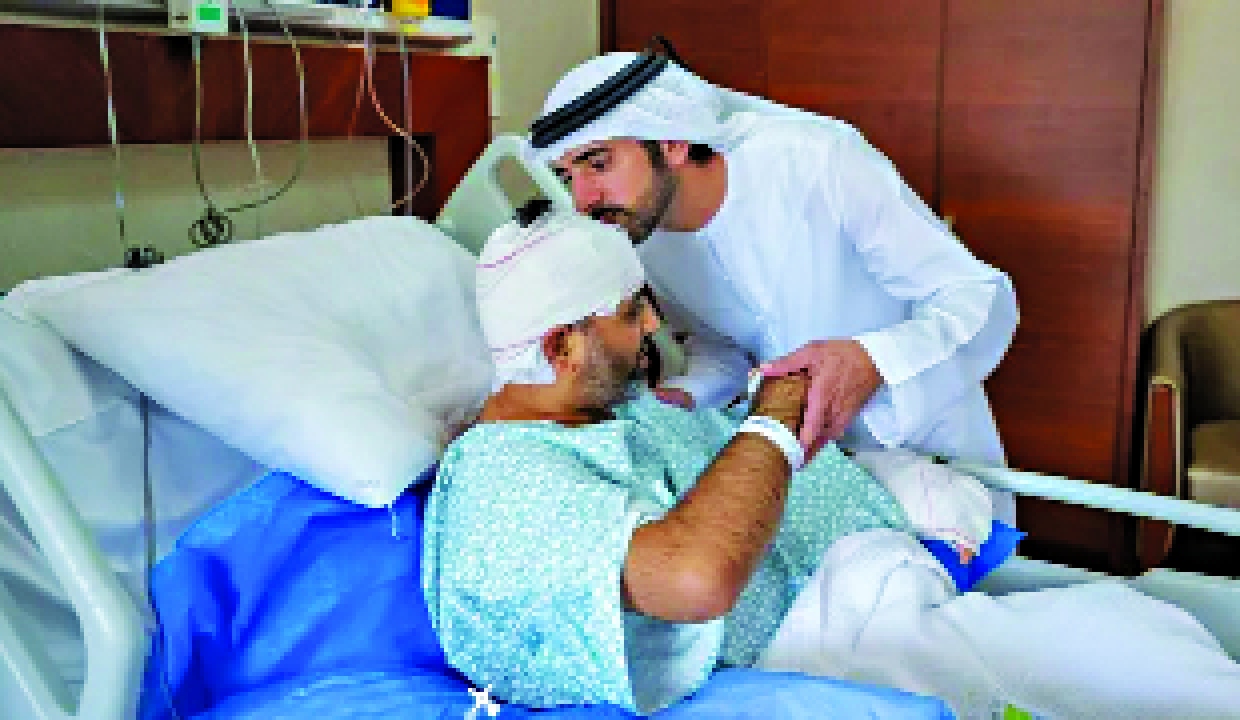
The story of Flight FZ1073 provides us with a lesson that goes far beyond the aviation industry. Regardless of whether there is an emergency in an aircraft or a natural disaster zone, the basic philosophy will remain the same: A safe system is not one in which nothing ever goes wrong; it is one in which a failure does not automatically become a disaster
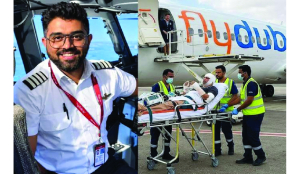
The Flydubai FZ1073 episode is easy to remember as one man’s act of nerve. Reportedly, Indian Captain Smit Machchhar was attacked in the cockpit by his co-pilot on a Dubai-Tel Aviv flight carrying more than 170 people. The aircraft is said to have dropped sharply before control was regained. Injured, the captain still managed to open the cockpit door so that others could step in. Passengers and crew restrained the attacker, two off-duty pilots on board helped manage the emergency, and the aircraft landed safely at Tabuk in Saudi Arabia.
Investigators will establish causes in due course, and judgment should wait for them. Captain Machchhar’s courage and composure deserve recognition. But the episode also underlines something larger. Even in an age of advanced navigation, communication and air traffic control, safety still rests on people: their judgement, health, training, coordination and ability to function under extreme stress.
From prevention to resilience
Traditional disaster management leaned heavily on prevention and response. Modern thinking adds a third idea, resilience: the ability of a system to absorb a shock, keep functioning and recover quickly. A resilient system does not assume that nothing will go wrong. It assumes something eventually will, and layers its defences so that one failure does not become a catastrophe.
FZ1073 shows this vividly. An injured captain kept acting, the cockpit door was opened, crew and passengers intervened, trained pilots happened to be aboard, and the aircraft reached the ground intact. Several human and institutional safeguards worked at once. Aviation already builds redundancy into its hardware, communication channels and navigation. The same logic must now extend to the human side of safety.
Heroism cannot be scheduled
Courage cannot be rostered. Preparation can. Training today covers engine failure, fire, depressurisation and bad weather. It should also stretch to rarer but dangerous scenarios: an incapacitated pilot, disturbance inside the cockpit, deliberate interference, communication breakdowns, cyber disruption, or several medical and security emergencies at once. Such events may be remote, but rehearsal means the response, if one arrives, flows from protocol rather than improvisation.
The human factor
Aviation security has long focused on keeping unauthorised people away from the cockpit. A harder question arises when the risk sits with someone authorised to be there. This is no argument for distrusting aviation professionals. It recognises that a person’s circumstances change across a career.
Screening and background checks matter, but they capture only a moment in time. Personal difficulties, workplace pressure, psychological strain, money worries, family troubles or visible changes in behaviour can surface years later. Safety-critical industries therefore need confidential support systems: peer networks, professional counselling, and trusted channels for raising concerns about a colleague. Employees must be able to seek help without fearing for their careers. The goal is early identification, care and prevention, not surveillance, stigma or punishment.
Cabin crew deserve attention too. Beyond passenger comfort, they are central to emergency safety, and their ability to communicate, keep order, spot vulnerable passengers and assist the flight deck can prove decisive. Joint exercises involving pilots, cabin crew and ground staff would help them prepare for the unusual.
The presence of off-duty pilots among the passengers also raises the question of human redundancy. Without presuming what regulators should decide, airlines and authorities could study whether qualified travelling personnel might be called upon under strict emergency protocols. That would demand reliable identification, security safeguards, a clear command structure and regulatory approval. The principle is familiar from disaster management: no critical system should depend on a single layer of expertise that can suddenly vanish.
A close call is a warning, not merely a lucky escape. Societies usually learn the hard way: an accident, deaths, an inquiry, recommendations, then reform. A mature risk culture learns before lives are lost. FZ1073 should therefore be examined calmly and without hasty conclusions. The investigation must first establish what happened and why. Beyond assigning responsibility, a wider review should ask what worked and what failed, which safeguards were deliberately designed and which depended on individuals, whether there were warning signs, and whether slightly different circumstances would have produced a different ending.
This matters all the more as Indian aviation expands. Millions of Indians now fly for business, tourism, work and international connections. India has regulatory, security and emergency response arrangements in place, but growth demands that risk management keep pace. These arrangements could be woven together under a broader approach of aviation disaster risk reduction. That means regulators, airlines, airports, air traffic management, security agencies, disaster management authorities, emergency health services, police, fire services and local administrations functioning as parts of one emergency system. This does not call for a new layer of bureaucracy, only better coordination of what already exists.
Joint exercises are the means. They should go beyond technical failures to uncertain, layered events: a human emergency combined with a medical problem, communication failure, bad weather or a diversion. Readiness is measured not by performance in normal conditions, but by how well people cope when several things go wrong together.
The incident is also a reminder that passengers can become part of the response. After earthquakes, floods, fires, building collapses and transport accidents, the first helpers are usually ordinary people who happened to be nearby. Aviation is no different. Passengers cannot be expected to perform professional roles, but awareness, discipline, cooperation and compliance with instructions make a real difference. Informed passengers are likelier to stay calm and support an orderly evacuation or response. Prepared communities are resilient communities, and passenger awareness deserves recognition as a small but meaningful part of aviation safety.
A real tribute to Captain Machchhar
Captain Machchhar’s conduct will rightly be remembered as courage. Yet remembering only a brave pilot risks missing the deeper lesson. The episode shows both how quickly a sophisticated system can slide towards disaster and how layered safeguards can stop it. Risk can never be eliminated, only reduced in effect. No safety system is foolproof, but a resilient one places enough buffers between a failure and a catastrophe. That is the essence of disaster risk reduction.
The sector should ask how pilots and cabin crew can be better supported, how emerging behavioural risks can be detected earlier while respecting privacy and dignity, how unconventional emergencies can enter training, how human redundancy can be strengthened, how near-misses can be learned from systematically, and how agencies can cooperate when an emergency crosses organisational lines. These questions arise not because aviation is unsafe, but because it has one of the strongest safety cultures in the world, and such cultures must keep strengthening. The best tribute to the captain is stronger systems. The aim should not be an aviation system that never faces a hitch, but one that copes when it does. The first pursues perfection, the second resilience. In an interconnected world where technological, environmental, human and security risks can converge unexpectedly, resilience is the more realistic goal.
The lesson reaches well beyond aviation. Whether in an aircraft, hospital, factory, city or disaster zone, a safe system is not one where nothing goes wrong, but one where failure does not automatically become disaster. Passengers should never have to depend on brave individuals. They should be able to rely on systems that foresee, absorb and prevent.
Captain Machchhar’s conduct will rightly be remembered as courage. Yet remembering only a brave pilot risks missing the deeper lesson. The episode shows both how quickly a sophisticated system can slide towards disaster and how layered safeguards can stop it. Risk can never be eliminated, only reduced in effect. No safety system is foolproof, but a resilient one places enough buffers between a failure and a catastrophe. That is the essence of disaster risk reduction
The writer is a former Executive Director, National Institute of Disaster Management, and Director, SAARC Disaster Management Centre; Views presented are personal.