Product endorsement Let the stars be role models not salesmen
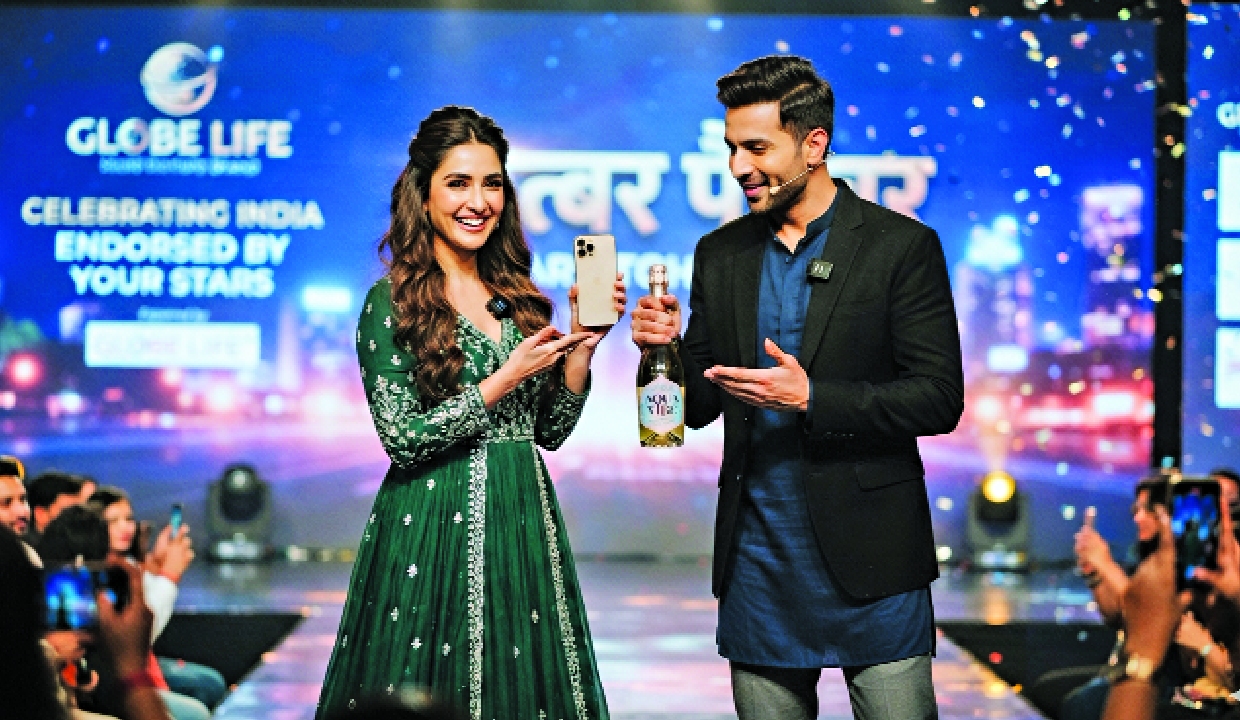
On September 22, 2026, President Droupadi Murmu made a poignant appeal to the film industry while addressing the winners of the 72nd National Film Awards in Kevadia, Gujarat. She reminded the glittering gathering how intensely the young admire and idolise popular heroes from the world of celluloid, who become role models and influence their formative years.
Everyone in India is convinced beyond doubt that the roles played by successful and popular stars are emulated by “crores of children and youth”. Against this backdrop, the President gave voice to millions of concerned parents when she appealed to all artists not to endorse “substances that are harmful to health”. The injurious impact of such endorsements is not confined to the young; it is equally, if not more, harmful to adults and the elderly.
The Presidential observations would reverberate in the heart of every parent seriously concerned about the changing food habits among children under the media blitzkrieg launched by the market. Its impact rises manifold when junk food products are endorsed by stars who are popular for their on-screen performances. It is indeed disturbing that culinary choices are influenced far more by peer-group pressure among children than by parents. Is it not worth analysing that food preferences are increasingly decided by multinationals?
On a broader scale, we must analyse what is responsible for the creation of such an anomalous situation. As a society and as a nation, why is the market not responding to its social, ethical and moral expectations? For decades, the injurious impacts of pan masalas, as a case in point, have been well known, but has anything improved? No, manufacturers find ways and means to circumvent any change in rules. The manner in which law enforcement agencies work at the grassroots level remains an open secret. Further, political parties and candidates need financial support to ‘fight’ elections. Less said, the better.
In urban and semi-urban areas, the market has tightened its grip over the food preferences of children, even grown-up young persons, and elders in a fairly large proportion. The variants of pan masalas and bhujias are so well known and so freely available, even outside the premises of schools and learning centres. Junk food already rejected and even banned in several countries flourishes without any impediments in India.
As a teacher, one would find it difficult to support the monetisation of the love and affection of fans, be it in films, cricket, or any such venture. This personal preference would probably find little support in the legalised economic pursuits prevalent in the second quarter of the 21st century in India. One just can’t give up the hope that, after the appeal from the President, at least those heroes of the children and youth could ensure that nothing is endorsed which they themselves have discarded from their menus. After all, how many packets of well-fried bhujias could an aged person in the age group 80+ consume on a daily basis?
One often recalls the famous story by Tolstoy, “How Much Land Does a Man Need?” How much more money do these mega-stars need to accumulate, and that too at the cost of possible damage to the health and the process of natural growing up of the future generations of India? One wishes they would give serious thought to becoming role models for the young of India in empathy, compassion and values! Maybe the universally adored heroes could lead this process of change of heart! One could be sure it would pick up swiftly, as these heroes have talent, credibility, acceptability and skills to earn through means that would be considered genuine and justified, in no way injurious to the future generations. Henceforth, let them never forget the golden words of the President: “Star vahi hai jo Roshni deta hai, star vahi hai jo Roshni failaye”.
These stars could become the torch-bearers of a movement of celebrities dedicated to making India drugs-free and adulteration-free. It would save millions of lives; it could give them a far larger purpose in life, an ethical and morally sound target to achieve.
Earlier this year, in her message to the nation on the eve of Republic Day, the President had expressed similar concerns on the health and well-being of children in these times of increasing complexities of life, which adversely impact their mental and emotional health as well. Every nation needs to ensure the availability of all the necessary physical, nutritional and emotional inputs to ensure proper growth of healthy, vibrant and enthusiastic future citizens.
And that requires coordinated efforts of parents, schools, society and the governments. Such a synchronised initiative requires adherence to ethics, values and morals. Should our leaders not ponder over the root cause of severe deterioration in the discharge of social obligations? It is shameful even to recall instances like a recent case in which mid-day meals were distributed only on paper for over two years, a reference to the Rajasthan mid-day meal scam unearthed in January 2026, where supplies were shown only on paper during the pandemic.
One must hasten to add that the blame can’t be put squarely on celebrity endorsements only. In Maharashtra, a special drive was conducted during the first three weeks of September 2026, the great Ganesh Utsav period. A total of 3,068 establishments were examined; 6.34 lakh kilos of adulterated foodstuff were confiscated, which was worth `9.76 crore. The items that are adulterated most include those definitely purchased on festive and auspicious occasions: modak, laddus, ghee, curd, oils, sabudana, and several more. During the next Diwali, this adulteration drive would be launched again. There would be some raids, some notices, even fines, followed by a quiet transition back to “status quo ante”.
The gravity of the damage being inflicted by unscrupulous persons on the people of India could be seen in Punjab. In the age group 18-75, around 6.6 million use drugs. Children in the age group 10-16 are victims of what is known as substance abuse. Alcohol, opium, hashish, narcotic drugs and psychotropic substances are freely available in Punjab. Pakistan ensures more than sufficient supply. Obviously, some handlers must be facilitating the transition. Junk food and adulteration are also gaining in popularity.
Every year, during the festival seasons, one learns about raids being conducted on certain sets of shops selling sweets, including eating joints. Occasionally, the anti-drug squads also become active. These are all widely publicised. Adulterated items, invariably recovered in alarming proportions, are destroyed with considerable fanfare. All such big news dies down quietly within a few days. No media ever reports on how many were found guilty and incarcerated.
Food adulteration is a great slur on the face of any civilised society. The same applies to the promotion of junk food by celebrities, particularly for children. India’s literacy touches a much-fancied proportion of around 80 per cent, rising from a mere 12 per cent at the time of Independence, and this becomes far more impressive when one thinks of a population rise of 100 crores during the intervening period.
It is obvious that our education expansion lagged behind in imparting human values to the young and old alike. Should our education system not realise the gravity of food adulteration, increasing popularity of junk food and extensive drug abuse? While the establishment may follow its own methods, the long-term solution would emerge from teacher education institutions and the schools. There is no other alternative.