It is Advantage India at climate week in New York
As the international community came together in New York last month, grappling with the overlapping challenges of climate change, war, and widening economic inequality, there was never a greater need felt for a substantially different discourse on human development.
Given the fragility of world peace, should a country’s growth not be evaluated by its resilience? Should a nation’s economic health not be measured by the quantum of innovation?
It is also through this critical, holistic lens that Anil K Antony’s Advantage India: Reshaping the Future for an Equitable World Order must be read. The book offers a comprehensive and forward-looking exploration of India’s potential to reshape the global order, presenting a blueprint that demands a close examination of how economic ambitions align with societal well-being.
Antony’s core thesis is both ambitious and well-structured: India’s contemporary rise is not a temporary historical accident, but the result of deliberate capability building across interconnected pillars of digital infrastructure, public policy, and strategic diplomacy. For observers of public policy and corporate sustainability, the book’s most compelling sections are those detailing India’s pioneering strides in Digital Public Infrastructure. Antony illustrates how platforms like Aadhaar, Jan Dhan Yojana, and digital learning systems have transitioned from mere technological innovations into massive vehicles for social democratisation. By lowering the barriers to financial inclusion, these initiatives have successfully integrated millions of historically marginalised individuals into the formal economy, providing a real-world case study in scalable social sustainability.
However, the true value of this book is in its assessment of how well these top-down frameworks address the deeply rooted structural challenges on the ground. Antony deserves credit for avoiding blind political triumphalism. He dedicates significant analytical space to the vulnerabilities within India’s current economic architecture, most notably the historical imbalance between a world-class services sector and a lagging manufacturing base. His discussion on establishing an indigenous semiconductor ecosystem acknowledges that catching up with global leaders requires more than capital; it demands institutional continuity, deep public-private partnerships, and long-term ecosystem development. From my perspective, this transition must be managed carefully to ensure that industrial expansion does not come at the cost of environmental degradation or labour exploitation.
The book’s engagement with the agricultural sector is particularly relevant to contemporary debates on climate resilience. Antony addresses the direct impact of climate shocks on rural communities, citing recurring environmental disruptions as a primary threat to economic stability. His proposed solutions, such as deploying automated digital crop insurance settlements and leveraging technology for risk mitigation, are highly actionable. Yet, from a policy implementation standpoint, the challenge remains bridging the vast distance between an elegant digital blueprint and the daily realities of a smallholder farmer. A truly equitable order requires ensuring that the dividends of technology are distributed evenly, preventing a new form of digital divide from replacing traditional economic disparities.
On the global stage, Antony frames India not as a revisionist power seeking to disrupt international stability, but as an independent, stabilising pole. By anchoring the nation’s foreign policy in the civilisational ethos of Vasudhaiva Kutumbakam (the world is one family), he argues that India’s rise is inherently tied to the collective progress of the Global South. This alignment of national interest with global welfare offers a refreshing alternative to zero-sum geopolitical competition. It suggests that India’s leadership could champion a more democratic and balanced multilateral framework, particularly in driving international climate finance and equitable resource distribution.
Ultimately, Advantage India is a vital contribution to the discourse on sustainable development and global governance. Antony effectively demonstrates that technological innovation and public policy, when aligned with a clear ethical vision, can act as powerful catalysts for national transformation. For policy practitioners, corporate leaders, and sustainability advocates, the book serves as both a roadmap and a challenge. It reminds us that India’s journey towards 2047 will not just be judged by the speed of its economic accumulation, but by its capacity to build a society where prosperity is genuinely inclusive, resilient, and enduring, and one where innovation plays a key role.
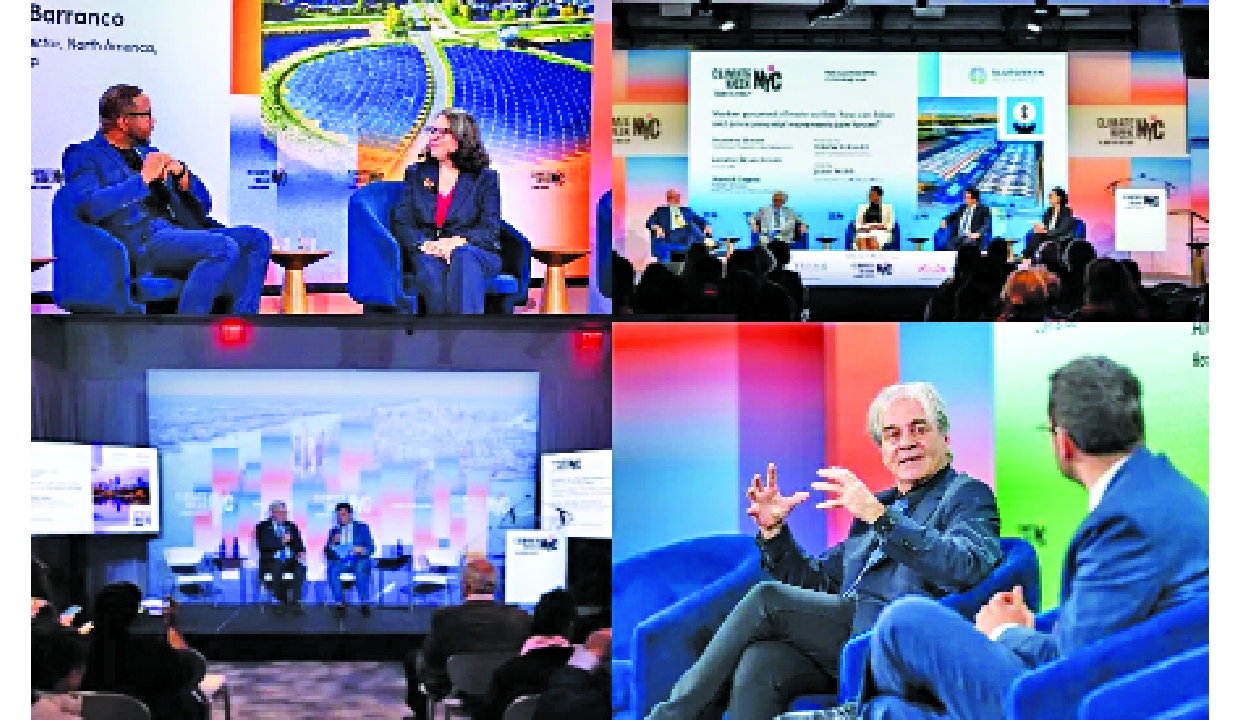
Indeed, at the New York Climate Week, the spirit of innovation that runs in contemporary India’s veins was felt. Practical solutions and frugal methods that overcome the twin demons of our changing climate and impoverishment, climate action in India was seen serving the developing economies of the world. Its demand for equitable climate finance while maintaining global security was also clear.
By defending the developing world’s growth rights in New York, Indian diplomats embody the role Antony outlines for the country as the definitive, confident voice of the Global South.
India has insisted at the UN that its per-capita carbon emissions remain far below the global average, advocating for fairness. By meeting its Paris Agreement climate commitments ahead of schedule, India also demonstrated the “reliability” currency that Antony argues defines India’s competitive advantage in a fractured world order.
This fairly proactive stance by India perfectly mirrors the central argument in Antony’s book that showcases a confident nation actively helping shape the global agenda at the New York Climate Week, but also beyond.
The writer is the CEO, Sustain Labs Paris, and a Global Leadership Fellow of the World Economic Forum; Views presented are personal.