BRICS: India’s path to economic growth through cooperation
India, a nation well known for its cohesive collaborations and cooperation, and alliances with different stakeholders, especially with global leaders, proves its strong partnerships leading to leadership excellence in this present decade. India’s biggest strength lies in human capital, digital technologies and people-centric approaches achieved through connecting with global partners.
India is on a strong success path in the last decade, especially steered through achieving the presidency/chairmanship for the last three years consecutively.
- 2023-24 — G20 Presidency [Human-Centric Approach]
- 2025-26 — Chairmanship of the Asian Productivity Organization (APO) [Digital-Centric Approach]
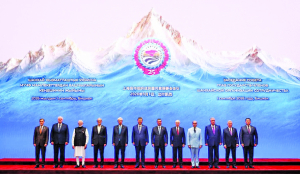
- 2026-27 - BRICS Presidency [People-Centric Approach]
2023-24 | 2025-26 - Global Presidencies | Chairmanship
The proven example was the use case of the G20 Summit. This united several countries under one umbrella called the vibrant mantra - “Vasudhaiva Kutumbakam”.
Following this, India has assumed its Chairmanship of the Asian Productivity Organization, Tokyo, Japan (APO). This position enhances collaboration and partnership with 21 APO member countries in the Asia-Pacific region. This initiative will play a key role in promoting grassroots innovation-led green productivity and digital manufacturing transformation of SMEs, including climate change, sustainability and inclusive growth across the member countries in the Asia-Pacific.
2026-27 — BRICS presidency
Presently, India has successfully joined the BRICS Centre for Industrial Competencies (BCIC) in collaboration with the United Nations Industrial Development Organization (UNIDO) and the National Productivity Council (NPC) under the Department of Commerce and Industry, Government of India. NPC is officially designated as the India Centre and will play a key role in connecting industry, academia, startups and MSMEs for capacity building, improvement of green productivity, climate change adaptation and adopting best practices in lean manufacturing.
This programme aims to provide compounded and integrated support services to small, medium and large manufacturing industries, including Micro, Small and Medium Enterprises (MSMEs), across BRICS countries and the Global South.
BRICS Presidency will boost the National Mission on Interdisciplinary Cyber-Physical Systems (NM-ICPS), which is a flagship initiative of the Government of India under the Ministry of Science and Technology, focused on designing, developing and commercialising future-generation fourth/fifth Industrial Revolution technologies such as Artificial Intelligence, Machine Learning, Industrial Internet of Things (IIoT), cyber security, blockchain, AR/VR and robotics. BRICS will push various essential elements of industrial competencies such as smart manufacturing through “e/silent factories” (like Bajaj Auto, Pune, and Havells-Lloyd, Rajasthan), quality (Zero Defect Zero Effect - ZED) and packaging, which align with the vibrant vision of Prime Minister Narendra Modi: “Make in India, Make by India, Make for India and Globe.”
The BRICS programme focuses on “Building for Resilience, Innovation, Cooperation and Sustainability”. India has strengthened resilience and innovation through digital infrastructure, semiconductor plants, green hydrogen technologies and quantum innovations like QNu Labs’ Quantum Random Number Generator.
Government initiatives like the National Semiconductor Mission, National Green Hydrogen Mission and NM-ICPS are strengthening innovation, sustainability and economic stability. BRICS will further boost manufacturing, supply chains, employability and economic partnerships across the Global South. It will also become a cornerstone for social security coupled with labour market formalisation, participation of the women workforce and development of a skilled workforce for India and BRICS countries. BRICS will enhance the participation of women in leadership roles in promising growth sectors. This initiative will pave the way for India to achieve global economic leadership and will facilitate the gig economy across BRICS countries as well. BRICS will also address the gap in digital technologies and gig employment.
The National Productivity Council is actively working by forming a BCIC platform that allows collaboration among academia, industry, startups and MSMEs. This will pave the way for training students, faculty members, industry practitioners and startups. NPC specialises in facilitating lean philosophy and smart manufacturing, including green productivity such as Total Factor Productivity (TFP) and Labour Productivity (LP).
Way forward for Viksit Bharat@2047
BRICS Presidency and APO Chairmanship for India will together form strong pillars by fostering vocational development across different sectors, especially benefiting youth, women and gig workers, while strengthening digital transformation technologies, green productivity, sustainability and inclusive growth across India, the Global South and the Asia-Pacific region. BRICS for India will place the nation on the global map as a forefront leader (“Vishwa Guru”) in leadership and economic excellence with the support of the Global South, creating a foundation and growth pathway for Viksit Bharat@2047.
T Senthil Siva Subramanian is Head of the Institute Industry Interface Program at Hindustan College of Science and Technology, Mathura. Yadu Kumar Yadav is Deputy Director at the National Productivity Council under the Department for Promotion of Industry and Internal Trade (DPIIT), Ministry of Commerce and Industry, Government of India; Views presented are personal.