Why India needs a stronger eastern maritime gateway
As the conflict in West Asia continues, global shipping routes remain under strain. For India, whose trade depends heavily on the sea, this makes the resilience of maritime routes more important than ever. Nearly 95 per cent of India’s trade by volume and around 70 per cent by value moves by sea. In this context, strengthening India’s eastern seaboard is not just about expanding port infrastructure. It is also about protecting the reliability of the country’s trade and supply chains.
The Bay of Bengal, which connects India with some of the fastest-growing economies of the Indo Pacific, is becoming a key corridor for global trade. As India deepens its engagement with Southeast Asia and strengthens connectivity with the Andaman and Nicobar Islands near the Malacca Strait, one of the world’s busiest maritime chokepoints, the eastern coast is gaining both economic and strategic relevance.
Within this shift, Andhra Pradesh stands out.
With a coastline of nearly 974 kilometres, the second longest in India, the state sits along key shipping routes linking India with Southeast Asia, East Asia and the wider Indo-Pacific. Its location gives it a natural advantage in trade connectivity and maritime logistics.
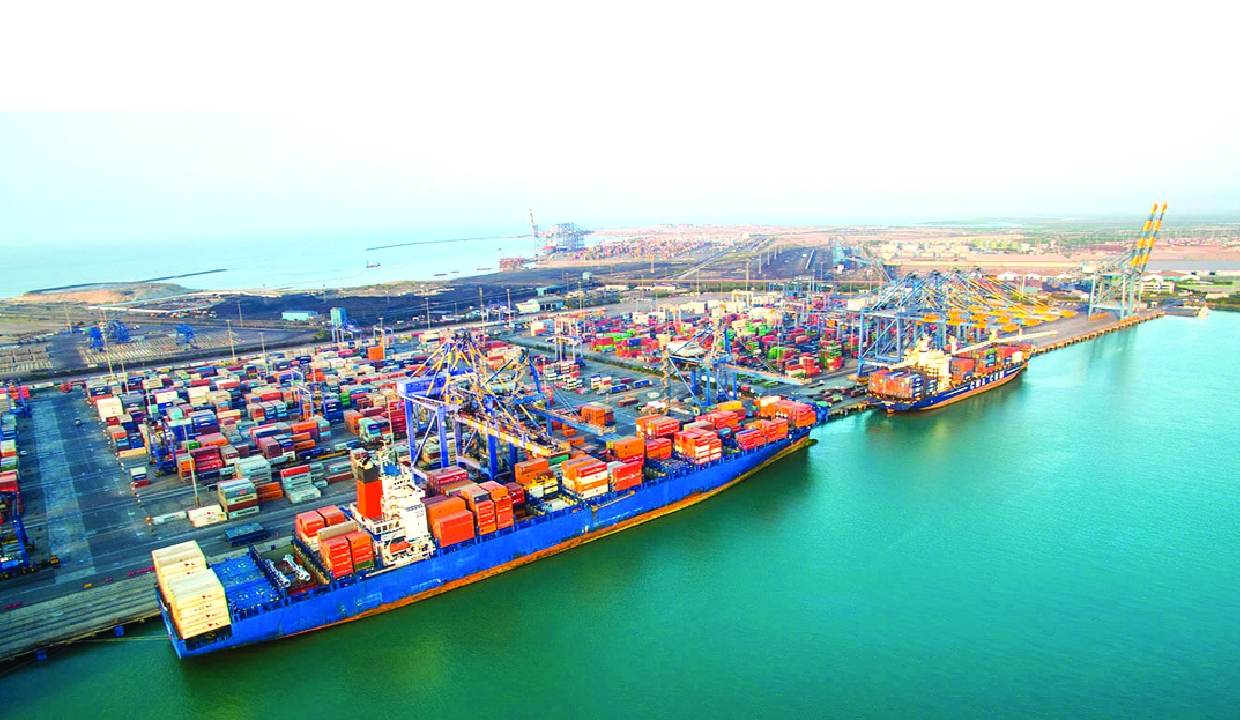
Andhra Pradesh already anchors one of the most significant port networks on India’s eastern coast. Visakhapatnam, Gangavaram, Krishnapatnam and Kakinada handle a large share of bulk cargo, containers, petroleum products and industrial raw materials serving eastern and southern India. These ports support sectors such as steel, cement, fertilisers, seafood exports and energy logistics, while also enabling industrial clusters to grow around them.
India’s maritime strategy is increasingly focused on port-led development under the Sagarmala Programme. More than 800 projects worth over Rs 5 lakh crore have been identified under this framework to improve port capacity, connectivity and coastal economic activity. Andhra Pradesh’s ongoing port expansion aligns closely with these national priorities.
Three new deep-sea ports will further strengthen this capacity. Mulapeta Port in North Andhra is being developed to support cargo movement along the northern Bay of Bengal and unlock mineral and bulk trade potential. Machilipatnam Port in Central Andhra is emerging as a modern container and bulk gateway supported by improved road and rail connectivity to India’s eastern hinterland. Further south, Ramayapatnam Port will add deep-draught capability that can handle larger vessels.
Together, these projects are helping shift India’s maritime balance. For years, most container traffic has been concentrated on the western coast. Expanding capacity along the eastern seaboard reduces pressure on existing ports, diversifies trade routes and improves resilience.
The economic logic is clear. Efficient ports reduce turnaround time, lower freight costs and attract manufacturing investment. When combined with industrial parks and logistics hubs, they become engines of regional growth. Andhra Pradesh has increasingly followed this approach by linking ports with industrial corridors and logistics planning.
There is also a strategic dimension playing out in real time. The ongoing conflict involving Iran, Israel and the United States is already disrupting key shipping routes and exposing how fragile global trade flows can be. The Strait of Hormuz and the wider Gulf region remain critical for energy and cargo movement.
For India, the implications are direct. Most of its crude oil imports pass through these routes, and a significant share of exports to Europe and West Asia depends on them. Disruptions in these corridors increase costs and reduce reliability.
The impact is already being felt in everyday life. A large share of India’s cooking gas travels through the Gulf region and the Strait of Hormuz. When tensions rise and ships avoid these routes, supplies tighten and prices become volatile. For millions of Indian households, this quickly becomes a kitchen-table issue.
In this context, strengthening the eastern seaboard is not just about growth. It is about creating an alternative. Ports along the Bay of Bengal provide a counterbalance by diversifying India’s trade gateways and reducing dependence on any single route.
Connectivity with the Andaman and Nicobar Islands further strengthens this advantage. Located near the Malacca Strait, the islands sit along major global shipping routes linking the Indian Ocean with East Asia. A stronger eastern mainland presence allows India to better use this strategic location.
If India is to achieve its long-term ambition of becoming a 1 trillion dollar merchandise export economy, port capacity and logistics efficiency will be critical. Expanding maritime infrastructure along the eastern coast will play a key role in that effort.
As global trade becomes more uncertain, India will need a more balanced and resilient maritime network. The eastern seaboard will be central to this shift. With its growing network of ports, Andhra Pradesh is well placed to play a leading role in shaping India’s maritime future.
The writer co-chairs the ASSOCHAM Andhra Pradesh Chapter and has served at NITI Aayog; Views presented are personal.